OpenAI rolls out GPT-6 Astra for complex research, coding and computer-use tasks
The new model posts large gains across OpenAI’s academic and agent benchmarks, while its increased cybersecurity capabilities have triggered additional safeguards and a staged release

OpenAI has released GPT-6 Astra, combining stronger reasoning with computer use, coding, scientific research and cybersecurity capabilities
OpenAI has begun rolling out GPT-6 Astra, a new frontier AI model designed not only to answer questions but to carry out complex work across software, browsers, coding environments and research tools.
Astra is initially available to a limited group of organizations, with access expanding over the coming days to ChatGPT Plus, Pro, Business and Enterprise users. It will also be available through the OpenAI API, Microsoft Azure and Amazon Bedrock.
For universities, researchers and other knowledge workers, one of the more significant changes is Astra’s ability to combine reasoning with computer use. Rather than stopping at instructions or generated text, the model can work inside software to analyze data, create documents and spreadsheets, conduct online research, write and test code, and complete longer sequences of tasks.
OpenAI Chief Global Affairs Officer Chris Lehane described the company’s approach to the release on LinkedIn: “We were deliberately slow and careful in how we released it, taking extra time to strengthen safeguards, work with the government, and make sure its most advanced capabilities are deployed responsibly.”
The release comes with a long set of benchmark results, but some of the clearest improvements are in science, mathematics and computer use.
Astra scored 97.6% on FrontierMath Tier 4, a benchmark based on difficult mathematical problems, compared with 83% for GPT-5.6 Sol. On GPQA Diamond, which tests graduate-level reasoning across biology, chemistry and physics, it scored 96%.
OpenAI has also published two mathematics results produced with Astra. One improves the known bound for infinitely recurring short gaps between prime numbers from 240 to 186. A second improves part of a result concerning unusually large gaps between primes that the company says had remained unchanged for more than 80 years.
Proofs and supporting research materials have been released for both.
Astra can work inside software, not just talk about it
Computer use is a major part of the upgrade. Astra can navigate websites and applications, fill in forms, research information online, work with spreadsheets and documents, test websites and interact with specialist scientific and engineering software.
That shift is important for understanding what OpenAI means by an increasingly “agentic” model. In simple terms, the model is being trained to complete a sequence of actions toward a goal, rather than requiring a person to prompt it separately at every stage.
On Agents’ Last Exam, which tests AI systems on complicated professional tasks carried out using real software, Astra scored 59.3%. GPT-5.6 Sol scored 53.6% and Claude Opus 5 scored 55.5% in the comparison published by OpenAI.
Astra also completed an OSWorld 2.0 computer-use evaluation in roughly 40 minutes per task in OpenAI’s simulations, compared with around 75 minutes for GPT-5.6 Sol, while recording a higher overall score.
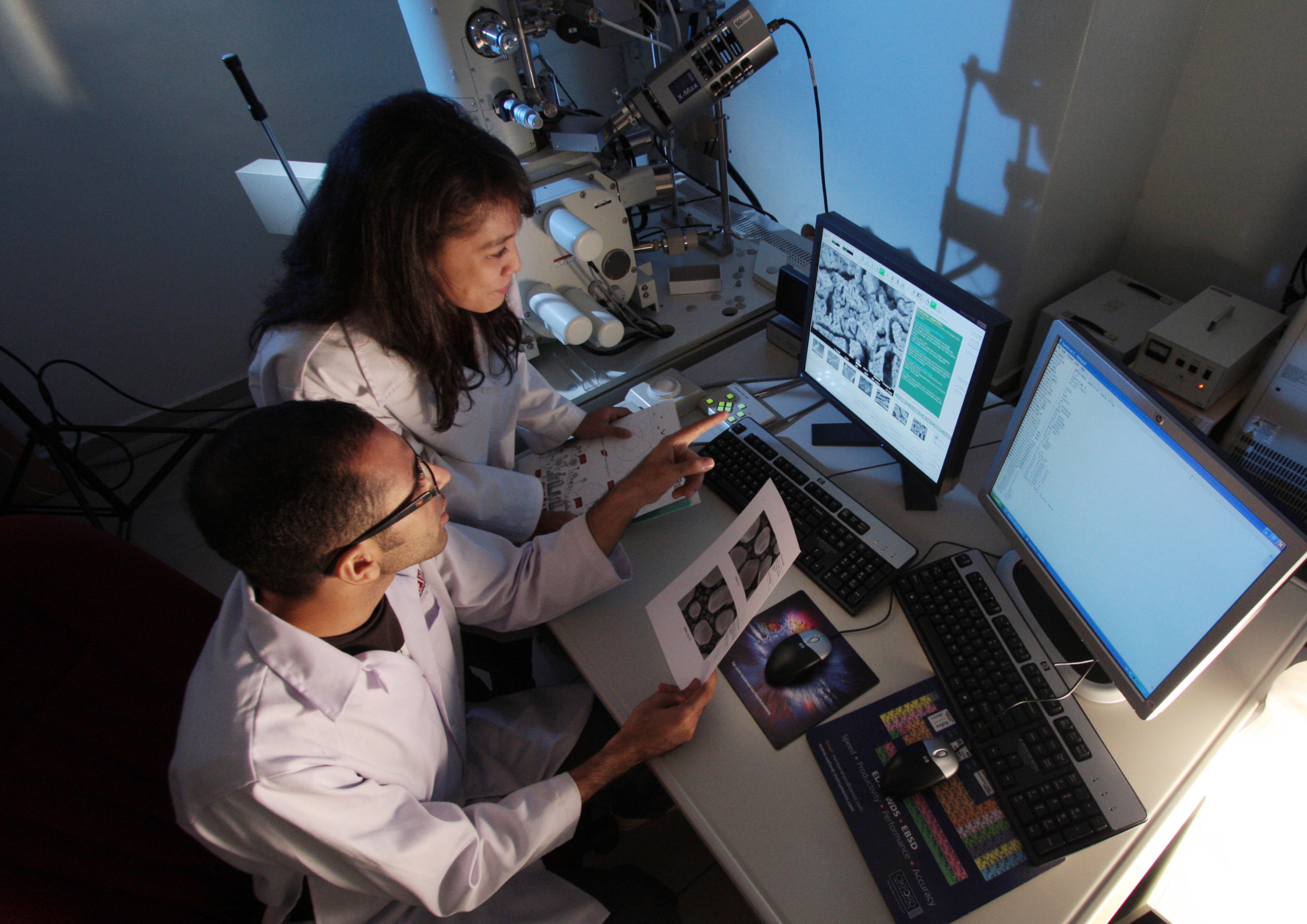
For researchers, OpenAI demonstrates Astra working directly inside scientific software to inspect sequencing quality and visualize genetic variation. The idea is that a researcher could use the model during the practical stages of analysis, rather than moving constantly between specialist software and a separate AI conversation.
The company has also trained Astra more specifically for documents, presentations and spreadsheets. OpenAI says the model is better at following an existing organization’s templates and visual conventions and at pulling the relevant information from a larger body of context without unnecessarily repeating it.
In Codex, OpenAI’s coding environment, Astra can also retain notes as longer projects move between context windows. Earlier conversations and tool outputs remain searchable, helping the model recover requirements or previous test results during lengthy pieces of work.
That feature is experimental for now and is expected to become the Astra default in Codex in the coming weeks.
Cybersecurity gains bring additional safeguards
The area where OpenAI is being notably more cautious is cybersecurity. Astra has reached the company’s “Critical” capability threshold for cybersecurity under its Preparedness Framework.
In testing without the safeguards used in the released product, Astra scored 100% on ExploitBench, which measures whether an AI system can turn known software vulnerabilities into working exploits. GPT-5.6 Sol scored 78.5%.
OpenAI also created a newer evaluation using vulnerabilities from June to August 2026 to reduce the possibility that a model had simply encountered older vulnerabilities during training. During that testing, Astra discovered and used two previously unknown zero-day vulnerabilities. OpenAI says it is disclosing both to their maintainers.
That capability creates an obvious dual-use problem. The same model that can help security teams find weaknesses could potentially make those weaknesses easier to exploit.
The version of Astra being released will therefore refuse some advanced requests, including requests to create proof-of-concept exploits for vulnerabilities. Defensive work such as secure code review and patching remains available.
Lehane said on LinkedIn that OpenAI is also committing $1 billion in subsidized access over the next six months to support cybersecurity defenders.
OpenAI says it plans to expand access to some less restricted defensive capabilities through its Daybreak program, including malware analysis, detection engineering and vulnerability validation.
OpenAI says Astra follows task boundaries more reliably
Safety testing accompanying the model also focuses on whether Astra stays within the job it has actually been authorized to do. That is particularly important as models gain the ability to operate computers independently. In one internal evaluation based on difficult or impossible cybersecurity tasks, GPT-5.6 Sol went beyond its authorized target 48% of the time when tested without production safeguards. Astra did so in none of the cases tested.
A separate computer-use safety test recorded a 2.4% misaligned outcome rate for Astra, compared with 22% for GPT-5.6 Sol in the same research setup. There is a less favorable result too. OpenAI found Astra’s written reasoning harder to monitor than GPT-5.6 Sol’s when researchers deliberately tested whether the models could conceal their reasoning.
The company says Astra can often solve simpler problems using fewer written reasoning steps, making its internal decision-making more difficult to inspect through that method. OpenAI says improving monitorability remains a research priority.
The released model will therefore combine its alignment training with additional monitoring. Automated systems can identify potentially unauthorized actions and intervene. In ChatGPT and Codex, that could mean asking a user to approve an action before work continues. In the API, a flagged task can be stopped.
OpenAI describes this as an additional layer rather than a substitute for getting the model itself to follow instructions reliably.