IMP Software launches budget-led finance system for schools, trusts and FE colleges
IMP Finance links transactions directly to institutional budgets, with the system designed to reduce the reconciliation and reclassification work involved in education finance
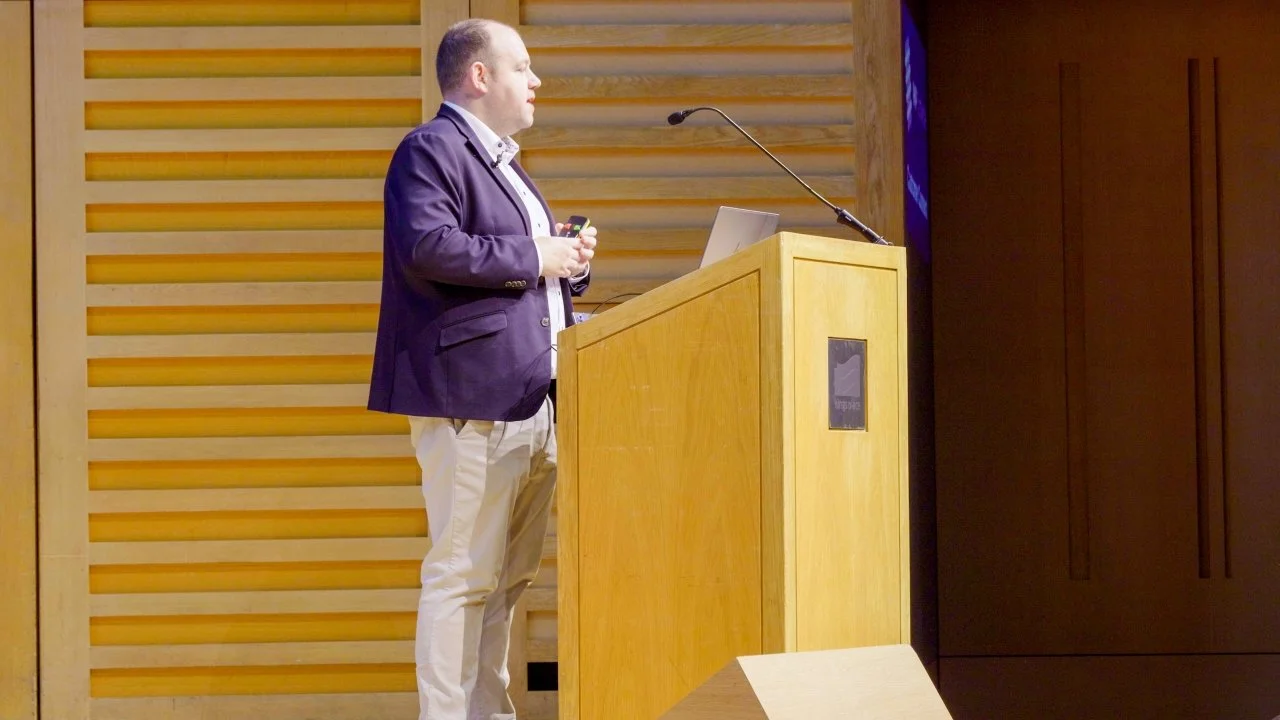
Will Jordan, Co-founder and CEO of IMP Software. The company has launched IMP Finance, a budget-led financial management system for education
IMP Software has launched a financial management system built around a different approach to how schools, multi-academy trusts and further education colleges connect their budgets with day-to-day spending.
IMP Finance uses what the company calls a budget-led model. Instead of purchase orders, invoices and journals being coded separately against financial accounts and reconciled back to a budget later, the coding is inherited from the budget line itself and carried through the transaction.
The aim is to keep planned and actual spending aligned throughout the month, rather than leaving finance teams to identify discrepancies and reclassify transactions as part of month-end accounting.
That model is the central difference IMP is making between the new platform and more conventional finance systems adapted for use in education.
Will Jordan, Co-founder and CEO of IMP Software, says the company wanted to build around the structures education finance teams actually manage rather than reproduce features from general business accounting systems.
“Education finance teams need flexibility to deal with complexities that are natural within them,” he says. “But equally, they don’t need things they don’t need, for example stock control or multicurrency, functionality that sits there in mid-market systems.”
Handling finance across schools and campuses
Those structures can vary considerably between education organizations. A multi-academy trust might centralize some spending while allowing individual schools to control other budgets. Trusts can also pool General Annual Grant funding, retain a proportion centrally or operate a combination of approaches.
Independent schools may operate alone, as part of a group or within a foundation, while further education colleges can manage finances across multiple campuses.
IMP Finance is designed to let those organizations use their own structures while analyzing expenditure across dimensions including individual schools or campuses, departments, projects, activities and funds.
Users can move from a summary figure to the underlying transaction, while audit trails record who carried out an action and the budget against which it was made.
The system also covers approval workflows, bank reconciliation and payment runs, alongside VAT processes used by academy trusts and independent schools.
Rather than presenting these as separate add-ons, IMP is positioning them within the same financial structure as the budget itself.
Moving month-end away from correction
The company argues that keeping transaction coding attached to the original budget should reduce the amount of correction required later.
Finance teams can see the remaining amount against a budget line during the month, rather than waiting for a month-end reconciliation to establish how actual spending compares with the plan.
Jordan describes the principle behind the system as giving finance teams data they can rely on without repeatedly correcting it.
“The underlying principle is the same across education: finance teams should be able to trust the data they are looking at, rather than spending their time fixing it,” he says.
The extent to which that model reduces administrative work will become clearer as customers begin using the system. IMP's announcement sets out expected improvements to processes, rather than independently measured results from established deployments.
IMP Finance is available now as part of the IMP Unified Platform, which also includes the company's financial planning and budgeting tools.
IMP says 34 customers are going live with the system this month. A total of 125 trusts, covering well over 1,000 schools, have signed up to use it.