New York puts $40 million Empire AI Beta supercomputer online for university researchers
The shared academic computing system has more than 300 research projects already queued and gives participating institutions substantially more AI training, inference and data capacity than Empire AI’s first system

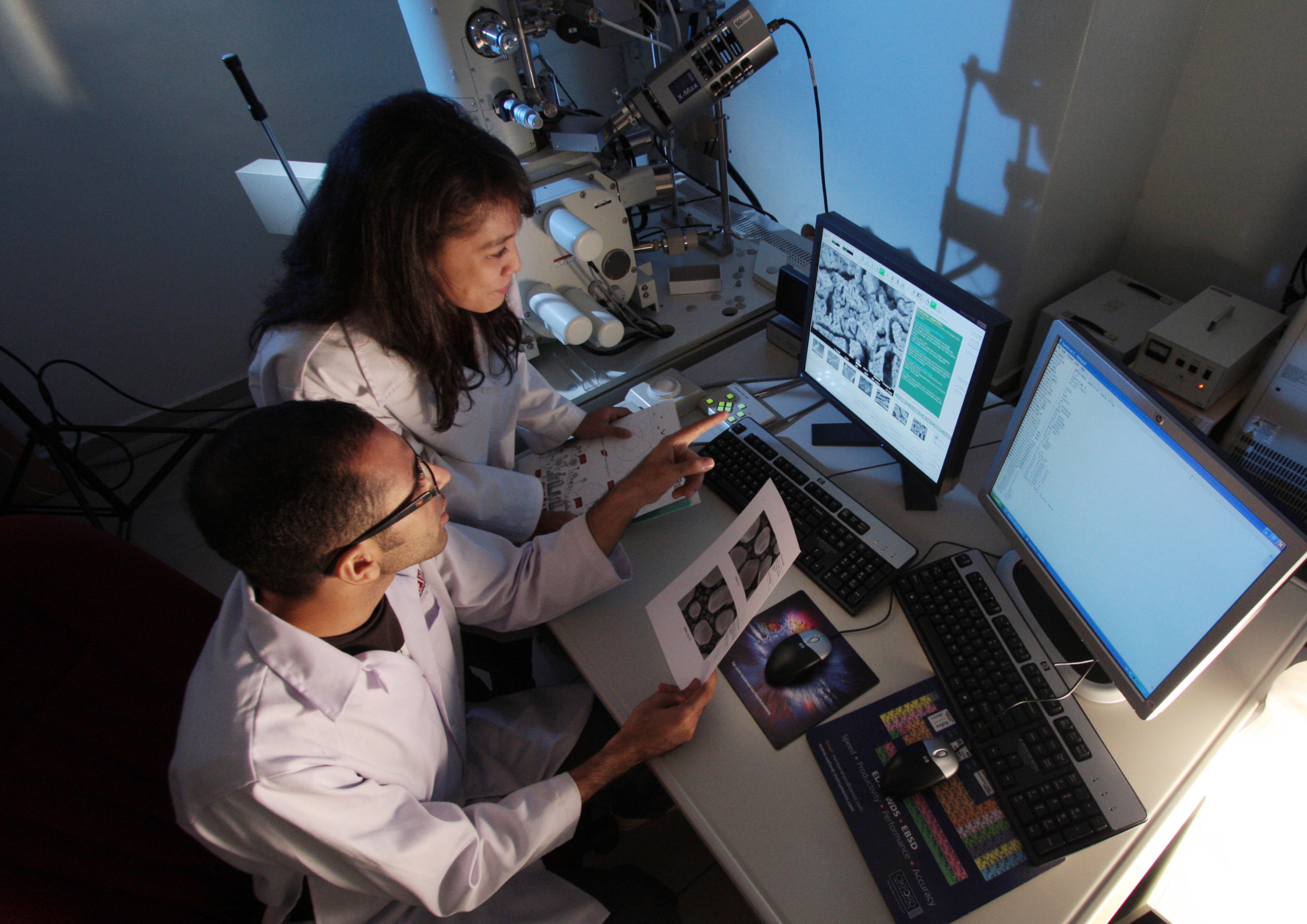
Empire AI Beta gives researchers across participating New York universities access to expanded shared AI computing infrastructure
New York has brought its $40 million Empire AI Beta supercomputer fully online, giving researchers across a consortium of public and private universities access to shared computing infrastructure for AI and other data-intensive research.
Housed at the State University of New York at Buffalo, Beta is the second major computing system developed through Empire AI, an initiative backed by more than $500 million in public and private funding. More than 300 research projects are already waiting to use the new system.
The practical change is a large increase in the computing resources available to participating academics. Compared with Empire AI Alpha, launched in 2024, Beta provides 11 times more AI training capacity, 40 times more inference capacity and eight times more data storage.
The system includes four NVIDIA GB200 NVL72 systems with 288 NVIDIA Blackwell GPUs, 60 NVIDIA Grace CPU Superchip nodes and more than 40 petabytes of storage.
Empire AI describes Beta as the most powerful academic AI research computer in the U.S. Its purpose is to give universities access to computing capacity that, according to the consortium, would be difficult for individual institutions to build and sustain independently.
That shared model is central to the project. Empire AI brings together New York State with public and private research universities, philanthropy and industry, rather than concentrating the infrastructure within a single university.
Research planned for the system spans health care, climate science, advanced manufacturing, education, cybersecurity, public safety and other fields.
Juan J. de Pablo, Executive Vice President for Global Science and Technology at New York University and Executive Dean of the NYU Tandon School of Engineering, said on LinkedIn that access to high-powered computing had previously limited the questions researchers could pursue.
He wrote that more than 300 projects were already queued across areas including medical diagnostics, climate modeling, infrastructure and trustworthy AI systems, adding that the capacity was something “no single institution could build or sustain alone.”
A shared resource across New York higher education
The initiative gives researchers across several of New York’s major higher education institutions access to the same computing infrastructure.
Empire AI currently includes the State University of New York, the City University of New York, Columbia University, Cornell University, New York University, Rensselaer Polytechnic Institute, the University of Rochester, Rochester Institute of Technology, the Icahn School of Medicine at Mount Sinai and the Flatiron Institute at the Simons Foundation.
Empire AI Research Computing Director Kiran Keshav says the additional capacity changes the scale of research that universities can attempt.
“Researchers who were once limited by access to computing power can now ask bigger questions, test more ambitious ideas and move faster from theory to discovery,” he says.
Empire AI Alpha has already supported more than 130 research projects and hundreds of researchers across New York, according to the state. Beta expands that capacity considerably, but it is not the final stage of the project.
Gamma facility scheduled for 2027
Construction is continuing on Empire AI’s permanent Gamma facility at the University at Buffalo, which is expected to be completed by the end of 2027.
The planned facility will incorporate a closed-loop thermal energy system that uses process heat from the computing infrastructure to heat university buildings, with the aim of supporting the campus’s net-zero targets.
The broader Empire AI initiative was announced in New York’s 2024 State of the State and is designed around a shared research infrastructure model for universities and other academic institutions.
New York officials are also positioning the initiative alongside the National Science Foundation’s new State and Regional AI Infrastructure Hubs program, which is intended to expand regional AI computing capacity and shared research infrastructure.
For now, Beta is operational, with more than 300 projects queued to use the system and the larger Gamma facility due to follow by the end of 2027.