University of Glasgow’s new teaching toolkit asks educators when to use AI technology
The open-access resource takes teachers from examining their assumptions about AI through lesson design, ethical checks and practitioner enquiry, with a final test of whether technology adds enough educational value to justify its use
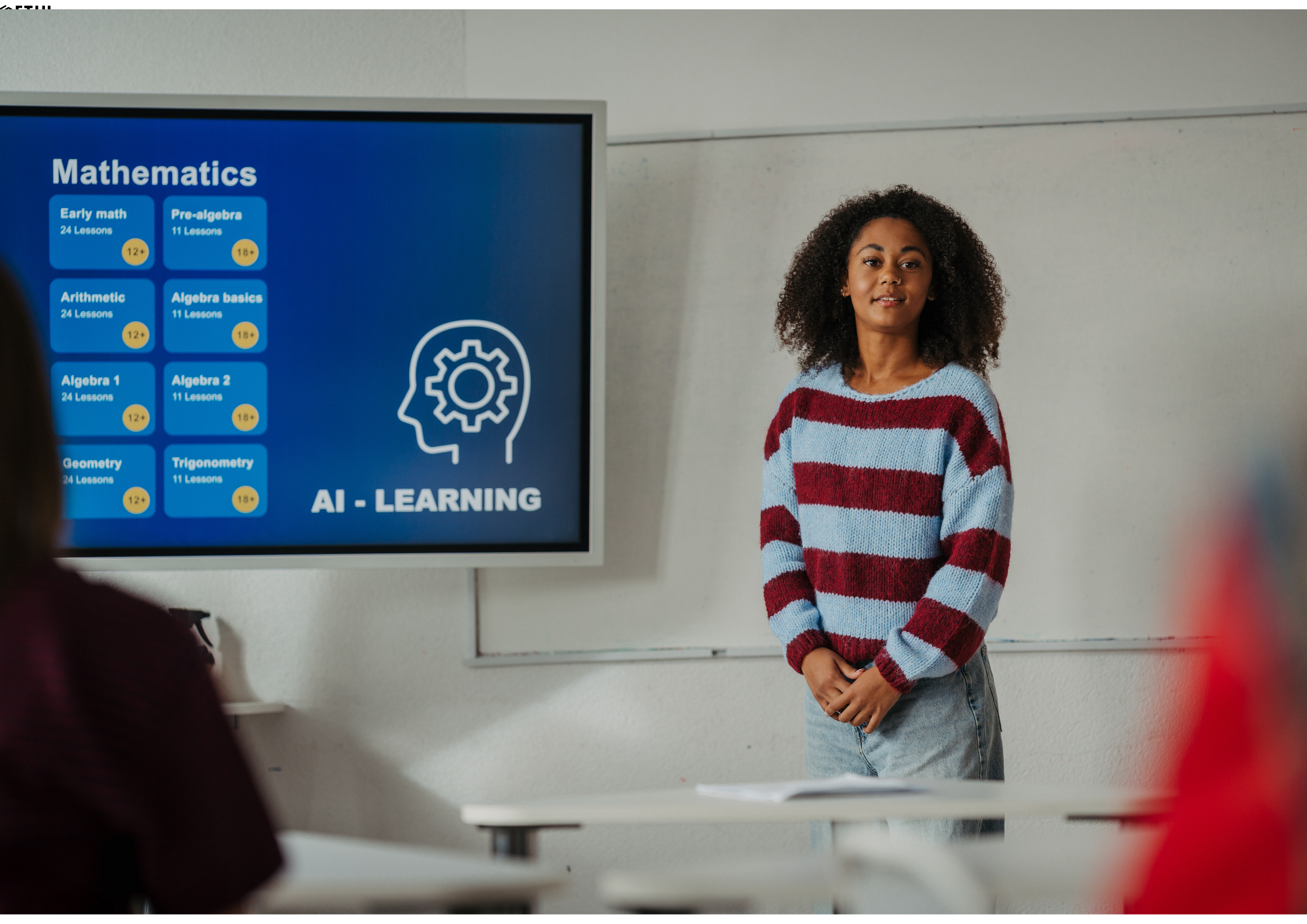
The University of Glasgow has released a free toolkit for teachers evaluating digital and AI use in learning.
The University of Glasgow’s School of Education has released a free toolkit designed to help teachers make more deliberate decisions about digital and AI technology, including whether it belongs in a lesson at all.
The 92-page Toolkit for Reflecting on the Use of Digital and Artificial Intelligence (AI) Technologies in Learning and Teaching was developed by Dr Mark Peart, Dr Gabriella Rodolico and Leon Robinson, with input from educators, teacher educators, students, education leaders, policymakers and partner organizations.
Rather than offering a list of recommended AI tools or prescribing how teachers should use them, the resource takes educators through a structured process of examining their own assumptions, analyzing teaching scenarios, designing technology-supported lessons and eventually carrying out practitioner enquiry into their own practice.
That includes a deliberately direct “should I?” checkpoint. Teachers are asked what a technology replaces, whether students still need to practice that skill independently, what using the technology costs in time, attention, data or environmental terms, who may benefit or be excluded, and what would be lost or gained if the technology were removed altogether.
Peart, Lecturer in Teacher Education and Programme Lead for the MSc AI in Education at the University of Glasgow, announced the release on LinkedIn.
He wrote that the toolkit was intended to support “critical, evidence-informed reflection” and encourage educators to examine how digital and AI technologies are selected, implemented and evaluated in their own settings.
The resource, he added, promotes “professional dialogue and thoughtful decision-making rather than advocating for particular technologies.”
The toolkit starts with teachers’ own assumptions
Before getting into AI lesson planning, the first section asks educators to examine how they already think about technology.
Teachers consider where they sit on a spectrum from early adopters to those who prefer established approaches, before responding to common claims around education technology.
Those include whether digital tools automatically improve learning, whether students are inherently “digital natives,” whether schools risk falling behind if they do not adopt new technologies, and whether teacher resistance is primarily about unwillingness to learn.
Generative AI receives its own exercise, reflecting a wider range of reactions including enthusiasm, uncertainty, concerns about safeguarding and bias, reliance on AI for planning and reluctance to use it at all.
The purpose is not to label a particular position as correct. The authors instead ask educators to make their starting assumptions visible before analyzing their practice. From there, the toolkit moves into a series of established education technology frameworks.
Teachers can examine classroom scenarios using the Technology Acceptance Model and Unified Theory of Acceptance and Use of Technology, SAMR, TPACK and Diana Laurillard’s Conversational Framework.
The case studies themselves cover teaching situations including virtual reality in primary science, iPads for exploring ecosystems, AI-supported creative writing, a mathematics app, AI voice assistants in science and literacy, and Bee-Bots for early programming.
The authors state that, unless otherwise indicated, these classroom scenarios were generated using AI and then edited by the research team. They are not presented as evidence from real classrooms.
AI use is tested against pedagogy, equity and student learning
The toolkit becomes more demanding once educators move beyond whether a technology is easy to use or engaging.
A critical and ethical section asks teachers to consider how technology affects knowledge, creativity, privacy, inclusion, relationships, student wellbeing, sustainability and long-term skill development.
Among the issues raised are whether AI encourages students to offload thinking, whether a tool is doing intellectual work students still need to learn for themselves, whose knowledge and perspectives are represented in technology, and whether generated content makes it harder to establish what students actually understand.
Teachers are also asked to consider student data, algorithmic bias, hallucinations, access to devices and subscriptions, the impact on human interaction and whether repeated technology use could increase student dependence.
The planning section then turns many of those questions into decisions for a real lesson.
TPACK is used to start with subject content and pedagogy before deciding what technology, if any, might add. The Conversational Framework focuses on how explanations, feedback, practice and reflection move between teachers, students and the learning environment.
ABC Learning Design is also included, with activities mapped across acquisition, inquiry, practice, production, discussion and collaboration.
Technology enters after the type of learning has been identified, rather than being treated as the starting point for lesson design.
For generative AI, the toolkit repeatedly asks teachers to consider whether the system is supporting students’ thinking or taking over too much of it.
The authors also make their own use of AI transparent. Generative AI tools were used selectively during development for drafting, editing and resource design, but the document states that all generated material was reviewed, evaluated, revised and approved by its authors, who retain responsibility for the final content.
Reflection moves into practitioner enquiry
The final section pushes the resource beyond a one-off AI training exercise.
Teachers are guided through developing a professional enquiry around their own practice, beginning with a specific classroom problem and moving through existing evidence, data collection, analysis, conclusions and sharing findings with colleagues.
The approach combines three sources of evidence: what is happening in the teacher’s own classroom, published education research and professional experience.
There is also detailed consideration of research ethics, including informed consent, student and colleague data, confidentiality, power relationships and whether participation in a classroom-based enquiry is genuinely voluntary.
The resource closes by encouraging educators to revisit their original assumptions and consider whether their thinking about digital and AI technology has changed.
The toolkit is intended as a living resource rather than a fixed framework, with the University of Glasgow team inviting feedback from educators using it in different settings.
It has been released under a Creative Commons Attribution-NonCommercial 4.0 International license, allowing it to be shared and adapted for non-commercial purposes with appropriate attribution.