Cisco pushes AI beyond the data center with expanded NVIDIA partnership
Updated Secure AI Factory framework targets edge deployment and real-time AI use, with a focus on scaling production and embedding security.
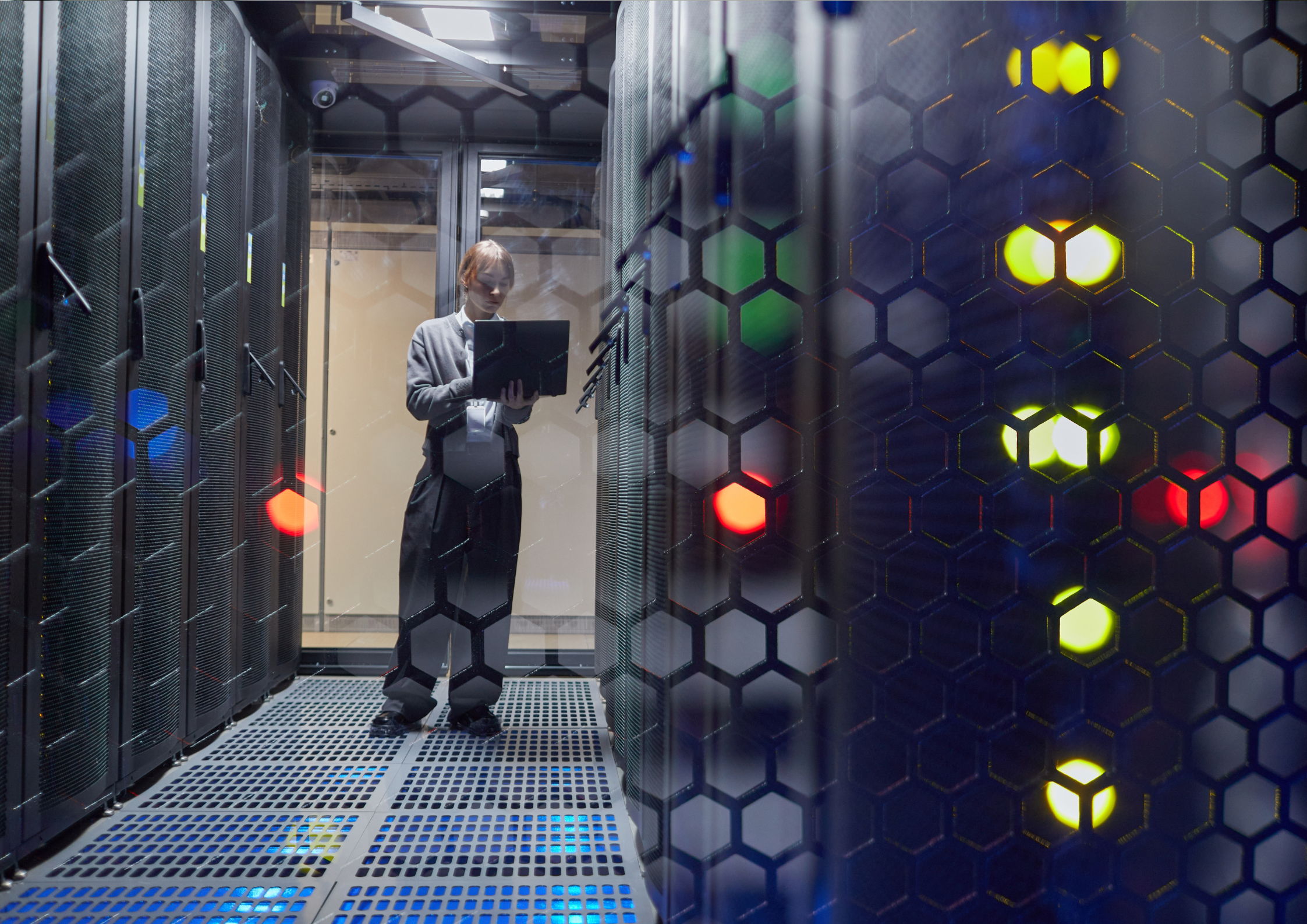
Cisco and NVIDIA have expanded their Secure AI Factory architecture to support AI deployment beyond centralized data centers, enabling organizations to run AI workloads closer to where data is generated and decisions are made.
The update, announced at GTC and shared via LinkedIn by Cisco Chair and CEO Chuck Robbins, introduces new infrastructure capabilities spanning edge environments, service provider networks, and enterprise systems. The move reflects a shift toward operationalizing AI at scale, particularly in use cases where latency and real-time processing are critical.
Robbins said in a LinkedIn post: “At GTC, we announced a major expansion of our Secure AI Factory with NVIDIA — helping customer scale AI from the data center to the edge, simply and securely.”
He added: “We’re excited about the possibility to help enterprises, neoclouds, sovereign clouds, and service providers move AI from pilot to production without stitching together disconnected systems, so they can deploy faster with security embedded from the start.”
Extending AI infrastructure to the edge
The expanded architecture allows organizations to run AI workloads across a distributed environment, including locations such as hospitals, factories, and transport systems where data is generated in real time.
Cisco is introducing support for NVIDIA RTX PRO 4500 Blackwell Server Edition GPUs across its UCS and Unified Edge portfolios, enabling AI inference at the edge without requiring full data center infrastructure. The company is also launching a reference design for service providers, combining Cisco networking platforms with NVIDIA GPUs to support managed AI services.
This reflects a broader shift in AI deployment models, where inference is increasingly performed closer to the source of data rather than in centralized environments.
Performance and deployment speed under pressure
Cisco has also introduced updates to its networking infrastructure to support large-scale AI workloads, including new high-speed switches and integration within its Nexus platform.
The company says the updated architecture simplifies deployment by reducing the complexity of multi-vendor environments, allowing organizations to move from pilot projects to production systems more quickly.
NVIDIA Founder and CEO Jensen Huang says: “AI factories are transforming every industry, and security must be built into every layer—from silicon to software—to protect data, applications, and infrastructure.”
He adds: “Together, NVIDIA and Cisco are building the secure foundation for AI infrastructure—core to edge—so companies can scale intelligence with confidence.”
Security built into AI systems and agents
The expansion also introduces additional security features, including extended firewall coverage and new controls for AI agents operating across distributed systems.
Cisco is integrating its AI Defense capabilities with NVIDIA platforms, including support for agent-based systems and development environments. This includes monitoring and validating agent behavior, as organizations begin to deploy more autonomous AI systems across workflows.
The updates are designed to address emerging risks linked to distributed AI systems, particularly as models and agents operate across multiple environments and interact with each other.
The latest release signals a continued focus on making AI infrastructure usable in operational settings, where performance, cost, and security requirements need to be balanced across increasingly complex systems.
ETIH Innovation Awards 2026
The ETIH Innovation Awards 2026 are now open and recognize education technology organizations delivering measurable impact across K–12, higher education, and lifelong learning. The awards are open to entries from the UK, the Americas, and internationally, with submissions assessed on evidence of outcomes and real-world application.