Harvard makes AI training mandatory for all freshmen in a first for its expository writing program
More than 90 percent of Harvard College students take an expository writing course in their first year, making this semester's mandatory three-part AI module one of the most significant curriculum moves on generative AI at a major US university to date.
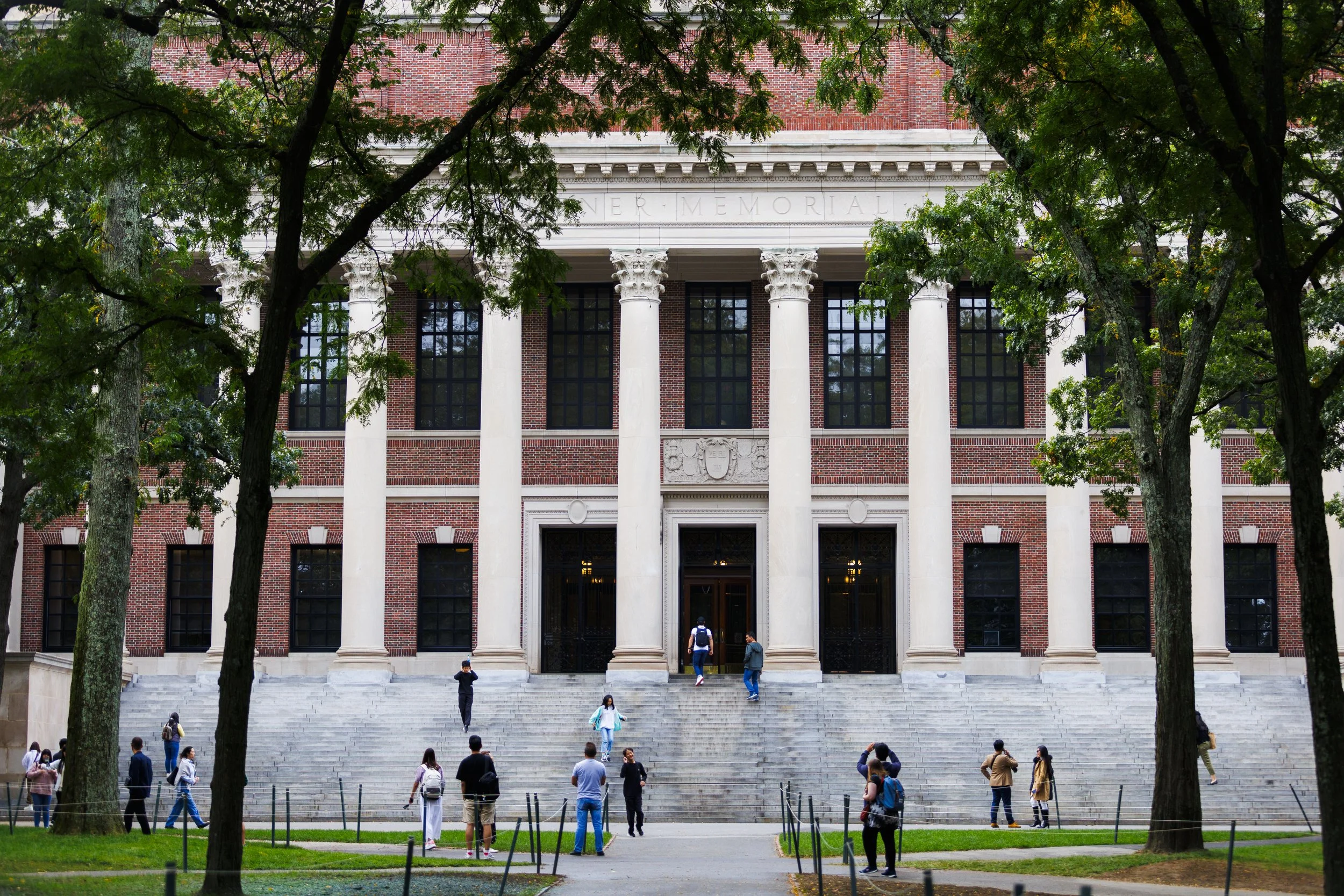
Harvard College has made a three-part AI training module mandatory for all freshmen enrolled in its expository writing program this semester. Photo Credit: Stephanie Mitchell/Harvard University
Harvard College has made a three-part AI training module mandatory for all freshmen enrolled in its expository writing program this semester, marking the first time the training has been required across the full program.
The move affects the majority of Harvard's incoming class, with more than 90 percent of Harvard College students completing an expository writing course in their first year to fulfill the College's writing requirement.
The module was developed by the Harvard College Writing Program and covers how large language models work, their effects on education, and broader questions including environmental impact, data privacy, copyright, and disinformation. It was piloted in select courses from fall 2024 before being rolled out across all sections this spring. The training was also required this semester in Expos 40, a public speaking elective taken primarily by juniors and seniors.
A shared baseline, not a position
Reporting by The Harvard Crimson, the university's independent student newspaper, reveals that the module was designed to give every student a common foundation in generative AI, and to reduce pressure on faculty to cover the basics themselves. Associate Dean of Undergraduate Education Gillian B. Pierce '88 told The Crimson: "Faculty may have some sense that, 'Oh, I need to teach students what is an LLM.' You can kind of assume now that students will come knowing that."
Writing Center director Jane Rosenzweig and preceptor Tad Davies, who led the module's design, told The Crimson the goal was to equip students to engage with ongoing debates rather than to steer them toward any particular view of the technology. Rosenzweig said: "There's no agenda for what students should take away from this, except what we all agree on, which is that when you have information, you can make better judgments about what you want to do with the technology."
The first section of the module walks students through the mechanics of large language models. The second examines AI's effects on education, drawing on published Harvard faculty research including work on custom chatbots in physics courses and the AI course assistant used in Computer Science 50. The third section covers environmental impact, data privacy, copyright, and disinformation, and includes a close reading of the terms of service for popular AI chatbots.
A work in progress, by design
Rosenzweig told The Crimson that the module is intentionally iterative, with the team re-testing lessons every semester because outputs from the image generators and chatbots used as teaching examples can change as underlying models are updated. "This is a work in progress," she said. "As society's conversation about AI changes, expect the module to keep up with that as much as possible."
Davies said the module was intended as a foundation rather than a complete treatment, with discipline-specific applications expected to follow in later coursework: "There's going to be disciplinary differences in the way that the models can engage in certain kinds of materials very effectively and less effectively in others. So students are going to need to engage their classes and their professors in this ongoing conversation."
Pierce framed the Expos module as a first step toward a broader, coordinated university response: "This is a collective project for the University. Our motto is Veritas. So how do we also educate students about what it means to be human, and what are our responsibilities there? Those are big questions, and it's going to have to involve everyone."
Rosenzweig confirmed that the module has been shared with Dean of the College David J. Deming, Dean of Undergraduate Education Amanda Claybaugh, and the FAS Faculty Advisory Committee on Artificial Intelligence. The training arrives as Harvard administrators have made AI curriculum a stated priority for the academic year, with Claybaugh hosting a Generative AI summit in January and Deming publicly urging students to learn to use AI while warning against letting it displace core learning.