BETT 2026: Ofsted sets out sharper SEN expectations as inclusion takes center stage
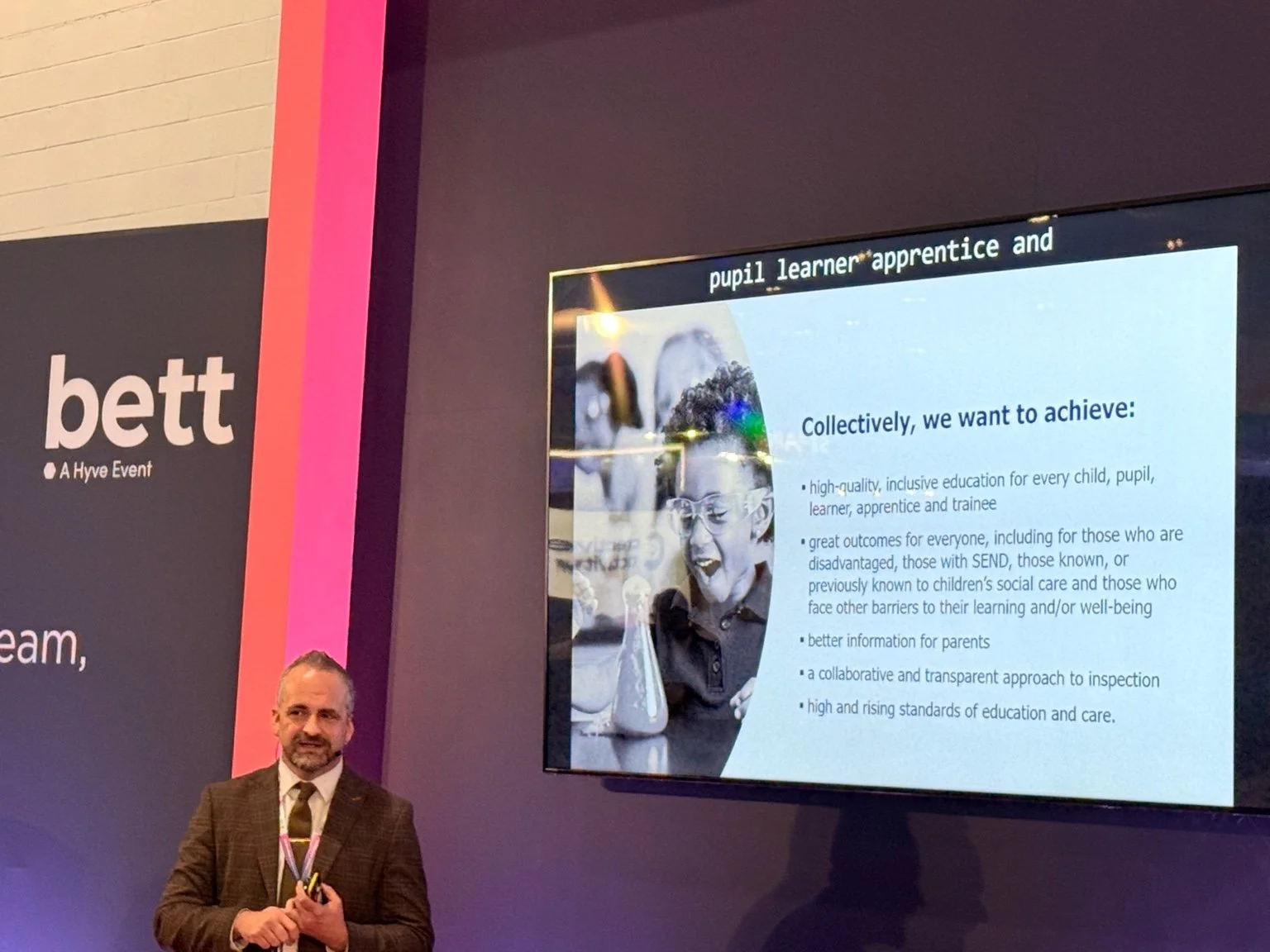
Special educational needs (SEN) moved firmly into focus at BETT 2026 as Ofsted used a packed session to clarify how inclusion is being evaluated under its revised inspection approach.
Led by Adam Broston, the session took place in the SEND Theatre and quickly reached capacity, with many attendees standing throughout. While the SEND Theatre was an appropriate and well-judged location given the subject matter, the level of interest underlined just how central SEN has become across the sector, and suggested the space could comfortably support an even larger audience in future editions of BETT.
SEN as a central inspection lens
Broston was clear that SEN is no longer treated as a standalone strand within inspection, but as a core consideration running through leadership, curriculum, and outcomes. “SEND is not something we look at in isolation,” Broston explained. “It runs through how we think about quality, leadership, and the experience of children in a setting.”
He told attendees that inspectors are increasingly focused on how well schools understand the needs of their students, particularly those requiring additional support, and how effectively that understanding translates into classroom practice. “What we are interested in is how schools identify barriers to learning,” he said, “and what they are actually doing to reduce those barriers.”
A key theme of the session was the shift away from paperwork-driven compliance towards day-to-day practice. Broston acknowledged that schools often feel pressure to demonstrate SEN provision through documentation, but stressed that inspection is moving toward impact rather than volume.
“We are not asking schools to create additional evidence for inspection,” he said. “We want to see what you are doing day to day, because that tells us far more than a file ever could.” He added that inspectors are being trained to look for consistency rather than isolated examples. “One strong intervention is not enough,” Broston said. “We are looking for whether support is embedded and sustained.”
Inclusion beyond labels
Broston repeatedly emphasized that Ofsted’s approach to inclusion extends beyond formal SEN identification. Inspectors, he said, are paying closer attention to students who face barriers to learning but may not sit neatly within established categories. “Inclusion is wider than SEN,” he said. “We are also thinking about disadvantage, attendance, wellbeing, and those children who may not have a label but still need support.”
He noted that inspectors are expected to consider how schools respond to overlapping needs and how leaders ensure no group of students is overlooked. “What matters is whether leaders know their children,” Broston said. “And whether they can explain how their approach works for those who need it most.”
Accountability with context
Broston also addressed concerns around accountability, particularly how SEN provision is judged across different local contexts. He confirmed that inspectors are expected to engage with schools’ circumstances, including staffing pressures and local challenges. “Context absolutely matters,” he said. “We want to understand the environment you are working in.”
At the same time, he was clear that context does not remove responsibility. “High expectations apply to every child,” Broston stated. “Inclusion does not mean lowering ambition.”
As Broston concluded, “If we get it right for children with SEN, we are far more likely to get it right for everyone.”
ETIH Innovation Awards 2026

The ETIH Innovation Awards 2026 are now open and recognize education technology organizations delivering measurable impact across K–12, higher education, and lifelong learning. The awards are open to entries from the UK, the Americas, and internationally, with submissions assessed on evidence of outcomes and real-world application.