OpenAI Government Affairs Director says Texas data center marks shift to physical AI infrastructure
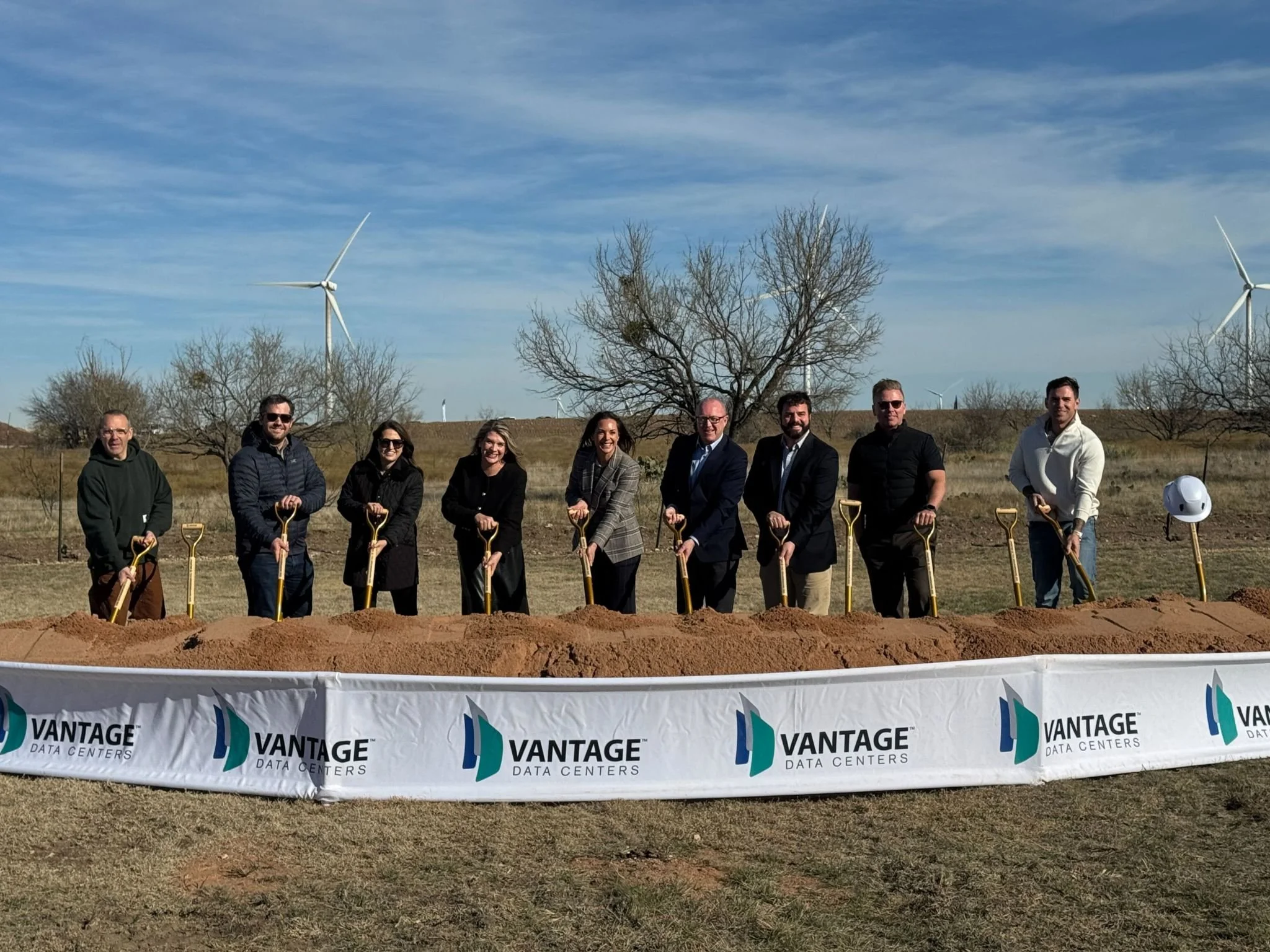
Photo credit: Erin Hodge
OpenAI has broken ground on a new Stargate data center site in Shackelford County, Texas, with the company framing the milestone as evidence that artificial intelligence is entering a more tangible, infrastructure-led phase.
In a post shared on LinkedIn, Erin Hodges, Strategic State Government Affairs Director at OpenAI, reflects on the significance of the project near Abilene, positioning it as part of a broader effort to build the physical backbone of the AI era in the United States. The comments signal how large-scale AI development is increasingly tied to energy, compute, workforce skills, and regional investment, with implications for EdTech, AI readiness, and long-term skills planning.
From models to “steel in the ground”
Hodges describes the groundbreaking as a shift in how AI progress is understood. “For a long time, ‘AI’ has sounded abstract: models, software, demos,” she writes. “But AI’s next chapter is deeply tangible, and it depends on real-world infrastructure.”
She adds that the project is intended to be more than a one-off build. “We’re approaching the Stargate site in Shackelford County as a long-term partnership with the people who call this place home, not a one-time project,” Hodges says, pointing to ongoing engagement with local leaders and community stakeholders.
According to Hodges, the site represents not only compute capacity but also employment across construction, operations, and local supply chains. During initial construction, the project is expected to employ more than 5,000 workers.
Local impact and national ambition
Hodges situates the Texas site within the wider Stargate initiative, which she describes as “a $500 billion nationwide effort to expand U.S. AI infrastructure at speed and scale.”
She outlines several intended outcomes, including visible job creation, local investment, expanded access to advanced computing, and momentum toward U.S. AI leadership. “This groundbreaking matters because AI can only deliver broad benefits if we build the compute to power it,” Hodges writes.
She also stresses how the project is being delivered. “We’re prioritizing safety, security, and responsible development; planning for reliability and resilience; and engaging early with local leaders, educators, and community stakeholders so the benefits are shared and lasting.”
Part of a wider Stargate buildout
The Shackelford County site forms part of OpenAI’s broader Stargate infrastructure platform, developed in partnership with Oracle and Vantage Data Centers. Stargate includes multiple large-scale campuses across the U.S., including projects in Texas, Wisconsin, New Mexico, and Ohio, designed to deliver multi-gigawatt AI compute capacity.
OpenAI and its partners have previously said the expansion is intended to support next-generation AI research, training, and real-world deployment, while anchoring infrastructure investment within U.S. communities.
For education and workforce stakeholders, the comments underline how AI capability is increasingly shaped by physical infrastructure decisions, not just software development. As Hodges puts it, the Texas site represents “what it looks like to turn a big national ambition into steel-in-the-ground progress.”