Community colleges get free AI curriculum and faculty training as Microsoft expands NAAIC partnership
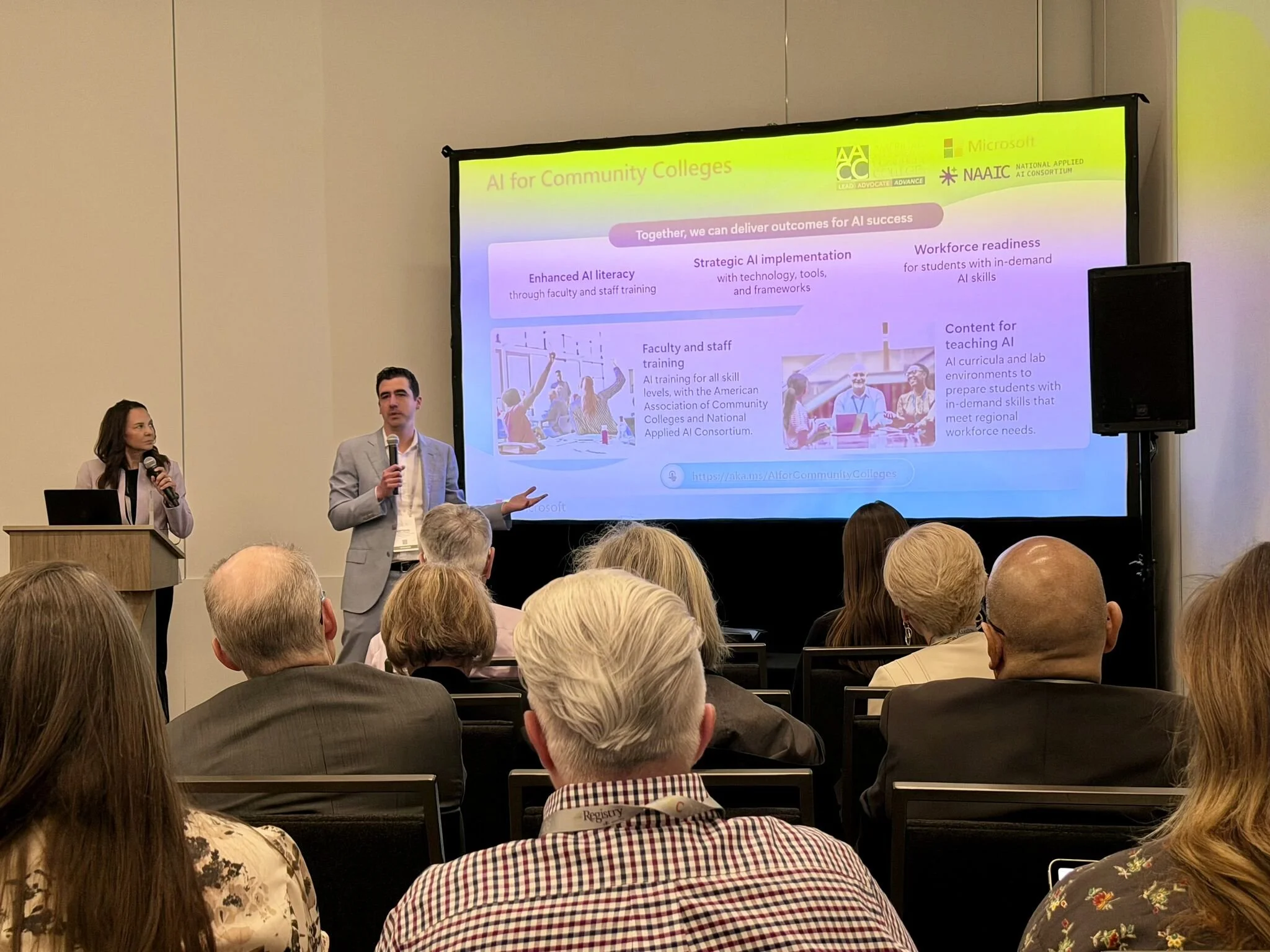
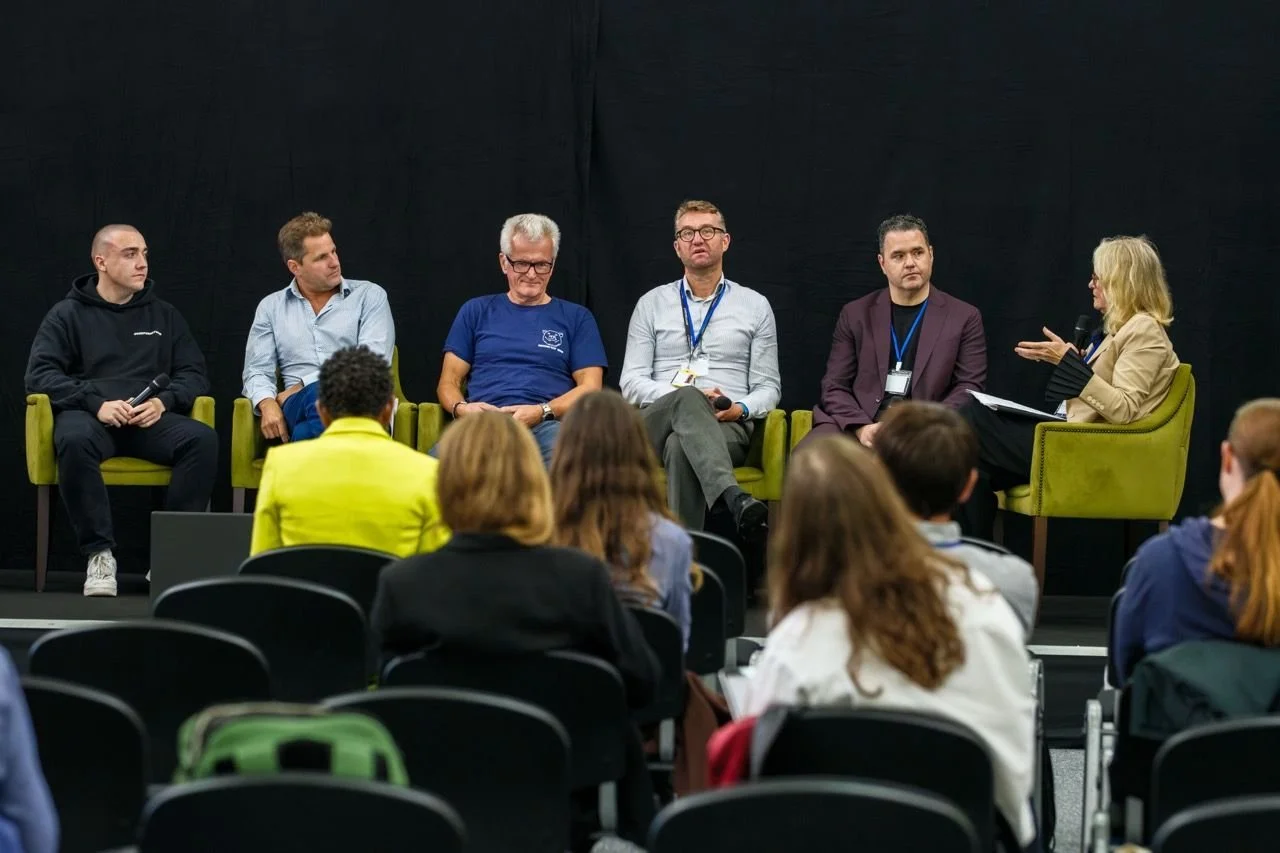
Antonio Delgado Fornaguera presents the Microsoft and NAAIC AI for Community Colleges partnership at the American Association of Community Colleges Annual Conference in Seattle. The initiative offers free AI curriculum, faculty training, and GitHub and LinkedIn tools to community colleges nationwide. Photo credit: Antonio Delgado Fornaguera
Microsoft and Miami Dade College are driving a national push to embed AI skills into community college education through the National Applied AI Consortium (NAAIC), a partnership that gives faculty, staff, and students free access to AI training, curriculum tools, and industry-standard software.
Antonio Delgado Fornaguera, Vice President of Innovation and Tech Partnerships at Miami Dade College and Founder of NAAIC, took to LinkedIn to outline the partnership's progress. He wrote: "Miami Dade College is leading the way in AI transformation for student success, with Microsoft as a strategic partner in this journey. A core element of our collaboration is sharing what we've learned with community colleges nationwide through the National Applied AI Consortium (NAAIC)."
Delgado Fornaguera wrote that the team presented at the American Association of Community Colleges Annual Conference in Seattle. He wrote: "It was a pleasure to present alongside Lorna Ferrell at the American Association of Community Colleges Annual Conference in Seattle, where we shared best practices from MDC's Microsoft 365 Copilot implementation and our broader AI transformation journey."
He added: "Grounded in practical, real-world examples, we demonstrated what's possible with Copilot, from employee augmentation to institution-wide transformation, and highlighted the return on investment community colleges can achieve."
On the support received from Microsoft, he wrote: "Thank you to Justin Spelhaug and Gregory Bianchi for the continued support from Microsoft Elevate. It was great to connect in person and discuss how we move from vision to reality at scale."
He continued: "Transformation starts with preparation. Faculty and staff can join NAAIC's Copilot training at no cost, thanks to Microsoft Elevate."
What Microsoft is providing through NAAIC
As a founding partner and sponsor of NAAIC, Microsoft's commitment spans faculty training, industry-aligned AI curriculum, LinkedIn integration, GitHub access, and national AI representation for community colleges.
On the training side, Microsoft is running no-cost AI bootcamps designed as train-the-trainer sessions, preparing instructors for the AI-900: Microsoft Azure AI Fundamentals certification. Sessions cover core AI concepts within the Azure ecosystem, best practices for designing AI lab exercises, and strategies for integrating Microsoft Learn resources into course syllabi. Generative AI training is also available for faculty and staff, covering how AI works, ethical use, effective prompting, and practical applications using Microsoft Copilot. Upcoming sessions include an Azure AI-900 training on April 30, 2026, and Generative AI and Copilot training on May 15, 2026.
Through the Microsoft Learn for Educators program, faculty gain free access to prebuilt curriculum modules, virtual lab environments, Microsoft Official Courseware, and assessment materials mapped to industry-recognized credentials. The program allows community colleges to build AI certificate programs or embed AI modules into existing STEM and career and technical education courses.
GitHub and LinkedIn tools for students and educators
NAAIC is also working with GitHub to give educators free access to GitHub Teams accounts, GitHub Copilot Pro, and GitHub Classroom, which automates assignment distribution, student repositories, and autograding. Students receive access to the GitHub Student Developer Pack, which includes GitHub Copilot, GitHub Codespaces, Visual Studio Code, and guided learning experiences covering AI-assisted coding and open-source fundamentals.
On the labor market side, NAAIC is collaborating with LinkedIn to provide community colleges with AI labor market insights drawn from LinkedIn's Economic Graph, which covers more than one billion members, 41,000 skills, 70 million companies, and 141,000 schools. LinkedIn Learning's AI Skill Pathways are available to help students and faculty upskill based on their role, alongside resources for professional branding, networking, and AI-powered job searching.
For EdTech developers and institutions looking to build AI-ready programs at scale, the NAAIC model represents one of the most structured and resourced approaches currently operating in US community college education.