King’s College London gains access to Google Quantum AI’s Willow processor
The National Quantum Computing Centre and Google Quantum AI have selected a King’s-led research project to use Willow for work connecting quantum computing and computational neuroscience.
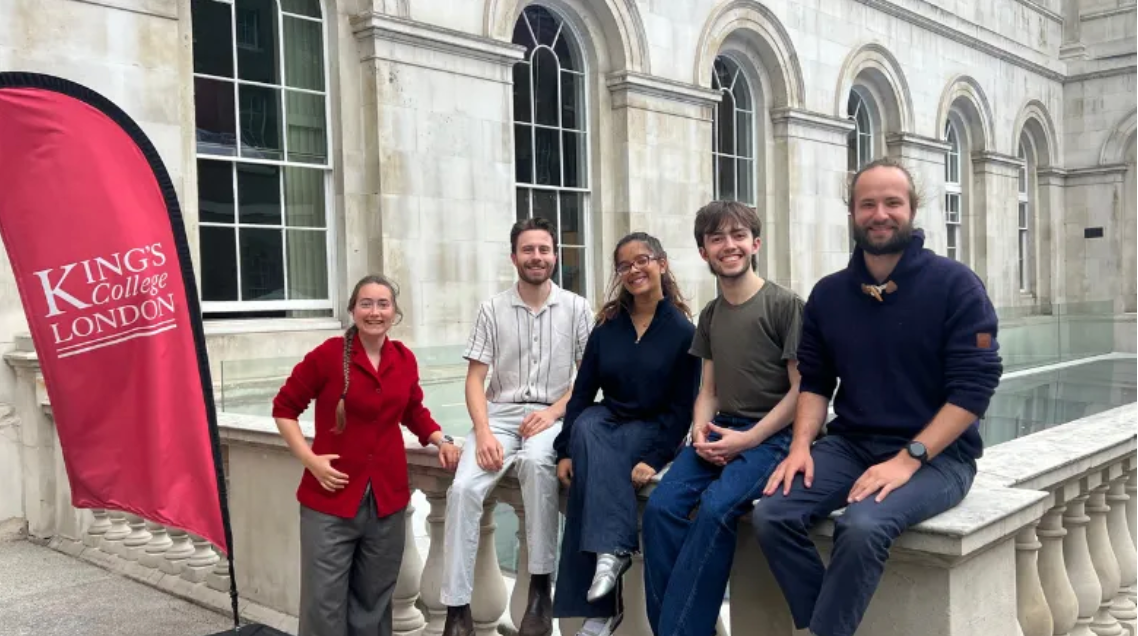
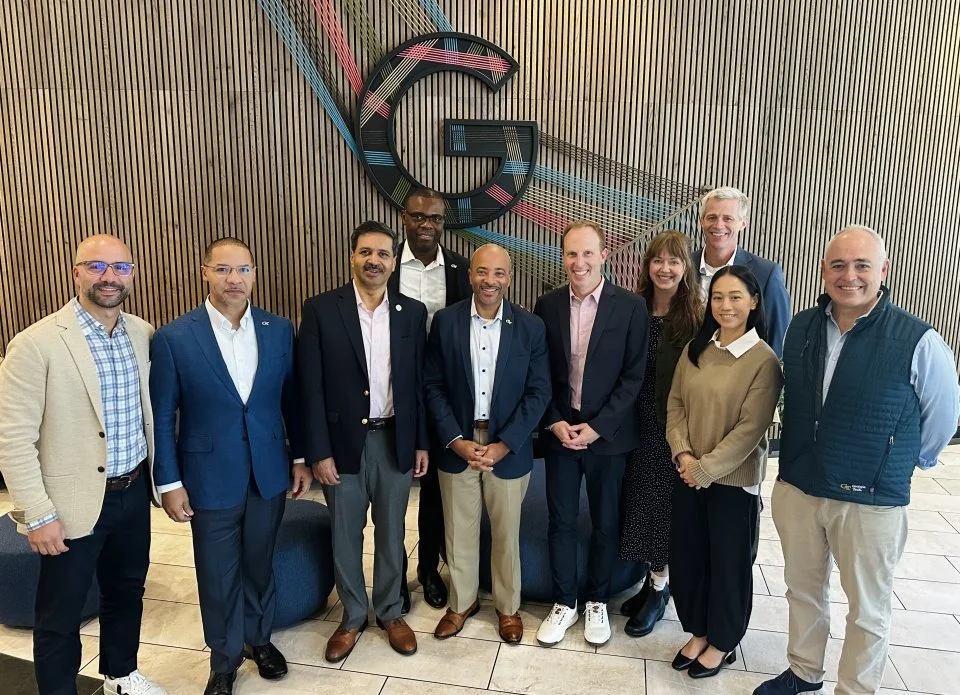
Left to right: Dr Eleanor Crane (King’s), Dr Drew Backhouse (King’s), Ms Ananya Kulkarni (King’s), Mr Luc Brink-Morrison (King’s), and Dr Alexander Schuckert (ENS Paris). Image credit: King’s College London
King’s College London has been awarded access to Google Quantum AI’s Willow processor through a joint initiative with the National Quantum Computing Centre, giving a UK-led university research team access to quantum hardware for work on neural systems and quantum dynamics.
The project is led by Dr Eleanor Crane, Quantum Computing Lecturer at King’s College London, and Dr Alexander Schuckert from ENS Paris. The team will work with Dr Chris Timmermann, Co-Director of the UCL Centre for Consciousness Research, to study quantum analogues of neurons using the Willow processor.
The National Quantum Computing Centre (NQCC) and Google Quantum AI announced the award on 28 May 2026. The call for proposals was launched in December 2025 to support UK researchers and research consortia working on applications that could accelerate progress toward useful quantum advantage.
Useful quantum advantage is the point at which quantum computers can solve certain problems of practical relevance faster than today’s most powerful classical systems. According to the NQCC press release, this is the first time Google has partnered with a British government institution to provide access to the Willow processor.
The King’s College London team will now work with experts from Google Quantum AI to design and run experiments on Willow, while the NQCC will provide technical support throughout the project.
King’s project selected for Willow access
The selected project will investigate quantum analogues of neurons and explore how quantum computing techniques could support the study of complex quantum dynamics inspired by neural systems.
Crane and Schuckert also co-lead a finalist team in the Google XPRIZE Quantum Applications challenge. King’s says the team’s research will inform how quantum computers can be used to study interacting quantum systems.
The work links quantum computing with computational neuroscience, but the longer-term scientific questions extend beyond the brain model itself. King’s says the research could help build understanding that may support future work on materials, energy systems, solar cells, and drug discovery.
Kate Alessi, Vice President at Google and Managing Director of Google UK & Ireland, wrote on LinkedIn that the project will use Willow "to simulate a quantum model of a network of neurons and test how it compares to classical models."
Alessi added that the work "could give scientists an unprecedented window into how the brain works at its most fundamental level."
NQCC and Google Quantum AI back UK research
The NQCC is the UK’s national lab for quantum computing and is focused on accelerating quantum computing development by addressing the challenges of scaling the technology. Its programme is delivered jointly by UK Research and Innovation’s research councils, the Engineering and Physical Sciences Research Council and the Science and Technology Facilities Council.
The centre is based at the Science and Technology Facilities Council’s Rutherford Appleton Laboratory site at the Harwell Campus in Oxfordshire.
Dr Michael Cuthbert, Director at the NQCC, comments: "This initiative reflects the UK’s commitment to fostering world-class quantum research and enabling researchers to access advanced quantum computing capabilities. We are excited to support King’s College London in exploring innovative applications that could help shape the future of quantum computing."
Charina Chou, Chief Operating Officer of Google Quantum AI, adds: "We see tremendous potential in quantum computing as a new tool to help scientists make advances across a variety of fields where classical computing hits fundamental limits. King’s has made a compelling research proposal, and with the NQCC’s invaluable support, we’re eager to offer our quantum computing resources and expertise to accelerate this work."
Quantum research and university collaboration
Google Quantum AI describes its mission as building large-scale, error-corrected quantum computing for problems that classical computers cannot solve. Its work includes superconducting transmon qubits, applications, algorithms, and quantum systems research.
King’s says Willow is among the limited quantum hardware globally capable of supporting the complex simulations required for the project.
Crane comments: "We are over the moon at working once again with our collaborators at Google, this time on pushing the limits of where quantum computers could exceed the capabilities of classical computers. This is some of the only hardware worldwide currently which would provide such complex simulations, so we are grateful to the NQCC and Google for this opportunity."
The project will now move into experimental work with Google Quantum AI and NQCC support. The NQCC says it will provide technical expertise throughout the collaboration to help the King’s team develop the scientific work using Willow.