National Research Organisations Group launches to connect UK research capability
The new alliance brings together around 40 publicly funded science and research centers, including The Alan Turing Institute, the Met Office and UK Health Security Agency.
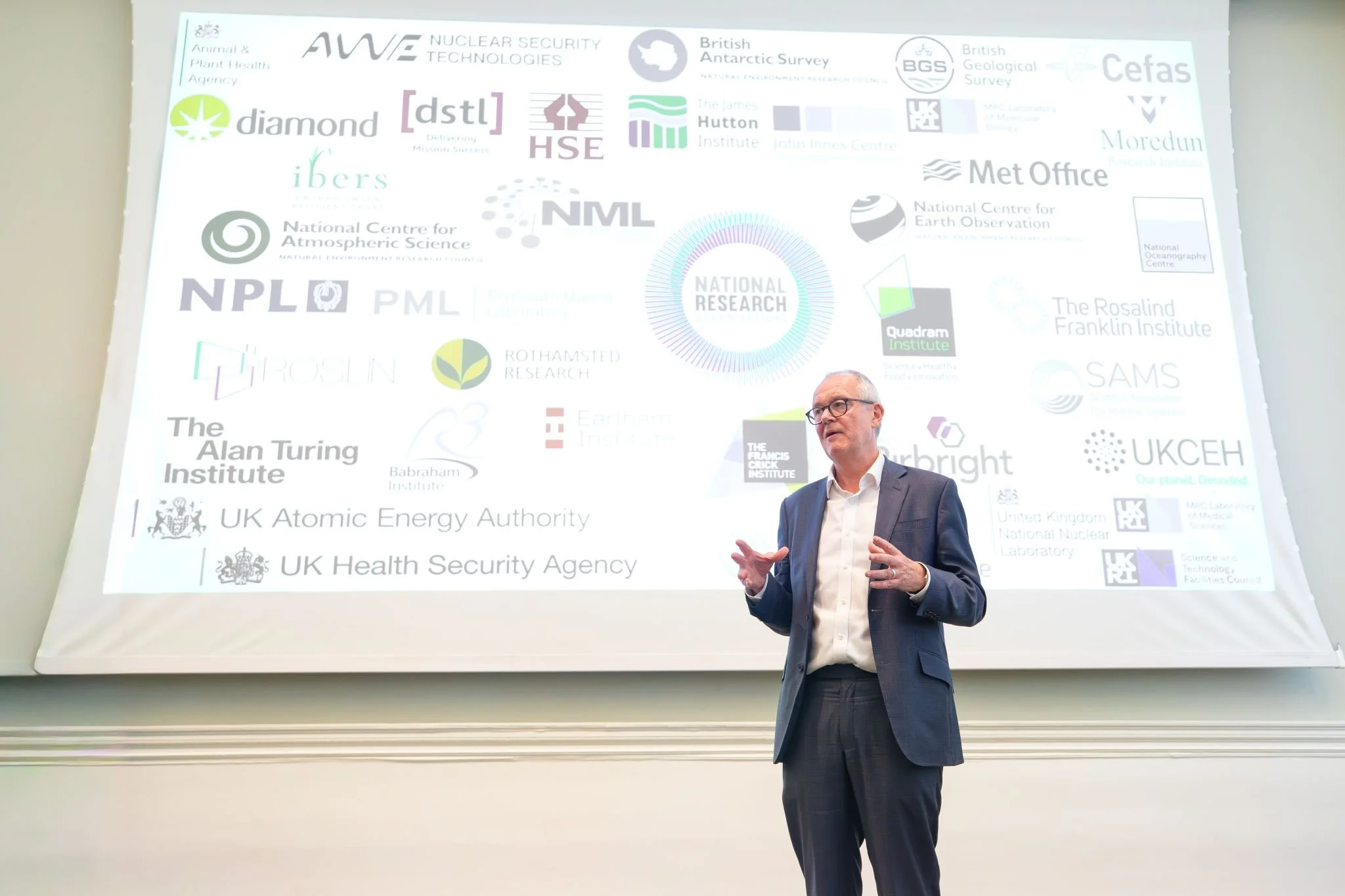
Lord Patrick Vallance at the official launch of the National Research Organisations Group.
The National Research Organisations Group has officially launched as an alliance for UK science and research centers, bringing together publicly funded organizations that work across research, infrastructure, data, policy and national capability.
The NRO Group said the launch brings together almost 40 publicly funded national research organizations, representing more than 41,000 experts across the UK. The Alan Turing Institute also confirmed its involvement, describing the group as “a collective voice for over 40 of the UK’s science and research organisations.”
The group is designed to make UK research capability more visible and easier to access for government, UK Research and Innovation, academia, industry and funding partners. Its members include national research organizations working across areas including AI, health, climate, environment, nuclear, measurement, oceans, agriculture, biological science and national security.
Science Minister Lord Patrick Vallance attended the launch, with the NRO Group linking his remarks to collaboration across the UK research ecosystem. The group said Vallance highlighted the role national research organizations play in generating knowledge, infrastructure and expertise that support economic growth, improve lives and address major national challenges.
The NRO Group has set a 2030 ambition to become a strategic partner for government, UKRI, academia and industry, with a focus on research impact, national priorities, skills development, public trust and the global visibility of UK science.
A single access point for national research
The NRO Group says it will act as “a single point of access” to UK scientific expertise and infrastructure, reducing complexity for organizations trying to work with national research centers.
Its participant organizations include The Alan Turing Institute, the British Antarctic Survey, British Geological Survey, the Met Office, National Physical Laboratory, UK Atomic Energy Authority, UK Health Security Agency, UK Centre for Ecology & Hydrology, National Oceanography Centre, The Francis Crick Institute, The Rosalind Franklin Institute and the Defence Science and Technology Laboratory.
The group said its members provide national and international capabilities and are either fully or partly separate from universities. They are research-intensive and at least partly publicly funded.
Although many of the organizations are involved in advanced teaching, education and training, the NRO Group says their primary purpose is research. The alliance sits between universities, public research infrastructure, government priorities and the specialist expertise used to train researchers, technical staff and future scientific workforces.
The Alan Turing Institute said the NRO Group brings together organizations with “unique expertise to tackle some of society’s biggest challenges.”
“Together we will help ensure science-based insights benefit people, communities, the economy, the environment and national resilience,” The Alan Turing Institute said.
Research visibility and public value
The NRO Group has been created after reviews of the UK research landscape identified fragmentation and a need for clearer governance and strategic alignment.
The group says it will map the UK research and innovation landscape, identify capabilities and opportunities, and provide a unified view on science, policy and research investment.
Its mission includes aligning research objectives with national priorities, raising the visibility and use of national research organizations, securing sustainable funding, generating knowledge and fostering innovation, collaboration and skills development.
The group has also linked its work to long-term scientific excellence. On 19 March 2026, the NRO Group published an open letter to UKRI Chief Executive Professor Sir Ian Chapman, following national BBC coverage of UKRI system changes and engagement with UKRI.
The letter set out how national research organizations could support UKRI’s new strategy and help ensure future funding and structural decisions strengthen national capability, resilience and long-term scientific excellence.
Governance now in place
The NRO Group says it has established an operating model and governance structure, including a Steering Group, Executive Group and Secretariat.
Membership is formalized through the NRO Memorandum of Understanding and associated agreements. The group says the structure is intended to support research organizations while keeping science independent, credible and useful to policy and public decision-making.
The launch gives the UK research sector a more visible coordinating body for organizations whose work often sits outside university structures but feeds into government, industry, public services, research infrastructure and national resilience.
The NRO Group said its role is to make “this unique breadth of capability more visible, more accessible and better connected to government priorities, public value and national need.”