OpenAI rolls out GPT-Live voice models for more natural ChatGPT conversations
OpenAI says the new ChatGPT Voice experience can listen and speak at the same time, with API access planned for developers and enterprises.
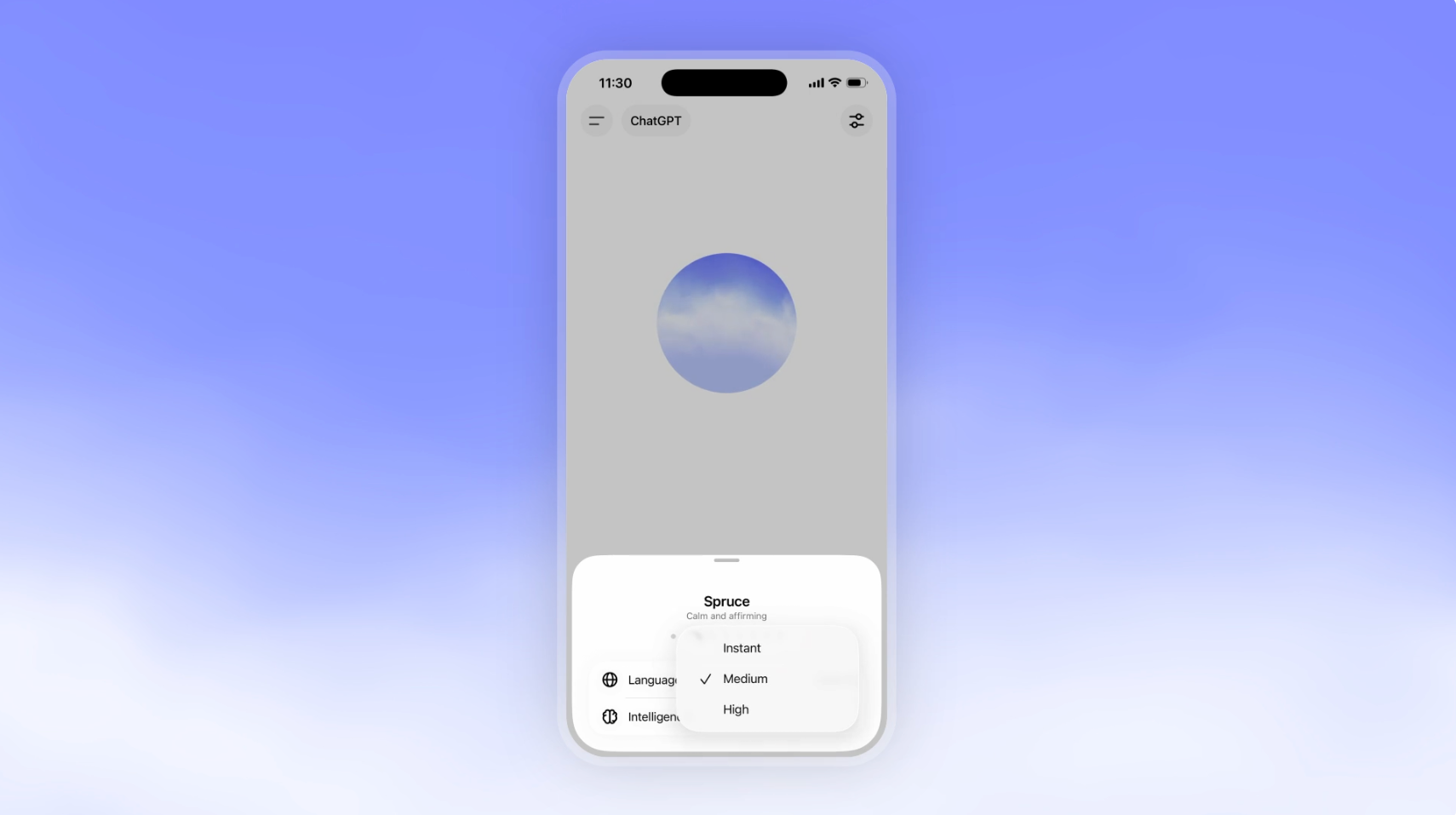
OpenAI is rolling out GPT-Live across ChatGPT Voice on iOS, Android and web.
OpenAI has started rolling out GPT-Live, a new generation of voice models for ChatGPT designed to make spoken interaction with AI more conversational, including live translation, better turn-taking and the ability to delegate more complex tasks to a frontier model in the background.
The rollout begins globally across ChatGPT on iOS, Android and web. OpenAI says GPT-Live-1 will become the default model for ChatGPT Voice for Go, Plus and Pro users, while GPT-Live-1 mini will become the default for Free users.
The rollout comes as voice becomes a more common entry point for AI-assisted learning, including language practice, accessibility support and hands-free study help. OpenAI says more than 150 million people use ChatGPT Voice and Dictation each week.
Developers and enterprises are not getting API access at launch. OpenAI says GPT-Live will come to the API soon, with a sign-up form available for those who want to be notified.
Voice model uses full-duplex architecture
GPT-Live is built on a full-duplex architecture, meaning the model can listen and speak at the same time rather than waiting for a user to finish a turn.
“GPT-Live makes talking with AI feel like having a real conversation. It’s also our smartest voice model yet,” OpenAI said in a LinkedIn post announcing the rollout.
The model can process input while generating output, allowing it to decide whether to speak, keep listening, pause, interrupt or use a tool. OpenAI says this supports quicker back-and-forth, a better sense of timing and live translation.
The new ChatGPT Voice experience also allows users to interrupt with a question, pause while thinking, or ask ChatGPT to stay quiet and listen. OpenAI says it has remastered the nine voices in ChatGPT for GPT-Live.
GPT-Live can delegate harder tasks
OpenAI says GPT-Live handles the live voice interaction while deeper work can be passed to another model. At launch, GPT-Live uses GPT-5.5 in the background.
“For questions that require web search, deeper reasoning, or more complex work, GPT-Live can delegate to our latest frontier model behind the scenes, and brings the result back into the conversation when it's ready,” OpenAI said.
Users can also choose between Instant, Medium and High reasoning levels, depending on whether they want faster responses or more time spent on an answer. OpenAI says Voice continues to support search, memory, images and file uploads, and can show visual cards for topics such as weather, stocks and sports while a conversation is happening.
The launch does not include voice with video or screen sharing in ChatGPT. OpenAI says those capabilities are planned, while legacy versions of ChatGPT Voice, including Standard and Advanced Voice Mode, remain available where supported.
OpenAI reports gains over Advanced Voice Mode
OpenAI says GPT-Live-1 and GPT-Live-1 mini were preferred over Advanced Voice Mode in head-to-head human evaluations of 5–10 minute conversations, covering overall preference, turn-taking, interruptions, conversational flow and naturalness.
The company reports preference rates of 75.7 percent for GPT-Live-1 and 69.2 percent for GPT-Live-1 mini against Advanced Voice Mode. It also says GPT-Live-1 outperformed Advanced Voice Mode on GPQA for scientific reasoning, BrowseComp for agentic web search and an internal voice telecom support benchmark.
GPT-Live also includes dedicated safety training for voice and new safeguards designed to act during real-time conversations. Its testing covered areas including self-harm, psychosis and mania, emotional reliance on AI, violence and sexual content.
Parents can choose whether teen users can access ChatGPT Voice through Parental Controls. OpenAI also says GPT-Live uses predefined voices and includes safeguards to prevent the model from imitating a real person’s voice.
OpenAI says it has optimized GPT-Live for some of the most-used languages in ChatGPT, while some languages may still have a non-native accent or gaps in fluency.