UK Science teacher launches free GCSE Astronomy course on YouTube
Dr David Boyce says the 31-lesson course covers the Pearson GCSE Astronomy specification and uses online video to support students, teachers, and young people interested in space.
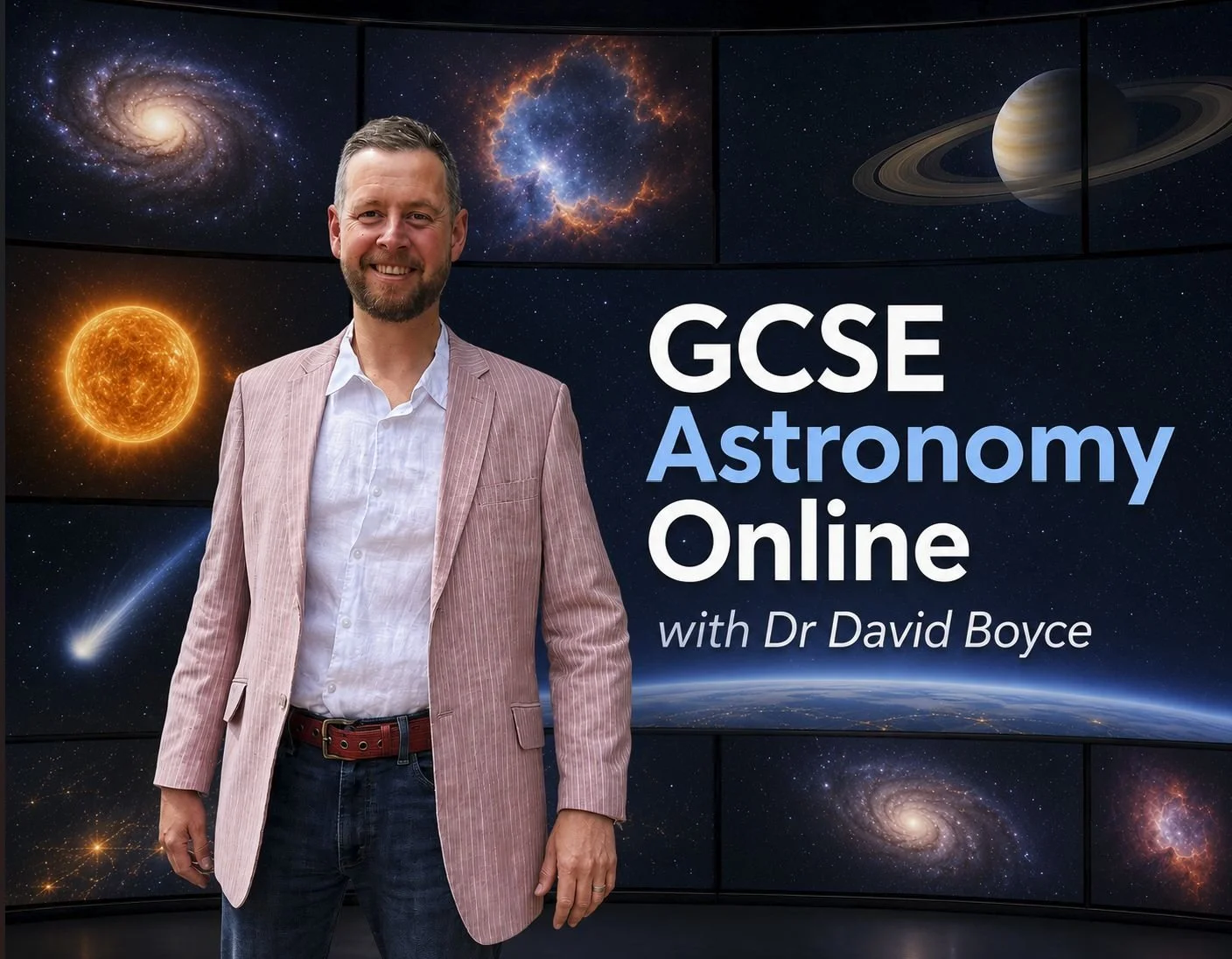
Dr David Boyce has launched GCSE Astronomy Online, a free 31-lesson YouTube course covering the Pearson GCSE Astronomy specification.
Dr David Boyce has launched GCSE Astronomy Online, a free YouTube-based course covering the Pearson GCSE Astronomy specification across 31 lessons.
Boyce, a PhD astrophysicist and science teacher at Queenswood School in Hatfield, England, announced the resource on LinkedIn after three years of development. The course is designed for students preparing for GCSE Astronomy, teachers looking for subject support, and anyone interested in space, the night sky, and astronomy.
The course sits on YouTube and covers topics including the Earth-Moon-Sun system, eclipses, tides, stars, galaxies, cosmology, astronomical data, and the tools used to study space.
Boyce said the course covers "every aspect of the Pearson GCSE Astronomy specification," while adding the "depth, detail, and scientific context" that can be difficult to fit into classroom time alone.
The launch adds another example of teachers using public online platforms to create curriculum-linked resources for students taking more ownership of their learning outside the classroom.
GCSE Astronomy course covers 31 lessons
The YouTube course page describes the series as a "complete GCSE Astronomy course" taught by Boyce, combining explanations, visuals, scientific detail, and exam preparation.
Each video includes worked examples, key terminology, practical guidance, and exam tips, according to the course description.
Boyce described GCSE Astronomy Online as "a free, YouTube-based resource designed for anyone with an interest in space, the night sky, and the wonders of the cosmos."
The course is structured to support exam preparation while also covering wider scientific context. The playlist description says students will learn how to interpret celestial motions, analyze astronomical data, and understand discoveries in science.
At Queenswood School, Boyce teaches chemistry, physics, and astronomy. His background also includes physics teaching roles, boarding, expeditions, teacher training, and an Honorary Visiting Fellow role at the University of Leicester.
Online learning and student independence
Boyce’s LinkedIn post links the project to the way students are using online platforms for independent learning.
"Students are taking ownership of their learning online, particularly through platforms like YouTube," Boyce said, adding that he wanted to create a resource that "met them where they already are."
His background also shapes the course. Boyce described himself as "both a PhD astrophysicist and winner of the Sir Arthur Clarke Award and the Royal Astronomical Society Education Prize," and said he wanted to go beyond teaching the specification by exploring "the nuanced stories behind discoveries, the latest developments in astronomy, and the sheer excitement of understanding our universe."
The course description says the videos are designed to help learners understand how the universe works, interpret astronomical data, and prepare for examination questions.
AI used for some visual material
The course uses video, visual material, and worked examples to support independent study. Boyce said the development process included experimentation with visuals, including occasional use of AI to animate or restore historical imagery.
"Along the way, I’ve tried to be experimental and creative with the visuals - occasionally using AI to animate or restore historical imagery," Boyce said. "Wherever possible, I’ve worked with Creative Commons material or sought permission before use. If any creator spots an image they would prefer removed, please do send me a DM and I will address it immediately."
For Boyce, space remains "the most powerful gateway into physics and science." He said the course reflects more than 30 years of interest in astronomy and added: "Hopefully, it helps many more people become awestruck by the scale, beauty, and majesty of the cosmos."
GCSE Astronomy Online is now available as a 31-video YouTube course. Boyce has asked teachers, students, and young people who may find the resource useful to share it.