BETT 2026: Industry–academia partnerships move up the agenda as skills gaps widen
A session at Bett 2026 set out how industry–academia partnerships are being positioned as a response to widening digital and AI skills gaps, with ServiceNow using labour market data and higher education collaborations to argue for tighter alignment between curriculum and employer demand.
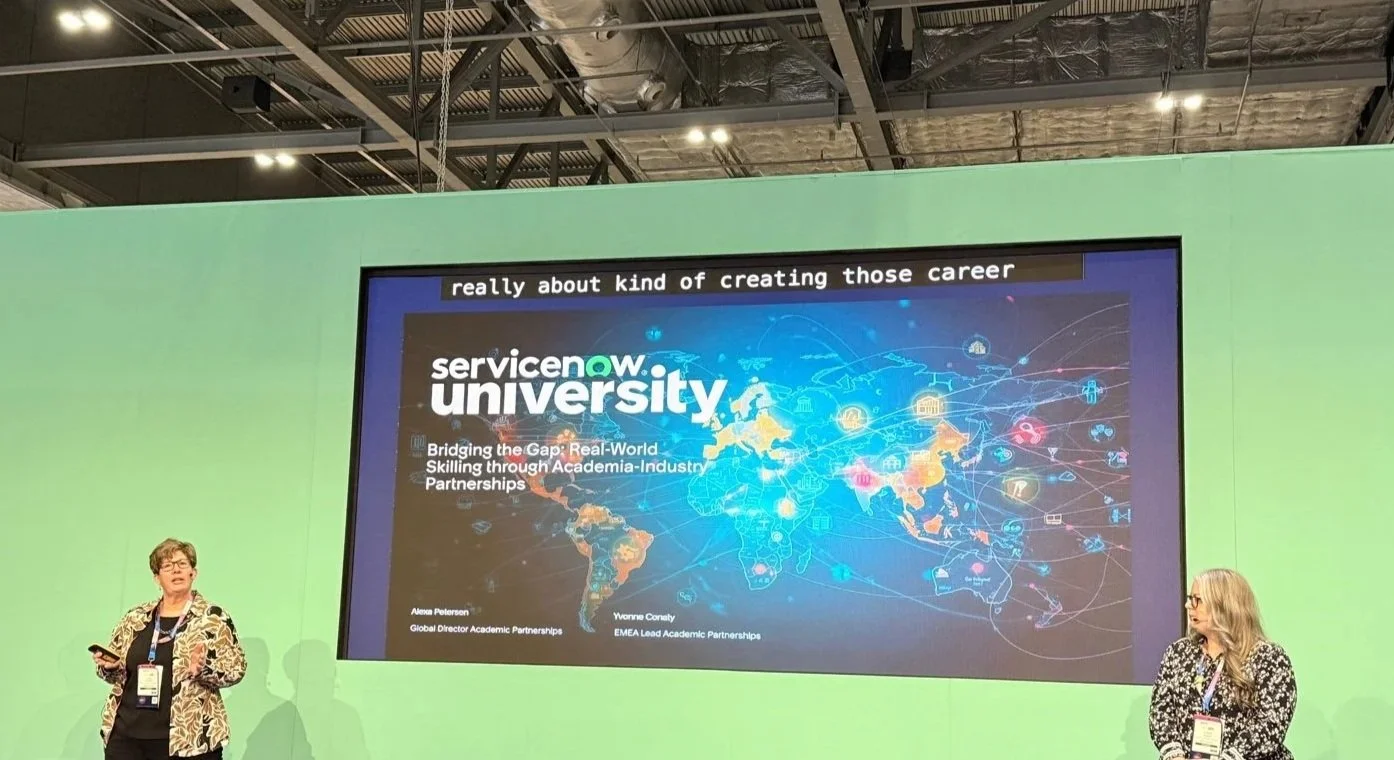
Skills shortages, particularly in digital and AI-related roles, were a recurring theme across Bett 2026. One session in the Higher Education Theatre focused squarely on how universities are being asked to respond, not through incremental curriculum updates, but through deeper structural partnerships with industry.
The session, titled Skilling for the future: turning academic pathways into career pipelines, was led by Alexa Peterson, Global Director of Academic Partnerships at ServiceNow, alongside Yvonne Conaty, EMEA Lead for Academic Partnerships.
Together, the speakers set out how growing demand for AI-enabled, workflow-focused roles is increasing pressure on higher education to demonstrate clearer links between study, skills, and employment outcomes.
Employer demand and pressure on education systems
Drawing on labour market data, Conaty outlined the scale of the challenge facing employers and educators. “Employers are struggling to hire the staff that they need,” she told the audience, adding that a lack of job-ready talent is having “a major impact on digital transformation”.
Figures shared during the session suggested that:
Sixty percent of employers report that skills shortages are affecting transformation efforts
Sixty-nine percent of executives see skills gaps as the biggest threat to future growth
More than half of EU adults currently lack basic digital skills
Speakers warned that without coordinated action, these gaps are likely to widen as AI reshapes existing roles rather than simply creating new ones.
The pace mismatch between academia and industry
A central theme of the session was the growing tension between academic programme cycles and the speed of technological change in industry.
Peterson argued that education systems are now being asked to prepare learners for roles that are still emerging. “We need to ensure how we are going to prepare current graduates today, but more importantly, how we are going to prepare future graduates for roles that don’t actually exist yet,” she said.
Examples referenced during the discussion included AI-related roles such as prompt engineers, AI ethics specialists, and data analysts working on sustainability and climate-related challenges, roles that speakers noted were rare or undefined five years ago.
Partnerships positioned as a mechanism, not a shortcut
Rather than presenting industry collaboration as a quick fix, the session framed partnerships as a mechanism for aligning academic theory with applied skills. “Partnerships are more than just handshakes,” Conaty said, pointing to the need for curriculum co-design, faculty enablement, and sustained feedback between institutions and industry partners.
The model discussed places academic knowledge and theory alongside hands-on application, with students gaining exposure to live systems, workflows, and employer-recognised practices while remaining within formal degree programmes.
Credentials, employability, and student expectations
The role of industry-recognised credentials featured prominently in the discussion, reflecting broader conversations across Bett 2026 about employability and return on investment for students.
Peterson noted that financial pressures are shaping student expectations. “The value-based outcome for many students is employment within their field,” she said. As a result, partnerships increasingly focus on aligning degrees with certifications and micro-credentials that employers recognise, with the aim of reducing the need for retraining after graduation.
Hiring data shared with Bett delegates
The session also shared hiring data linked to ServiceNow-related roles, which speakers presented as indicative of wider enterprise technology trends.
According to figures shared on stage, there were an average of more than 55,000 related job postings per month globally in 2025, with more than 24,000 companies competing for similar skill sets. In Europe, demand was reported to be growing year on year, with vacancies often remaining open longer due to a shortage of qualified applicants.
Roles highlighted included system administrators, application developers, technical consultants, and business analysts, spanning sectors such as retail, finance, consulting, and public services.
As AI becomes embedded across enterprise systems, the discussion reinforced a growing consensus across the event: employability, digital skills, and curriculum relevance are increasingly inseparable. For universities and colleges, the challenge is no longer whether to engage with industry, but how to do so in ways that are scalable, academically robust, and responsive to rapid labour market change.
ETIH Innovation Awards 2026

The ETIH Innovation Awards 2026 are now open and recognize education technology organizations delivering measurable impact across K–12, higher education, and lifelong learning. The awards are open to entries from the UK, the Americas, and internationally, with submissions assessed on evidence of outcomes and real-world application.