Argonne joins DOE AI consortium as U.S. pushes to scale scientific discovery
National lab participation builds out a growing network linking AI infrastructure, research collaboration, and university engagement.
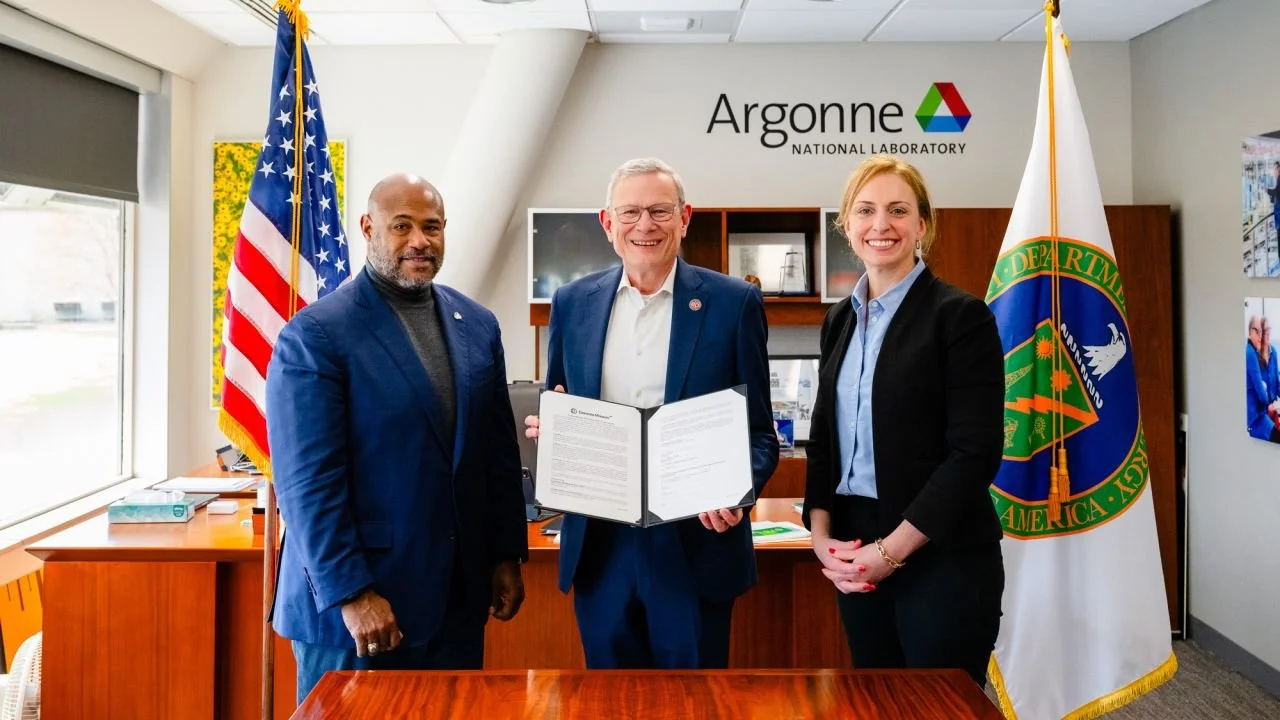
Argonne National Laboratory representatives formalize participation in the DOE’s Genesis Mission Consortium, supporting AI-led scientific collaboration across national labs, industry, and academia.
Argonne National Laboratory has joined the U.S. Department of Energy’s (DOE) Genesis Mission Consortium, adding to a public-private network focused on accelerating scientific discovery using artificial intelligence.
The consortium, launched earlier this year, brings together national laboratories, universities, and industry partners to connect advanced computing, experimental tools, and scientific data.
Argonne’s involvement adds further capacity to a model that is shifting how large-scale research is coordinated, with AI systems increasingly embedded across workflows and collaboration.
Consortium model moves beyond funding into coordination
The Genesis Mission Consortium is structured as a public-private partnership linking DOE, National Laboratories, universities, and private sector organizations. Participants are expected to contribute infrastructure, expertise, data, or in-kind support rather than rely on a traditional grant model.
Alongside this, the Genesis Mission Partnership Exchange has been introduced as a collaboration platform. It enables organizations and researchers to create profiles, identify partners, and form multidisciplinary teams aligned with national science and technology challenges.
The platform is being rolled out in stages, beginning with profile creation, followed by partner discovery and AI-supported matching. The approach places more emphasis on coordination and shared capability than on standalone projects.
AI infrastructure and data integration at the core
The Genesis Mission brings together supercomputing resources, user facilities, and AI systems to increase the pace of research across fields including advanced materials, quantum information science, and medicine.
Argonne’s role builds on its existing work in large-scale computing and engineering research. The laboratory employs around 3,400 staff, including 1,400 scientists and engineers, and supports more than 200 research projects each year.
In a LinkedIn post, Argonne National Laboratory stated that its involvement forms part of a broader effort to accelerate discovery through AI integration across research environments.
The consortium remains open to universities, companies, and individual researchers. There are currently no membership fees, with contributions expected in the form of technical capability, personnel time, or data.
The DOE has indicated that access to elements of the Genesis Mission ecosystem will expand over time, with further opportunities for collaboration and funding expected as the platform develops.
For higher education, the model ties research participation more directly to skills development. As AI becomes part of scientific workflows, institutions will need to ensure students and researchers can engage with these systems in practice rather than at a theoretical level.