Meta report says Sub-Saharan Africa digital economy could reach $300 billion by 2035
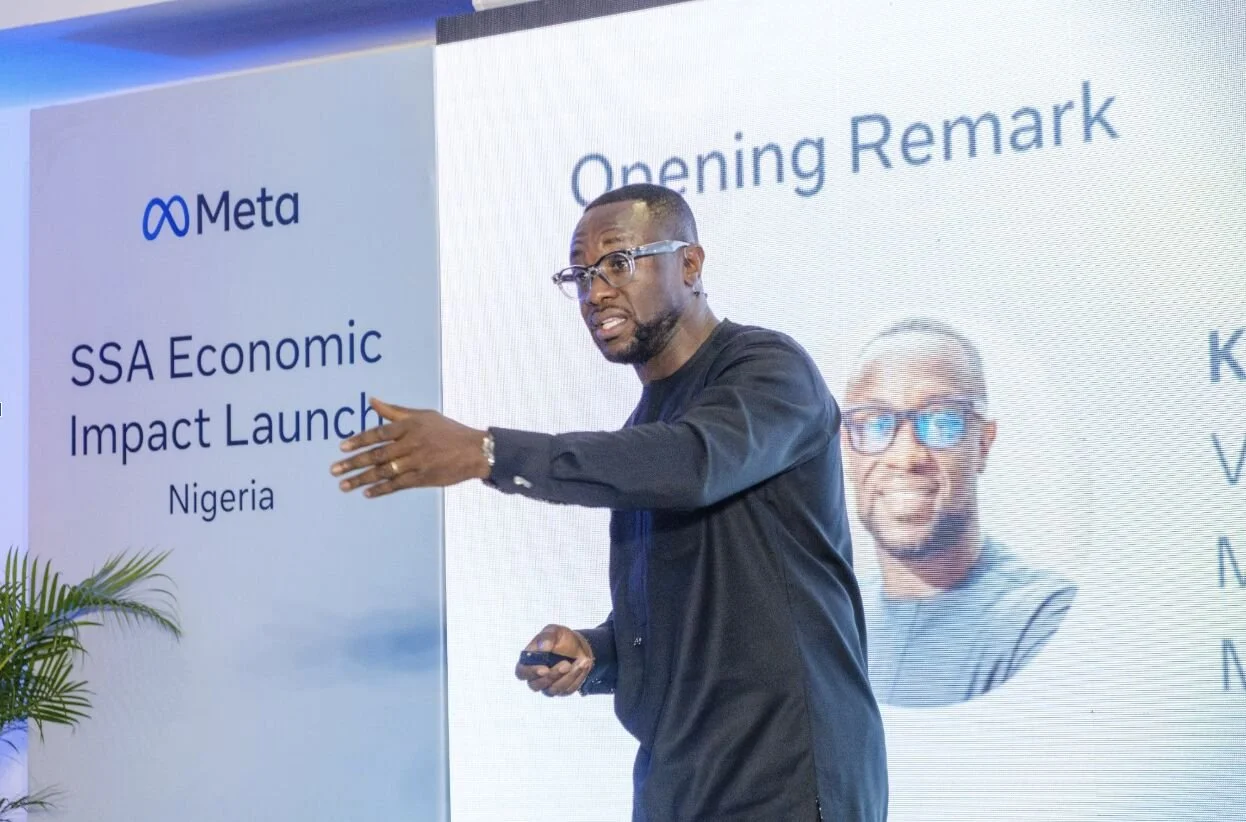
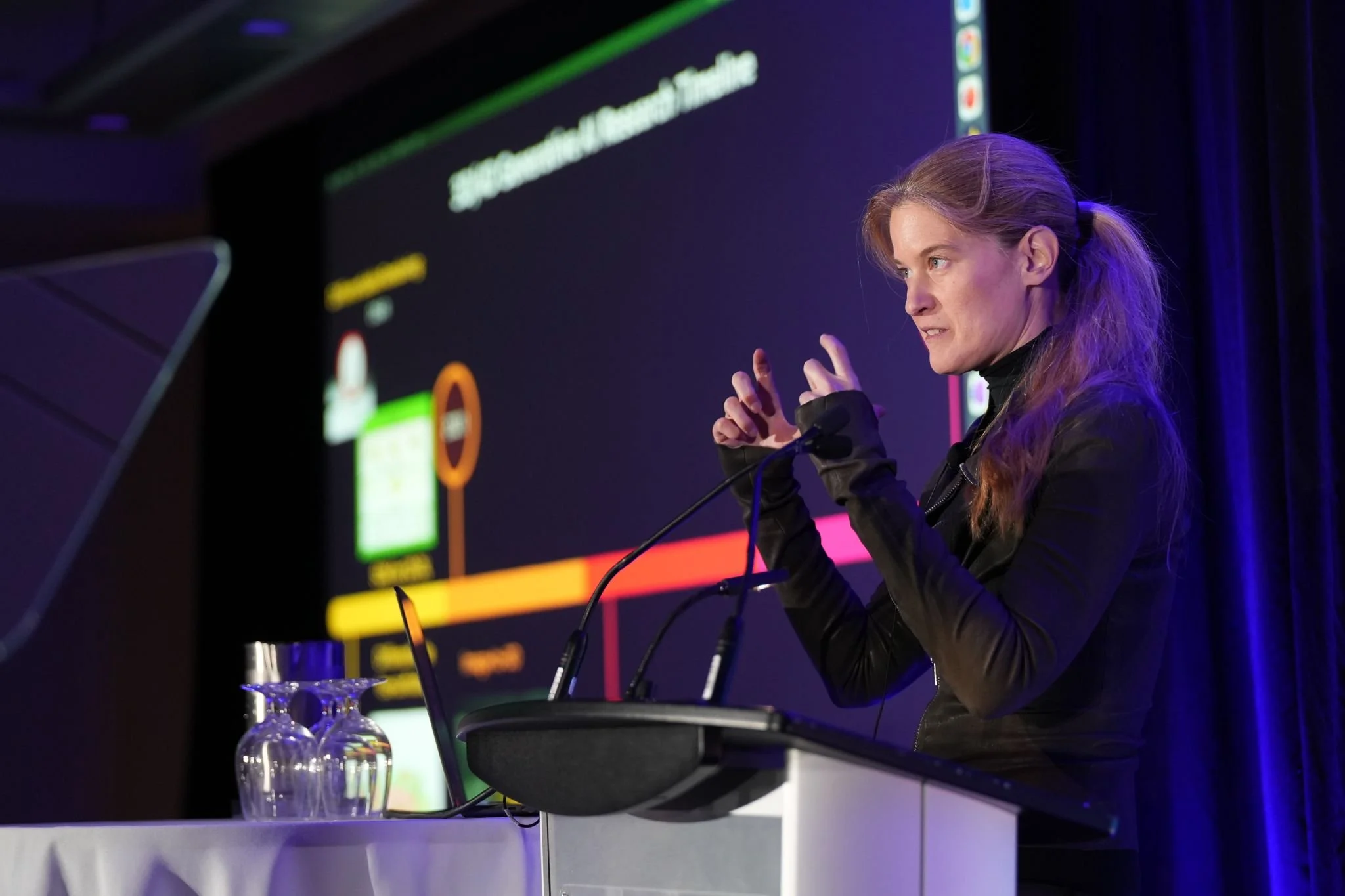
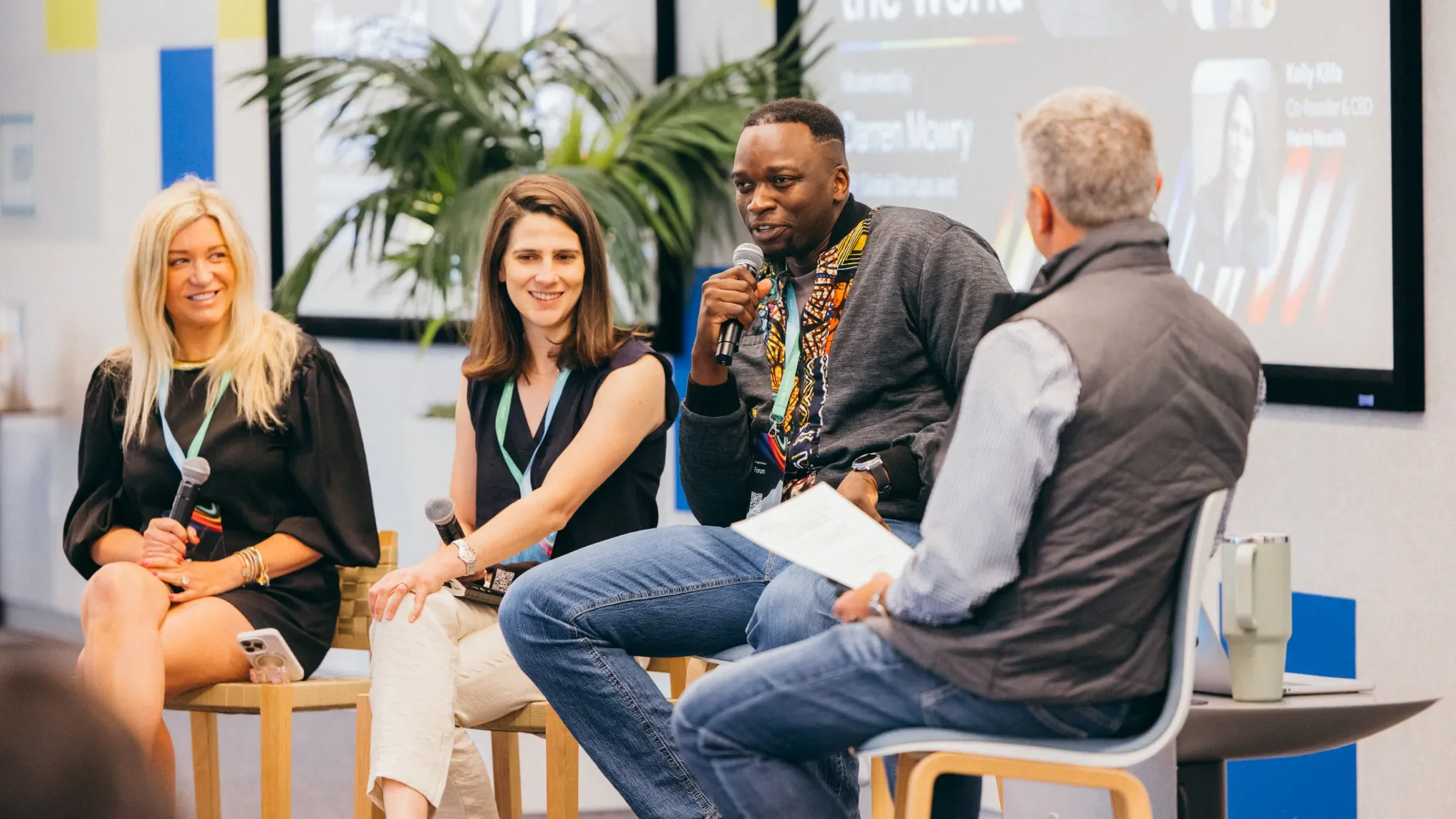
Kojo Boakye, Vice President, Public Policy, Africa, Middle East, and Turkiye at Meta, speaking at the SSA Economic Impact Launch in Nigeria. Photo credit: Kojo Boakye
Meta has launched an economic impact report for Sub-Saharan Africa, with research by Public First estimating that the region’s digital economy could grow from $130 billion today to $300 billion by 2035.
The report, announced around Africa Day, examines Meta’s role in digital infrastructure, digital platforms, and open-source AI across Sub-Saharan Africa. It includes country studies for Kenya, Nigeria, South Africa, and Côte d’Ivoire, and sets out how Facebook, WhatsApp, Instagram, Meta AI, Llama, No Language Left Behind, PyTorch, and other tools are being used by businesses and developers.
Public First estimates that Meta’s digital infrastructure investments generated $16 billion in economic value across Sub-Saharan Africa in 2025. The research links this to subsea cables, terrestrial backhaul, and edge infrastructure, as well as the use of Meta platforms by small and medium-sized enterprises.
The report also includes education and healthcare examples, including Foondamate, a South African AI study assistant accessed through WhatsApp and Messenger, and Jacaranda Health’s PROMPTS system in Kenya, an AI-powered SMS service for pregnant women and new mothers.
Kojo Boakye, Vice President, Public Policy, Africa, Middle East, and Turkiye at Meta, shared the report on LinkedIn and said the launch followed country reports in Kenya, Nigeria, South Africa, and Côte d’Ivoire.
Meta links infrastructure investment to digital services
Public First says limited international bandwidth, high infrastructure costs, and access constraints around advanced technology continue to affect digital participation across Sub-Saharan Africa.
The report says the 2Africa subsea cable will deliver up to 180 Tbps of capacity and could bring 90 million additional Africans online by 2035. Public First says the additional capacity could support real-time telemedicine, cloud-based education tools, AI applications requiring low latency, and remote work.
Meta’s infrastructure investments across subsea cables, terrestrial backhaul, and edge infrastructure are positioned in the report as a way to reduce latency and bandwidth costs. Public First estimates that these investments could support an additional $150 billion in cumulative economic value by 2035.
The report says Meta’s family of apps generated $3.6 billion in direct business activity across Sub-Saharan Africa in 2025. Public First also estimates that 74 million African SMEs used Meta’s apps as digital storefronts, with associated benefits including productivity gains, consumer savings, and additional economic activity for telecommunications operators.
Open-source AI features in education and healthcare use cases
Open-source AI is a central part of the report, with Public First estimating that Meta’s open-source AI models could support $23 billion in economic value for Sub-Saharan Africa’s digital economy over the next decade.
The research says 81 percent of online adults in Sub-Saharan Africa agree that AI products developed within the region will be important for the continent’s economic growth. It also says 66 percent of online business leaders surveyed would use open-source AI tools if available and accessible.
Boakye wrote on LinkedIn: "What excites me most isn't just the data in these reports — it's the quotes and survey responses from people across the SSA region. They highlight how African developers are customising Llama in local languages to improve education and agricultural outcomes, how SMEs are scaling to regional markets via WhatsApp Business, and how creators are building on their cultural capital to gain global audiences on Instagram."
Foondamate is cited in the report as an example of a South African company using Meta’s Llama AI models to build an AI study assistant for WhatsApp and Messenger. The system helps students with maths problems, explanations, research, and essay development, and the report says it has supported more than three million students.
Jacaranda Health’s PROMPTS system is also included as an example from Kenya. The AI-powered SMS service gives pregnant women and new mothers care information, reads incoming messages, triages risk, and connects users to nurses or referrals.
Nigeria launch includes GovGuide Nigeria and AI support for businesses
Alongside the Nigeria report launch in Abuja, Meta unveiled GovGuide Nigeria, a multilingual AI-powered voice and text chatbot that gives Nigerians access to information on government services in English, Hausa, Igbo, and Yoruba.
The chatbot was built by Publica AI on Meta’s open-source Llama models, in partnership with Nigeria’s Federal Ministry of Communications, Innovation and Digital Economy and the National Centre for Artificial Intelligence and Robotics.
Meta also launched the Meta Transform with AI Program in Nigeria, delivered with the Small and Medium Enterprise Development Agency Nigeria and Fate Foundation. The initiative supports medium-sized businesses in adopting AI tools, including Advantage+, to reach customers, manage engagement, and support revenue growth.
Boakye said on LinkedIn: "A huge thanks to Hon. Minister Dr. Bosun Tijani, and so many other partners and friends, who joined us for the launch. I must also say a huge thanks to my incredible colleagues working across SSA to drive this work forward. This is a team effort, and I couldn't be prouder!"
The Nigeria country study estimates that Meta’s platforms generated $820 million in economic activity for businesses across Nigeria in 2025. It also says Nigeria’s digital economy could grow from $52 billion today to $120 billion by 2035, if the required foundations are in place.
Public First estimates that 14 million Nigerian SMEs used Meta’s platforms to start and grow their businesses in 2025, contributing $2 billion to Nigeria’s GDP and generating $640 million in productivity gains through more efficient communication.
In Kenya, the country study estimates that Meta’s platforms generated $140 million in economic activity for businesses in 2025, while Kenya’s digital economy could grow from $4.2 billion today to $13 billion by 2035. In South Africa, Public First estimates that Meta’s platforms generated $1 billion in economic activity for businesses in 2025, with the country’s digital economy projected to grow from $30 billion today to $53 billion by 2035.
Public First conducted polling of 1,000 online adults and 254 business decision makers across 19 Sub-Saharan African countries between September 2 and October 3, 2025. Country polling was also carried out in Côte d’Ivoire, Kenya, Nigeria, and South Africa.