Tech skills that will drive tomorrow's world
The job market doesn't announce when it shifts. It just does and a year later people look back and ask where the old roles went.

Traditional IT admin positions are drying up. Manual QA is getting automated out of existence. Meanwhile, something called an MLOps engineer is now a bottleneck at companies that didn't even have the role listed two years ago.
This article isn't about vague predictions. It's about what's actually worth learning right now and where that learning leads.
What the Market Looks Like Right Now
NVIDIA shipped Blackwell. Microsoft pushed Copilot+ with dedicated NPU requirements baked into the hardware spec. Google's DeepMind took AlphaFold and expanded it beyond proteins into RNA and DNA territory. None of that was a press release fantasy — it's in production environments, and it's changing what enterprises expect from the people they hire.
The uncomfortable observation: jobs are getting more specific, not more general. "Knowing cloud" used to be enough. Now that means which cloud, in which configuration, for which compliance regime. The scope keeps expanding. So does the gap between what companies need and who's available.
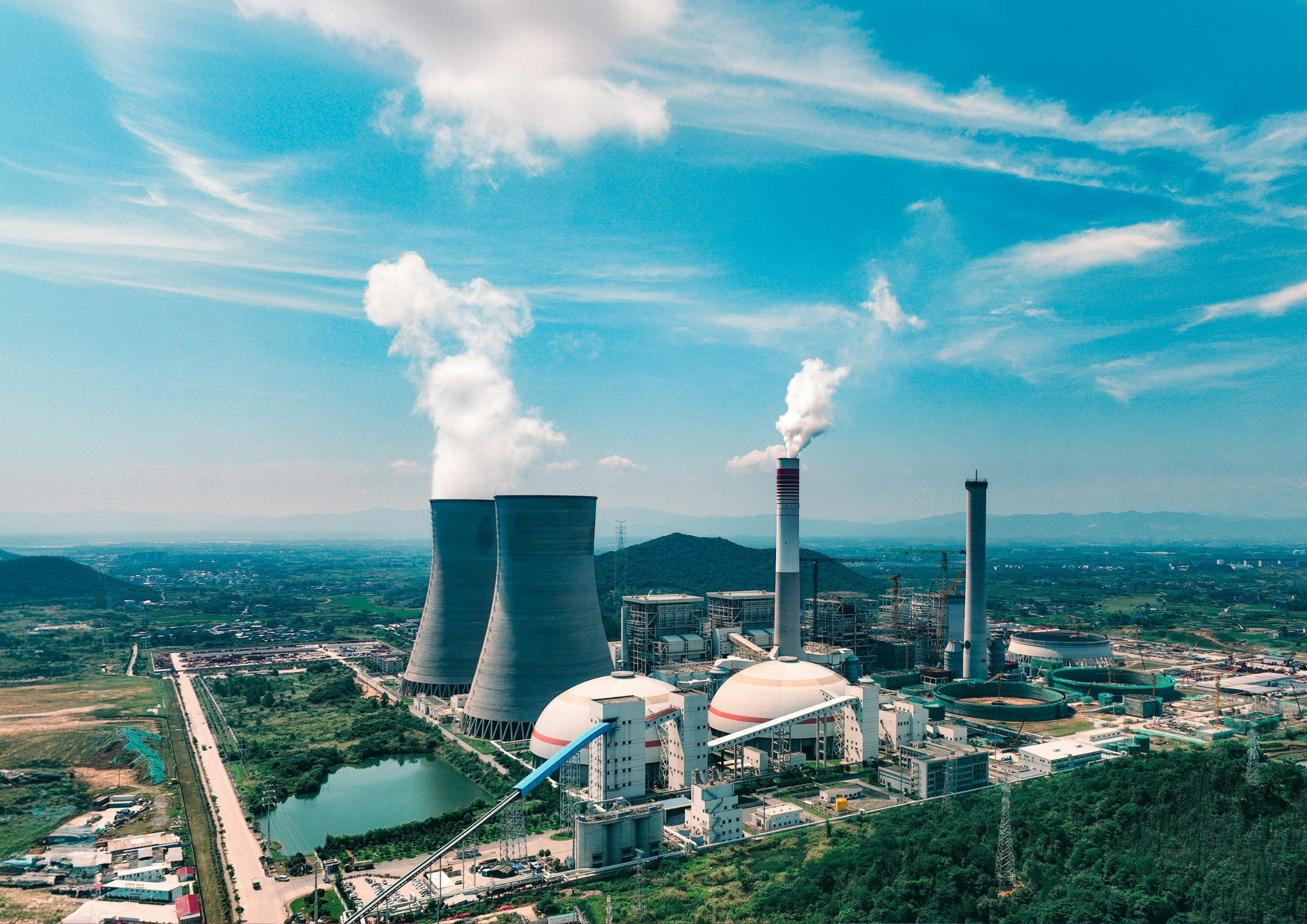
Power grids, water treatment plants, transit systems — these aren't the sectors that usually come up in tech hiring conversations, but they're going through one of the more dramatic digitization pushes in any industry right now. Organizations building IT solutions for utilities, for example, need engineers who can reason about cloud-native architectures and 20-year-old SCADA systems at the same time. That profile barely exists in the talent pool. And those organizations are competing with fintech startups for the same people.
That tension runs through almost every conversation about where the real engineering difficulty lives in 2026.
AI and Machine Learning: The Real Ask
What "knowing AI" actually means to a hiring manager
Using ChatGPT isn't a skill anymore. Neither is writing prompts. Those became table stakes sometime in 2024 and the bar moved on.
What companies are struggling to find: engineers who can run a RAG pipeline against a proprietary document store without it hallucinating on domain-specific terminology. People who know how to set up model evaluation loops that catch drift before it becomes a production incident. Folks who've actually done red-teaming — not read about it, done it — and can document failure modes in a way a compliance team will accept.
Skills that are genuinely in demand:
RAG (Retrieval-Augmented Generation) — connecting LLMs to internal knowledge bases without retraining the model every time data changes; harder than it sounds once structured and unstructured sources are mixed
MLOps — model versioning, deployment pipelines, monitoring for output quality degradation post-launch
Model red-teaming and evaluation — stress-testing for failure modes in adversarial conditions, documenting outputs for regulated environments
Multimodal workflows — pipelines where text, image, and audio move through the same system
Agent frameworks — LangChain, AutoGen, LlamaIndex; the scaffolding that makes multi-step AI reasoning possible in production
Where the demand actually concentrates
Here's something that surprises people: the highest-paying AI roles in 2026 aren't at AI labs. They're at JPMorgan Chase, which runs an internal AI research operation that rivals most tech companies in headcount. They're at Mayo Clinic, which built its own model evaluation infrastructure for clinical decision support. At Chevron, ML runs real-time failure prediction on offshore equipment.
Regulated industries. Slower to adopt, but when they do, the salaries reflect the compliance overhead and domain difficulty. An ML engineer who can explain model behavior to a legal team is a much rarer find than one who can just build the model.
Cloud and Infrastructure: Fragmentation Won
The single-cloud era is basically over
Large enterprises don't run on one cloud anymore. They run on three. Sometimes four, if you count the legacy on-prem that never got migrated. Managing workloads across AWS, Azure, and GCP — with different pricing structures, different compliance tooling, different latency profiles per region — is a genuinely different discipline from what DevOps meant five years ago.
Snowflake built an entire business around this fragmentation. Their architecture runs natively across all major cloud providers so organizations can query data wherever it lives without moving it first. But that only works if the engineers involved understand data gravity — which data costs more to move than to store nearby — and how egress pricing changes the economics of a query.
Edge computing: where the abstraction ends
At some point, the data has to come from something physical. A temperature sensor on a factory floor. A vibration monitor bolted to a turbine housing. A traffic camera processing plate recognition without sending every frame to a data center.
AWS Wavelength and Azure Edge Zones push compute closer to those physical endpoints. The latency improvements — measured in milliseconds, sometimes less — matter enormously in industrial automation and predictive maintenance systems where acting on a reading in 2ms versus 200ms means catching a fault or missing it.
Skills that matter here:
Kubernetes at the edge — orchestrating containerized workloads across nodes with intermittent or low-bandwidth connectivity
Industrial protocols (MQTT, OPC-UA, Modbus) — the unglamorous but necessary bridge between IT systems and operational hardware
Real-time stream processing — Apache Kafka, Flink; data that needs to be acted on before it's even fully ingested
Embedded Linux and constrained hardware — ARM chips, FPGAs, systems where you can't just throw more memory at a problem
Cybersecurity: The Threat Model Changed
What the actual attack landscape looks like
The Colonial Pipeline attack cut fuel supply to the US East Coast. Not theoretical — actual shortages, actual queues at gas stations. The MOVEit breach hit hundreds of organizations through a single file transfer tool in a matter of days. The Change Healthcare incident in 2024 locked up claims processing for American healthcare providers for weeks.
These aren't sophisticated nation-state operations. They're mostly opportunistic exploitation of known vulnerability patterns. The scale of damage is what changed. And the attack surface keeps widening:
AI-generated phishing that personalizes content per target and bypasses traditional filter heuristics
Deepfake audio used in fraud — a finance team at a Hong Kong firm wired $25 million after a video call they believed was with their CFO; it wasn't
OT/IoT devices in industrial settings with default credentials and no realistic patch cadence
Software supply chain compromises — SolarWinds was a proof of concept, not a one-off
What security work actually looks like in 2026
The field split into specializations. "Cybersecurity engineer" as a catch-all title doesn't mean much anymore:
Cloud security engineers — IAM policy configuration, continuous posture monitoring with Wiz or Prisma Cloud, catching misconfigurations before they become breach vectors
OT/ICS specialists — industrial control system security is its own discipline; threat actors operating against it have gotten considerably more capable
Threat intelligence analysts — mapping observed adversary behavior to MITRE ATT&CK, tracking campaigns, feeding findings back into defensive posture
Security architects — designing zero-trust network architectures from scratch, which is much harder than patching existing perimeter-based setups
Certifications — CISSP, CEH, CompTIA Security+ — open doors in regulated sectors. But the interviews are increasingly about tooling. Splunk, CrowdStrike Falcon, Microsoft Sentinel. Can you use them, or did you just list them?
Data Engineering: The Role That Runs Everything Else
Somewhere between the raw data source and the executive dashboard, something has to move the data, clean it, validate it, transform it, and make it queryable without the whole pipeline collapsing overnight. That's data engineering. Unglamorous. In extremely short supply.
The observation that keeps surfacing in hiring conversations: companies that invested heavily in ML capabilities hit a wall when their data infrastructure couldn't support the models they wanted to train. Data engineers became the bottleneck.
The modern production data stack:
Ingestion: Fivetran or Airbyte for managed connectors, custom Kafka producers for streaming sources
Storage and compute: Snowflake, Databricks Lakehouse, Google BigQuery — the "data warehouse vs data lake" framing collapsed into lakehouse architecture
Transformation: dbt (data build tool) became the de facto standard for SQL-based transformation; version-controlled, testable, reviewable
Orchestration: Apache Airflow is the incumbent, Prefect and Dagster are gaining ground for teams that want something less operationally painful
Databricks Genie and Snowflake Cortex both ship text-to-SQL now. Natural language queries that generate SQL automatically. Does that make SQL obsolete? No — the opposite. Someone still needs to look at what the model generated and confirm it's asking the right question. That's harder than writing the SQL yourself.
Quantum Computing: Closer Than It Looks
IBM's Heron processor improved error rates to where hybrid classical-quantum algorithms became viable for narrow problem classes. Google's error correction research moved fault-tolerant quantum computing from theoretical to a matter of engineering timeline. Microsoft is taking a different path with topological qubits through Azure Quantum — slower to demonstrate, potentially more stable at scale.
What's actually running on quantum hardware: Roche uses hybrid workflows for molecular simulation in drug discovery. JPMorgan published research on quantum approaches to portfolio optimization. Not press release pilots — operational research with real compute budgets.
The security angle matters more than most realize. "Harvest now, decrypt later" is already in practice: adversaries collecting encrypted traffic today, waiting for the capability to decrypt it later. NIST finalized its first post-quantum cryptographic standards — organizations running sensitive long-lived data are starting migration planning.
Worth learning: linear algebra as the foundation, Qiskit or Cirq for circuit programming, hybrid algorithm design basics, post-quantum cryptography.
Where to Actually Build These Skills
Most platforms are fine. Some are useless. The difference comes down to whether the learning involves doing something real or just watching someone explain it.
fast.ai — Jeremy Howard's practical approach has held up; assumes you can code and skips theoretical scaffolding in favor of getting models running first
Kaggle — competitions with real messy datasets; finishing in the top decile of a serious competition tells a hiring manager more than most certifications
TryHackMe and Hack The Box — Capture the Flag format for cybersecurity builds pattern recognition faster than any course; if you've spent time on HTB boxes, you know why
Coursera / edX — DeepLearning.AI's specializations are legitimately good for ML fundamentals
Pluralsight — useful for cloud and infrastructure depth, better for engineers who know what they're looking for
Certifications worth the time: AWS Certified Solutions Architect (still the cloud benchmark), Certified Kubernetes Administrator (hands-on proctored exam — you either know it or you don't), Databricks Certified Associate Developer (gaining traction fast), Google Professional ML Engineer, and CompTIA Security+ for regulated-sector entry.
The Part Most EdTech Platforms Miss
Nearly every tech learning platform builds curriculum for developers building consumer software. That's fine — there's demand for it.
But here's what gets underinvested: the engineers who keep actual infrastructure running. Hospital systems. Transit networks where a routing failure strands tens of thousands of commuters. Energy grids where distributed solar, storage, and EV charging loads have to balance dynamically, automatically, every few seconds.
A smart grid balancing renewable input runs the same telemetry pipeline architecture as any cloud-native product. Anomaly detection in water distribution uses the same ML fundamentals as bank fraud detection. The stack isn't exotic. The operational context, safety requirements, and legacy OT integration — that's what makes it hard, and that's what most engineers aren't trained for.
The talent shortage in critical infrastructure is worse than in consumer tech. The hiring bar for OT/IT hybrid skills is higher. Almost no curriculum addresses it directly. For engineers willing to go where the difficulty actually is, that gap is worth taking seriously.
Bottom Line
AI, cloud, cybersecurity, data engineering, quantum literacy — those are the pillars. The tools exist. The learning paths are accessible. The demand is real and growing in directions that don't make the usual headlines.
What doesn't happen automatically is depth. Broad and shallow gets through interviews at companies that don't know what they're hiring for. It doesn't hold up anywhere else. Pick the domain, go deep enough to build something real with it, and don't wait for the perfect roadmap before starting.
The infrastructure doesn't maintain itself while everyone figures out the optimal learning path.