White House sets out national AI policy framework with focus on workforce training and education
New legislative recommendations build on earlier US AI initiatives, placing skills development and education systems at the center of national strategy.
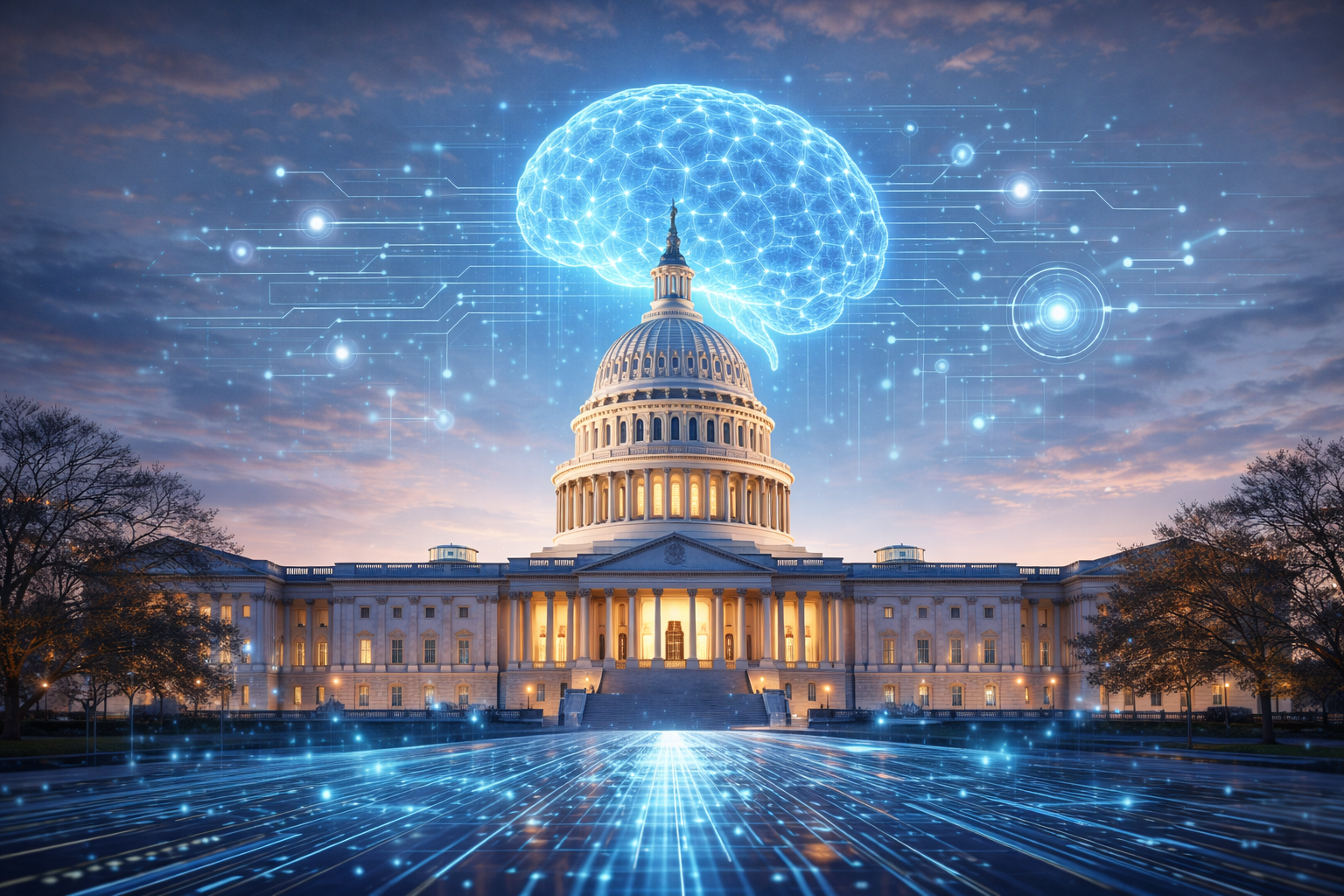
The White House has published a National Policy Framework for Artificial Intelligence, outlining how the U.S. plans to align AI development with workforce training, education systems, and national regulation.
The framework moves beyond earlier AI announcements by tying policy directly to jobs and skills, with proposals to embed AI training into existing education and workforce programs and expand how the government tracks AI-driven changes in the labor market.
In a LinkedIn post, Keith Sonderling, United States Deputy Secretary of Labor, said the framework is “a bold step toward ensuring America leads the world in AI development and that American workers share in the benefits that AI creates.” He added that the approach is designed to avoid “a 50-state patchwork” and instead establish a single federal policy.
Workforce training and education systems move to the center
The framework places workforce readiness at the core of AI policy, with a clear expectation that AI skills will be integrated into existing programs rather than delivered through new standalone initiatives.
Proposals include embedding AI training into current workforce development pathways such as apprenticeships, as well as expanding federal efforts to analyze how AI is reshaping jobs at a task level. The aim is to give policymakers and employers a clearer view of how roles are evolving as AI adoption increases.
There is also a focus on strengthening the role of institutions such as land-grant universities, which are expected to support AI-focused education, technical assistance, and youth development programs.
The approach signals a shift from high-level AI strategy toward practical implementation, where education providers are expected to adapt existing delivery models to reflect changing skill requirements.
National policy direction seeks to limit state-level fragmentation
Alongside workforce measures, the framework sets out a more defined federal position on AI regulation.
It calls for a national standard to reduce the risk of inconsistent state-level rules, while maintaining the ability for states to enforce existing laws related to consumer protection, fraud, and child safety.
The proposals also state that AI oversight should remain within existing regulatory bodies rather than introducing a new federal regulator, and recommend the use of regulatory sandboxes to support testing and deployment of AI applications.
In parallel, the framework highlights the importance of making federal datasets more accessible in AI-ready formats to support development across industry and academia.
Infrastructure, safety, and intellectual property included in policy scope
The framework connects AI growth with infrastructure and operational requirements, particularly around data center expansion.
Proposals include streamlining federal permitting for AI infrastructure and enabling on-site energy generation to support increased demand, while aiming to prevent rising electricity costs for residential users.
On safety, the framework outlines requirements for AI platforms to implement protections for children, including tools for parental control, content moderation, and age assurance mechanisms.
It also addresses intellectual property, stating that questions around AI training on copyrighted material should continue to be resolved through the courts, while suggesting that Congress may explore licensing or collective rights frameworks for creators.
Sonderling referenced several of these areas in his LinkedIn post, highlighting protections for “free speech,” “intellectual property,” and “children,” alongside a focus on driving “American innovation.”
Shift toward implementation across education and skills
The framework does not introduce immediate regulation, but it sets a clearer direction for how AI policy will be applied across education, workforce systems, and industry.
For EdTech providers and training organizations, the emphasis is on integration rather than expansion. AI is expected to be built into existing programs, with a focus on measurable skills development and alignment with labor market demand.
The direction is practical. AI is no longer positioned as a standalone policy area. It is being embedded into how governments approach jobs, training, and economic growth.
ETIH Innovation Awards 2026
The ETIH Innovation Awards 2026 are now open and recognize education technology organizations delivering measurable impact across K–12, higher education, and lifelong learning. The awards are open to entries from the UK, the Americas, and internationally, with submissions assessed on evidence of outcomes and real-world application.