University of Greater Manchester embeds student-designed AI literacy framework in training
The UK case study records 492 tutorial completions by May 2026, but its evaluation relies on self-reported responses from 50 students

The University of Greater Manchester has embedded a co-designed generative AI literacy framework into student training
The University of Greater Manchester has embedded a four-step generative AI literacy framework into its pre-enrollment and academic skills programs following a project that treated students as co-researchers, designers and evaluators.
Published in Compass: Journal of Learning and Teaching, the case study details how staff and students developed guidance covering AI technologies, ethics, bias, academic integrity and responsible use. The resulting framework and online tutorial now form part of training for current students and those preparing to enter the university.
The project began with a university-wide survey of 101 students. Researchers found marked differences in awareness and confidence across disciplines, uncertainty about acceptable AI use and demand for institutionally supported, research-informed guidance.
Two postgraduate students were then recruited as research interns based on their disciplinary expertise and experience with AI. Their roles expanded beyond consultation to include analyzing survey and focus group data, reviewing research, co-facilitating student discussions and developing the framework’s content.
Authors Nurun Nahar, David Howard, Kater Akeren, Emmanuel Ngele and Graeme Prescott describe the approach as an attempt to recognize students’ direct experience of using generative AI in their academic work.
Four stages move from preparation to responsible use
Two focus groups were conducted with Business Management and Nursing and Midwifery students. The paper states that these subjects represented the university’s largest cohorts and recorded the highest rates of AI-related misconduct referrals.
The combined survey and focus group analysis produced three main themes: uneven levels of AI confidence and understanding, uncertainty about ethical use and strong demand for university guidance.
Six co-design workshops translated those findings into a framework containing four stages: Prepare, Understand, Apply and Responsible Use. The stages cover progressively developing students’ knowledge of AI and their ability to evaluate and use the technology.
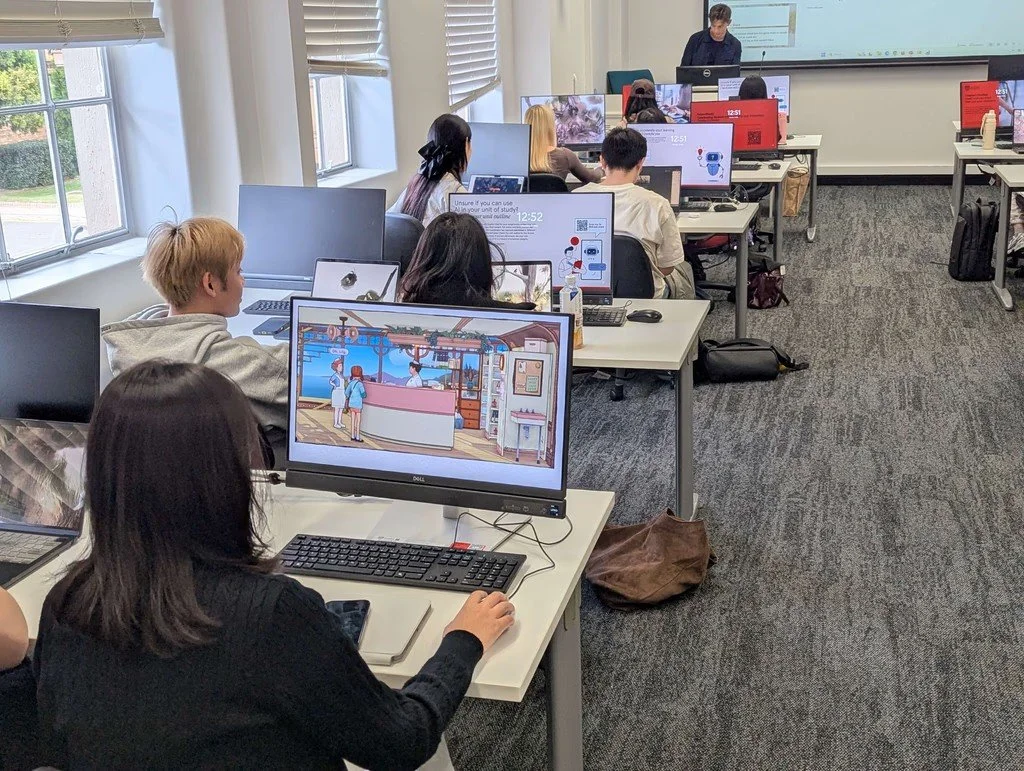
A self-paced tutorial was also created within the university’s Learning Excellence Achievement Pathway, or LEAP, online platform. Students can receive a digital AI literacy badge after completing it.
The framework and tutorial were integrated into academic skills provision and PREPARE, a seven-week pre-enrollment program for new students. The university has also incorporated AI literacy into its academic integrity policy.
An academic skills team leader quoted in the paper describes the tutorial as “a proactive foundation for digital academic integrity and critical engagement with emerging technologies.”
Evaluation finds higher confidence, with limits
Following the framework’s institutional introduction in May 2025, 492 students had completed the tutorial by May 2026. Approximately 50 students also attended AI literacy workshops co-designed by the student partners and delivered through academic skills support.
The evaluation used questionnaires completed before and after engagement by 50 students participating in PREPARE and LEAP. Researchers report that students described increased confidence in using AI responsibly, greater awareness of ethical boundaries and a clearer understanding of institutional expectations.
Participants also reported that the tutorial helped clarify acceptable uses of AI in academic work. The researchers acknowledge that only two students acted as project partners, creating a risk of partial representation linked to their disciplinary backgrounds. The focus groups were also limited to Business Management and Nursing and Midwifery students.
The authors describe the framework as adaptable across disciplines and institutions, while noting that the study is specific to the University of Greater Manchester and students transitioning into higher education. They call for wider cross-disciplinary testing and longitudinal research into its effects on students’ AI literacy.