Harvard builds AI toy to test how artificial intelligence changes children’s play
The US study has entered laboratory testing and will move into children’s homes to examine language, imagination, relationships, trust and persuasion over time.
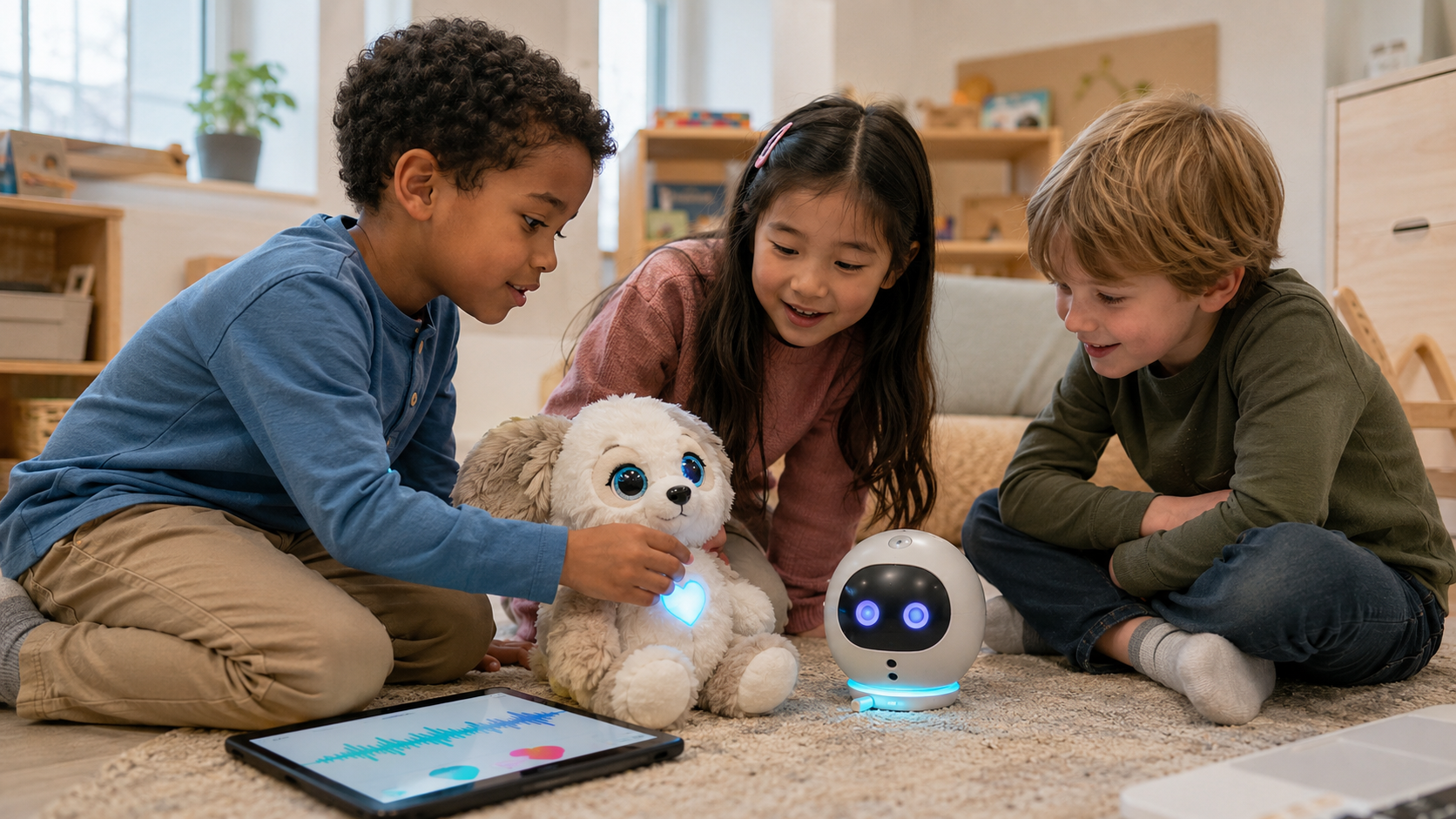
Harvard researchers are testing how interactions with AI-enabled toys may influence children’s play, language, social behavior, trust and attachment
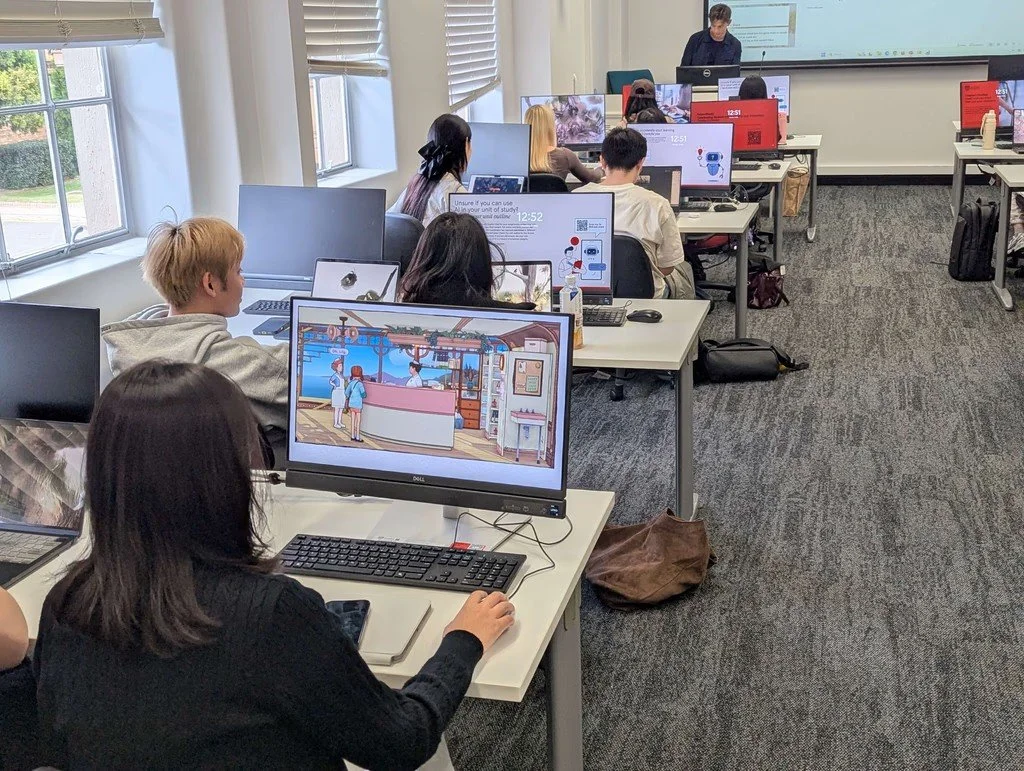
Harvard Graduate School of Education researchers have built an AI-enabled toy and begun testing it with children, moving a debate dominated by theory and short experiments into a new laboratory and home-based study.
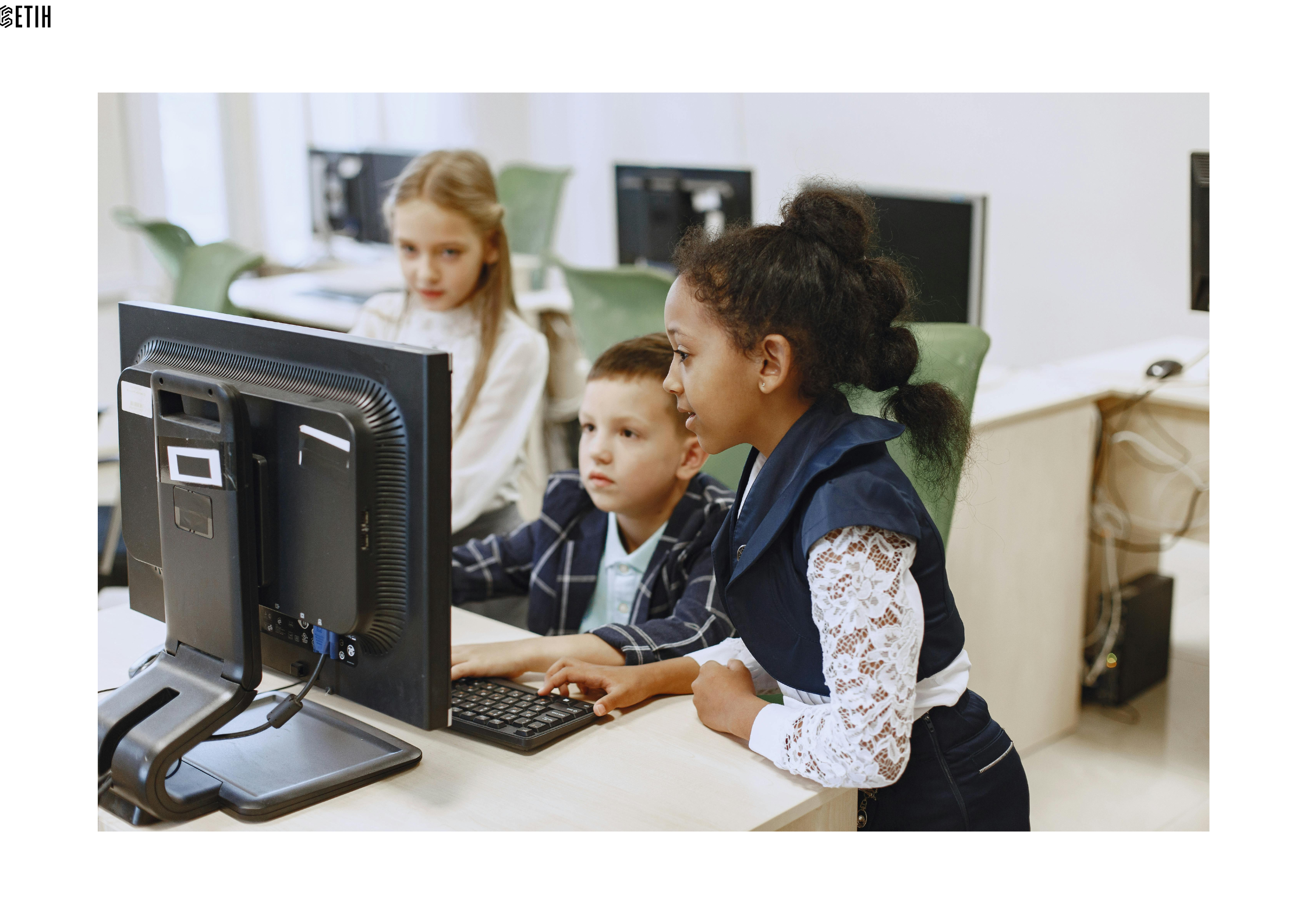
The project will compare children’s interactions with the purpose-built AI toy against their play with traditional, non-AI toys. Researchers plan to examine play behaviors, language use, social interactions, trust and attachment.
Ying Xu, Assistant Professor at Harvard Graduate School of Education, announced on LinkedIn that the team had “just launched the first phase” of the research. She added that “we built our own AI toy and began testing it with children in the lab.”
A longitudinal phase involving participating families is due to follow. That should allow the team to observe whether relationships and patterns of play change as children spend longer with a responsive toy, rather than limiting the evidence to a brief laboratory interaction.
Those results will eventually test questions set out in Artificial Intelligence in Toys: Implications for Child Development and Play, a preprint written by Xu with Harvard researchers Lauren Girouard and Zhonghao Shi.
The 21-page paper is a review and conceptual framework, not a results paper from the newly launched study. It examines existing developmental research and identifies the competing ways in which AI-enabled toys could expand or constrain children’s experiences.
At the center of the analysis is a simple question: when a toy can talk, remember and initiate a new topic, who is directing the play?
AI toys can become participants rather than props
The researchers define AI-enabled toys as physical playthings that incorporate AI chatbot functions. They are typically connected to the internet and may use built-in microphones to record, process and respond to children’s speech.
Some are given the persona of an animal, imaginary creature or fictional character. They may also remember earlier conversations.
That combination separates them from both traditional toys and AI applications accessed through a tablet or phone. A conventional teddy bear remains silent until a child gives it a voice, decides what it wants and places it inside an imagined story. An AI toy can answer, introduce its own ideas and attempt to move the conversation forward.
The paper describes this as a redistribution of agency. Control over the dialogue, narrative and relationship no longer rests entirely with the child. Instead, it is negotiated between the child and the system.
That redistribution is not automatically presented as harmful. The researchers distinguish between a toy acting as an “organizing force” and functioning as a “responsive resource.”
As an organizing force, the system might supply roles, scenarios or next steps that narrow the child’s imaginative choices. As a responsive resource, the same technology could offer material that a child changes, rejects or uses to extend an original idea.
Previous studies reviewed in the paper point in both directions. Children observed playing with robotic pets used their programmed features but also extended the experience imaginatively, including pretending to take a toy to a supermarket while remaining in the room.
Other evidence indicates that dialogue supplied by a toy can restrict the range of stories children create. An analysis of the AI-enabled Hello Barbie doll found that its structured questions and predefined responses could direct the conversation. In another study, children playing with talking Rescue Heroes figures concentrated more heavily on the rescue narratives supplied by the toys, while those using non-talking versions created a wider range of themes, including family and caregiving stories.
Generative AI may produce less rigid conversations than those earlier products. However, the Harvard researchers argue that the underlying trade-off remains: dialogue generated by the toy can partly replace dialogue and narrative that children would otherwise have produced themselves.
More conversation does not necessarily mean richer language
Language is another area where additional interaction can carry competing implications. An AI-enabled toy can sustain a conversation when a child is playing alone, potentially increasing exposure to words and spoken language. Studies covered by the paper have connected vocabulary introduced by AI systems with later word learning.
One cited study found that children continued using non-routine words introduced by an AI speaker when talking to their parents. That suggests language acquired through an artificial system can carry over into conversations with people.
The quality of those exchanges is less certain. Research reviewed by the authors associates children’s conversations with AI toys or devices with reductions in the quantity, effort, mutual grounding and richness of interaction compared with conversations involving parents.
There is also a question of displacement. A toy that behaves like a conversational partner could reduce interaction with caregivers or other children if it becomes a substitute for human company. Alternatively, a system deliberately designed to involve parents could create new opportunities for shared discussion.
The new study’s comparison with traditional toys should help researchers examine how these possibilities play out during actual play. The planned home phase will be particularly important because a laboratory session cannot show whether an initially engaging toy eventually supports family interaction or begins to replace it.
Relationships, trust and persuasion extend the stakes
The preprint draws on research suggesting that children can place responsive technologies in a category between living beings and ordinary objects. They may understand that a device requires electricity and an internet connection while still attributing feelings, intentions or a mind to it.
In one study cited by the authors, children aged four to eight attributed substantial agency to an interactive storytelling chatbot. The effect was strongest among younger participants, with four-year-olds judging its agency as comparable to that of a living person.
Physical form may strengthen those perceptions. Dolls, animals and stuffed toys already invite affection, role play and cuddling. Adding a voice, memory and apparent social responsiveness could make the relationship feel reciprocal rather than entirely imagined by the child.
Existing child studies have not established that AI-enabled characters produce stronger attachment than non-interactive characters. Research involving children aged four to six found no meaningful increase in perceived friendship or attachment. The Harvard paper warns, however, that those experiments were short and may not have given relationships enough time to develop.
That limitation helps explain the importance of the longitudinal home-based phase. It should provide evidence about repeated interaction and attachment that a short encounter cannot capture.
Trust presents a separate problem. Children have been found to view smart speakers as more capable than people at supplying factual information, while social cues as simple as giving a robot a human name can increase their confidence in what it says.
An AI toy combines that apparent informational authority with a physical character designed for play. If it supplies inaccurate information, children may not encounter the warnings commonly displayed beside chatbot responses, and younger users may struggle to recognize the mistake independently.
The researchers also identify persuasion as an area requiring scrutiny. One study found that a talking doll could change children’s views about moral transgressions to a degree similar to a human participant. The preprint argues that toys capable of forming relationships and shaping beliefs could also influence children’s choices without those children recognizing the persuasive intent.
These are hypotheses and risks identified through earlier research, not findings from Harvard’s new AI toy. The study is intended to build the evidence needed to distinguish what the technology might do from what happens when children live and play with it.
The work is supported by the Esther A. and Joseph Klingenstein Fund and the Dean’s Office at Harvard Graduate School of Education. Xu’s LinkedIn announcement also names the Digital Wellness Lab as a project partner.
The laboratory phase is underway. The longitudinal study with participating families is planned next, with its scale and schedule yet to be disclosed.