Canva pushes into AI-powered education with Canva AI 2.0 and Learn Grid rollout
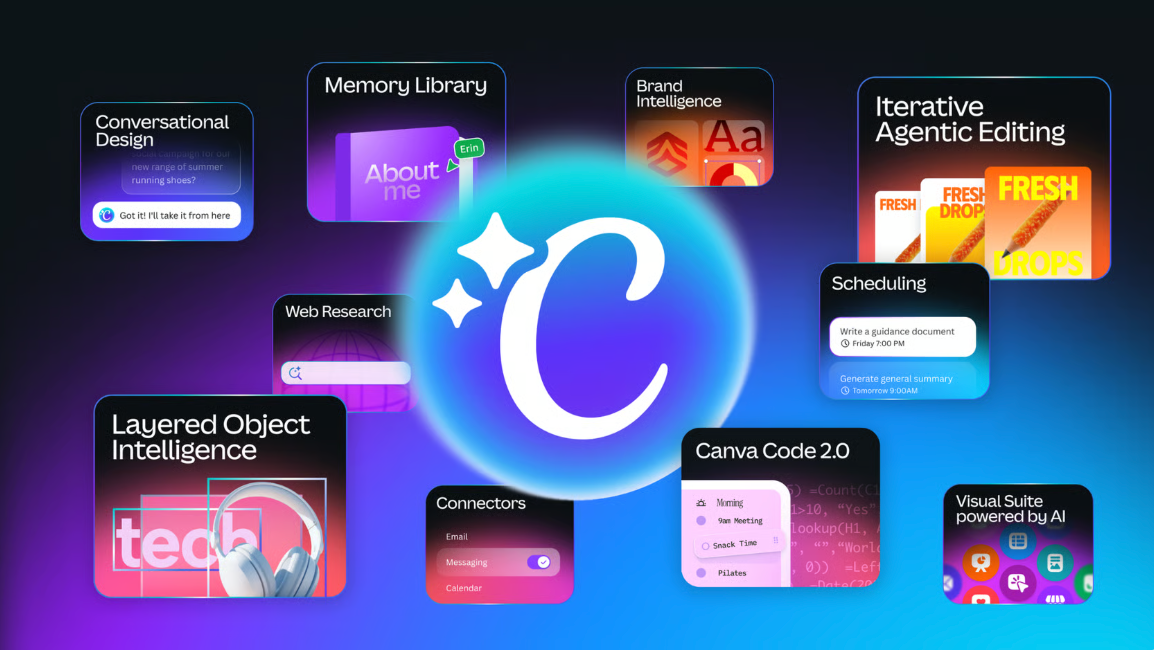
Canva AI 2.0 introduces conversational design, agentic workflows, and education features such as Learn Grid within a single platform
Canva has launched Canva AI 2.0, introducing a shift from design software to an AI-driven platform that can generate, manage, and refine complete outputs from a single prompt.
The update includes new education features such as Learn Grid, alongside workflow automation and integrations, bringing Canva more directly into the AI in education and digital learning space.
The release marks Canva’s most significant product update since its launch, moving the platform toward conversational, agent-based workflows. For teachers and students, the addition of AI-powered lesson creation and differentiated learning tools signals a move beyond design into classroom delivery and support.
From design tool to AI workflow platform
Canva AI 2.0 changes how users create content. Instead of starting with templates or static tools, users begin with a goal, idea, or brief and develop outputs through conversation.
The system generates structured, editable designs from the outset, including layout, hierarchy, and branding. Each element remains independently editable, allowing users to refine specific parts without rebuilding the whole asset.
At the center of the update is a shift toward agentic workflows. Canva AI selects tools, coordinates actions, and produces complete outputs, while maintaining context as users iterate. A persistent memory layer allows the system to learn preferences and apply them across projects.
This reflects a broader trend across AI tools, where platforms are moving from single outputs to systems that manage multi-step processes.
New workflows connect AI to everyday tasks
The update introduces a set of workflows designed to integrate Canva into existing tools and routines.
Connectors allow Canva AI to work with platforms including Slack, Gmail, Google Drive, Google Calendar, Notion, and Zoom, enabling it to generate content based on existing communications and files.
Scheduling enables tasks to run automatically in the background, while web research pulls in structured information that can be turned into editable outputs.
Other additions include tools for applying brand consistency, generating interactive experiences, and building structured data outputs such as spreadsheets. The direction is clear: Canva is positioning itself as a workspace where content is created, adapted, and delivered in one place.
Learn Grid brings AI into lesson planning and delivery
Alongside the broader platform changes, Canva has introduced Learn Grid, a new feature focused on education.
Learn Grid allows teachers to generate multiple versions of the same lesson at different levels, supporting differentiated instruction without requiring multiple planning cycles. Students engage with interactive activities rather than static content, while parents can use the same material to support learning at home.
The feature builds on Canva’s existing education offering, which remains free for teachers and students globally, and introduces a more structured approach to AI-supported teaching and learning.
A shift toward outcome-based AI use
The launch highlights a wider shift in how AI tools are being used across education and work. Rather than generating individual assets, platforms are increasingly designed around outcomes.
Users define what they want to achieve, and the system manages the process of getting there.
For education, this has direct implications. Teachers are not just creating materials, but shaping workflows. Students are not just consuming content, but interacting with adaptive outputs. The skills required move beyond prompt writing toward planning, evaluation, and iteration.
Canva’s growing role in the AI ecosystem
Canva AI 2.0 also expands the platform’s role within the wider AI ecosystem. The system supports workflows that bring in content from other tools and turn it into finished, editable outputs.
This positions Canva between AI generation and final delivery, rather than as a standalone design layer.
The update is supported by Canva’s own AI infrastructure and models, designed to increase speed and reduce cost, and reflects a broader push toward vertically integrated AI platforms.
What this means for EdTech
Canva’s latest update signals a shift toward integrated platforms that combine content creation, automation, and delivery.
For EdTech, the introduction of Learn Grid points to a model where lesson planning, differentiation, and student engagement sit within a single environment. At the same time, the move toward agentic workflows suggests that the boundaries between productivity tools, design platforms, and learning systems are continuing to blur.
For schools and providers, the focus is shifting. The question is no longer whether AI tools are used, but how they are embedded into teaching, learning, and skills development.