Game-based learning: what Clash of Clans can teach students
Integrating game mechanics into the educational process opens new opportunities for engaging students through reward and progress systems they intuitively understand.

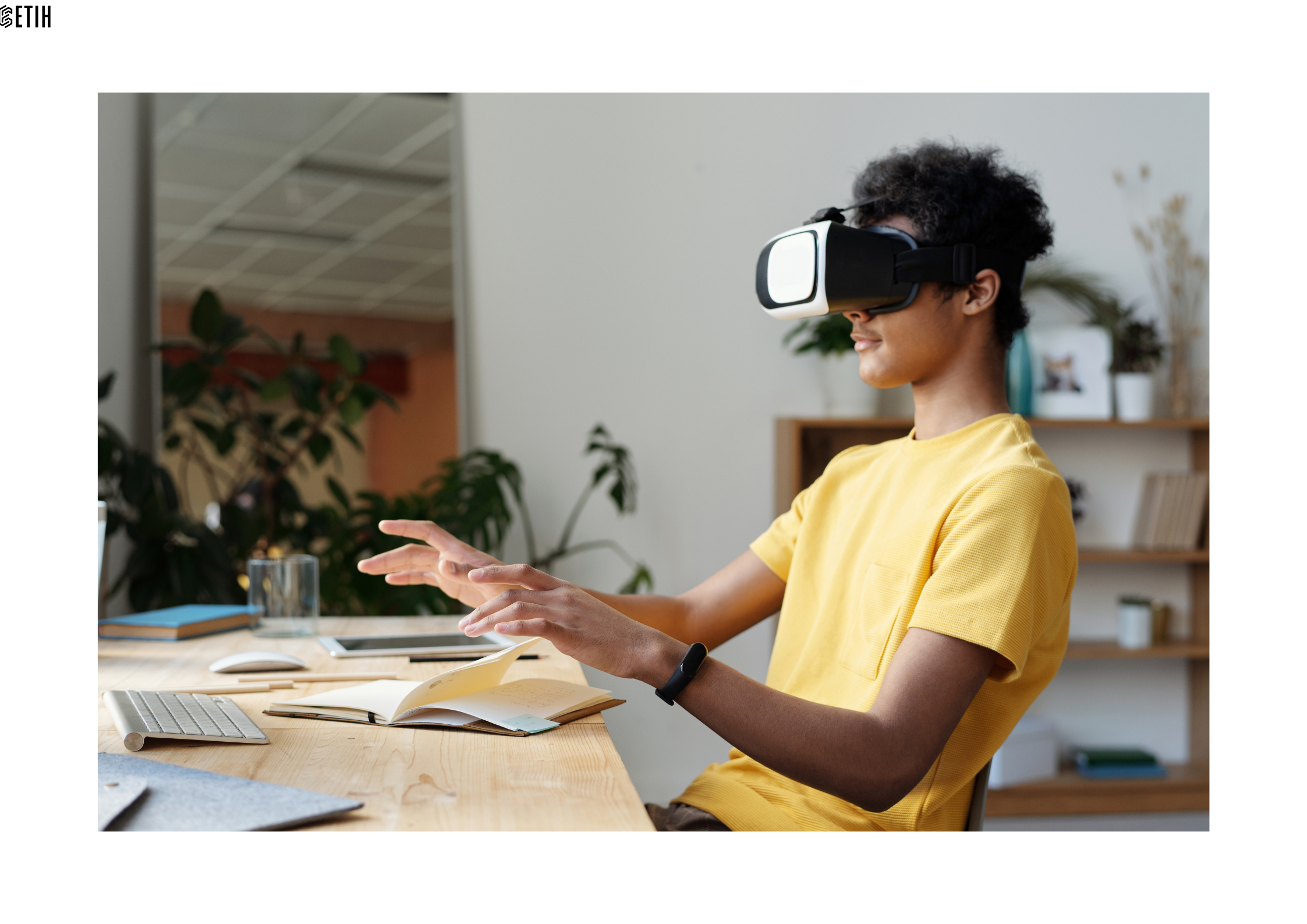
Photo credit: Creative Minds Factory on Unsplash
Using Clash of Clans as an example, we analyze how concepts of long-term planning and resource management can be adapted to create effective learning platforms. We break down key gamification principles that transform monotonous study into an exciting, goal-driven journey.
Cognitive Load and Resource Management
In Clash of Clans, the player is constantly working with three basic types of resources: gold, elixir, and time. In the context of EdTech, the student must manage cognitive load, allocating the right amount of mental processing between learning new theory and reinforcing existing skills. The “resource gathering” system of Clash of Clans promotes the student’s discipline, as one cannot build a powerful army without investing in the infrastructure of resource gathering. In the context of EdTech, the student must “gather" basic knowledge before moving on to more advanced levels.
Modern educational systems increasingly encourage individual learning paces. Sometimes students need quick access to advanced content, bypassing stages they have already mastered independently or in other settings. In the gaming industry, this time-saving approach is implemented through acquiring prepared accounts, such as those on https://skycoach.gg/clash-of-clans-boost/accounts, allowing the user to dive directly into high-level strategy. In education, a similar principle appears in external study programs or accelerated courses, where the focus shifts from the process of “accumulation” to the process of applying knowledge in practice.
Strategic Planning and Delayed Gratification
Perhaps one of the hardest things to teach an individual is how to delay gratification, and this is exactly what Clash of Clans forces the player to do, as all upgrades require waiting several days or even weeks to complete. This is exactly how one should train the prefrontal cortex, as this part of the brain is in charge of executive function. In relation to learning, this could be in the form of a long-term project or research, in which one does not receive recognition until after several steps in the process have been completed.
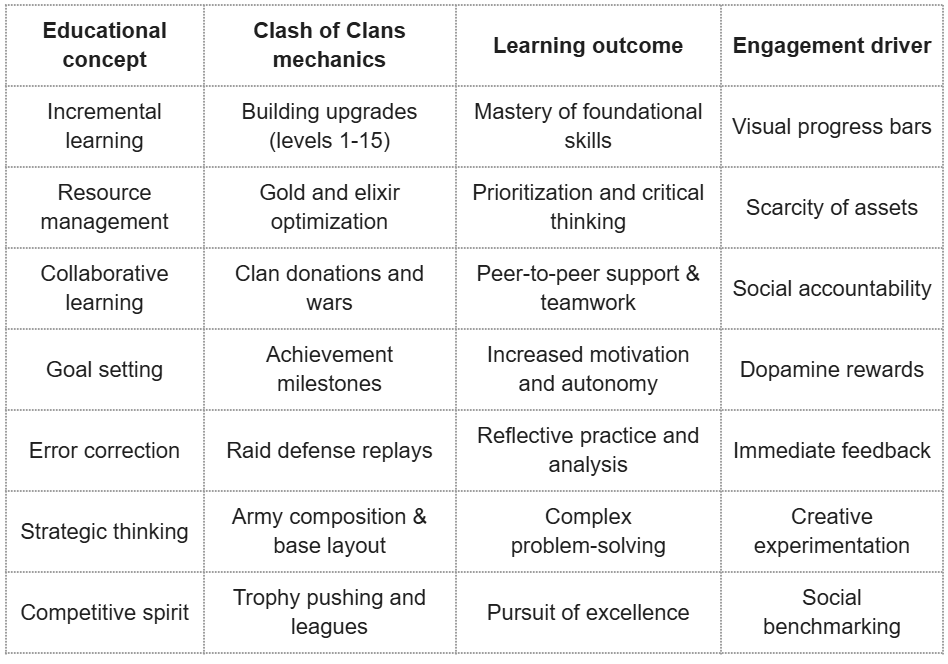
Game-based mechanics also help develop analytical thinking through error analysis. Watching attack replays in the game is a classic example of reflection, when a learner examines the exact moment their strategy failed. Implementing similar “replay” systems in online courses allows students to see weaknesses in their problem-solving logic without waiting for instructor feedback.
Social Learning and Clan Dynamics
The phenomenon of clans in Clash of Clans is a ready-made model of social constructionism. Students absorb information better when united by a shared goal and a sense of responsibility to the group. Mutual assistance in the form of troop “donations” within a clan teaches learners to share their competencies for collective success. In the EdTech environment, this is implemented through forums, group hackathons, and peer-review systems, where a student’s authority grows alongside their contribution to the community.
Team spirit, as well as competitiveness, finds its highest expression in leagues. It would be worthwhile for teachers to observe how esports tournaments, especially professional ones, are conducted, as it might provide valuable insights into the conduct of academic tournaments. The current structure of the Call of Duty League 2026, including the teams, the system, and the schedule, shows the importance of both the schedule and the rules of participation, as it makes the participants feel involved in the tournament. This might help teachers make the curriculum more dynamic.
Gamification as a Tool for Attention Retention
In the era of short-form thinking, keeping a student’s attention for more than fifteen minutes is a major challenge. Games solve this through short sessions and micro-goals. Every wall or cannon upgrade in CoC provides an instant visual result. Educational platforms should use this principle by breaking large text blocks into interactive quests with immediate knowledge checks.
Balancing Difficulty and the Zone of Proximal Development
Games are very good at keeping a balance between boredom and anxiety, thus keeping a player in a state of flow. If the opponent is either too weak or too powerful, there is no motivation. Matchmaking in a game such as Clash Royale or Clash of Clans is similar to adaptive testing in a learning environment. The player must be given tasks that are within their zone of proximal development.
Ethical Aspects and Digital Literacy
Using game mechanics also places responsibility on EdTech developers regarding digital safety and ethics. Games teach basic principles of economics and data protection. Including cybersecurity elements in game scenarios helps students understand the importance of strong passwords and personal data protection in practice. We teach them not only to “build walls, but also to understand how algorithms attempting to breach those walls operate.
Analyzing user behavior inside game modules to personalize the learning plan;
Using storytelling to create context around dry academic material;
Implementing collective goal-achievement mechanics to strengthen social bonds within the group.
Nevertheless, it is worth remembering that the game itself, rather than the goal, remains the tool. Thus, the risk of over-gamification lies in the possibility of students becoming obsessed with earning points rather than learning valuable content. Thus, the task of EdTech innovators lies in finding the golden mean, where the game does not substitute but rather stimulates curiosity.
Concluding Thoughts
The experience of Clash of Clans shows us that the more intricate the system of management and interaction, the more accessible it becomes. In the context of education, we can build a system where learning becomes a natural process of personal development, rather than a requirement. The future of education lies at the crossroads of cutting-edge technology, psychology, and the experience of game mechanics.