ETIH Innovation Awards Winners: IXL receives Editor’s Choice Award
IXL was recognized for a joined-up learning platform covering curriculum, assessment, analytics, personalized practice, and UK-specific evidence across Reception to Year 13.
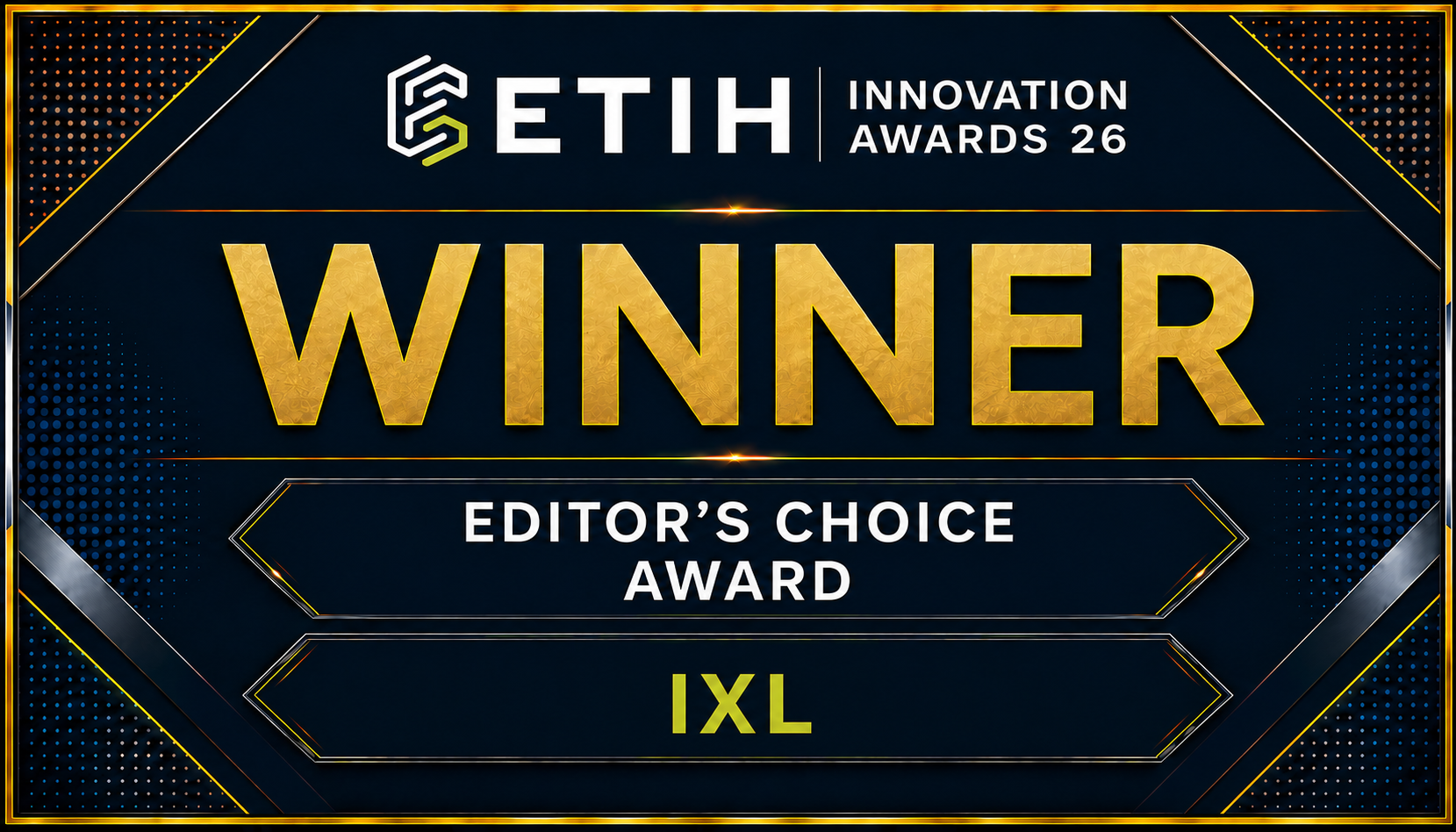
IXL received the Editor’s Choice Award at the ETIH Innovation Awards 2026
IXL has received the Editor’s Choice Award at the ETIH Innovation Awards 2026, with the editorial team recognizing its joined-up approach to curriculum coverage, assessment, analytics, personalized practice, and evidence across UK schools.
The platform covers Reception to Year 13, with curriculum resources, assessment, analytics, personalized practice, KS1 and KS2 SATs support, and Functional Skills mapping brought together for UK schools.
IXL combines math, English, and science content with personalized practice, real-time diagnostic assessment, analytics, curriculum resources, quizzes, universal assessments, and teacher tools. It includes more than 5,000 skills and supports schools across daily teaching, intervention, exam preparation, and progress tracking.
For judges, the strength of IXL’s evidence base was a major factor. The entry cited more than 100 studies involving 80,000 schools, including research linking IXL use to SATs gains, reading proficiency, grammar and punctuation outcomes, and school-level progress in UK settings.
Al Kingsley MBE, ETIH Innovation Awards judge, described IXL as having a “strong evidence base” citing “100+ studies across 80,000 schools” and UK-specific data including Northamptonshire Year 6 research, England-wide reading and grammar findings, and evidence from Nightingale Academy.
Neil Almond, ETIH Innovation Awards judge, also pointed to the breadth of the platform, describing IXL as a “comprehensive tool that can be used at every stage of education.”
A platform built around fewer moving parts
IXL’s entry focused on a problem familiar to many schools and trusts: digital tools can multiply quickly, while the work of connecting assessment, practice, curriculum planning, and progress tracking still falls back on teachers.
Paul Mishkin, IXL Learning’s CEO, says schools are asking harder questions about whether classroom technology is earning its place: “The question schools are grappling with isn't really whether technology belongs in the classroom anymore. It is whether the technology they are using is actually worth it. Does it save time? Does it help teachers do their jobs better? Can it actually personalise learning for all pupils? A big part of accomplishing those things is bringing everything schools and trusts need together in one place, and that is where IXL stands out.”
IXL’s model brings curriculum, assessment, analytics, and practice into the same environment. Teachers can use the platform to identify gaps, assign practice, review progress, and support students without moving between separate products for each task.
For ETIH, IXL’s strength was the way its curriculum, assessment, analytics, and practice tools worked as one platform rather than separate classroom products.
Kingsley also framed IXL’s institutional fit around that breadth, saying the platform has “full Reception-Y13 UK curriculum coverage with KS1/KS2 SATs and Functional Skills mapping” and “the most rigorous evidence base of any entry by a wide margin.”
Mishkin connects the joined-up approach directly to workload and budget pressure: “When curriculum, assessment, analytics and personalised practice all live together, teachers aren’t jumping between systems just to get a clear picture of where pupils are. They can assess, identify gaps, assign practice and track progress without piecing together disparate pieces of information. That means less time managing software and more time doing what teachers do best: teaching.”
The same argument applies at trust and school level. At a time when leaders are reviewing EdTech spend, IXL’s entry positioned one platform covering multiple needs as a more practical option than separate tools that do not connect.
Data that points teachers to the next step
A recurring theme in IXL’s submission was the difference between giving teachers more data and giving them usable direction.
Mishkin says teachers need to know which students are struggling, what they are struggling with, and what should happen next: “Far too often, many EdTech tools have been guilty of the opposite. They provide data, but not direction. That makes differentiation harder. In any classroom, some pupils are ready to move ahead, while others need more time to catch up. Technology should make that easier to manage, not less efficient.”
The Real-Time Diagnostic is designed to give teachers a continually updated view of student understanding in math and English. It identifies what students know and automatically creates individualized action plans based on the results.
For Mishkin, the main shift is that teachers can respond while there is still time to change the learning path.
“The biggest shift is timing,” he says. “Teachers are looking for actionable insights—data that doesn’t just report scores, but gives them clear guidance that reflects the reality of their classrooms. They need to know what is happening right now, not a while ago, so they can step in before small learning gaps become major problems.”
IXL’s adaptive practice adjusts as students work, changing the level of challenge and support. The entry also highlighted translation into more than 120 languages, mobile apps across major platforms, multisensory supports, step-by-step explanations, Group Jams, Leaderboards, and analytics at school, class, and student level.
The platform’s design is deliberately not built around gimmicks, according to Mishkin. He argues that EdTech should give teachers flexibility rather than push students through rigid routes: “What doesn’t help? Tools that are overly gamified, rely on gimmicks or move pupils through rigid learning paths that do not reflect how real classrooms work. Those methods interfere with pupils’ progression towards more independent learning and leave teachers with less flexibility to decide when and how technology should support instruction.”
Emma Thompson, Director of Content and Editor at ETIH, says: “IXL received the Editor’s Choice Award because it showed how much schools can gain when curriculum, assessment, analytics, and practice are treated as connected parts of the same learning process. The entry did not rely on one headline feature. It showed a platform with depth, evidence, and practical relevance for teachers, students, and institutional leaders.”
UK evidence and classroom use
IXL’s submission included evidence from UK schools and wider research. The entry cited research into Year 6 students in Northamptonshire, where reaching proficiency in one additional IXL Maths skill per week was associated with a 1.5-point increase in KS2 SAT scores.
IXL also cited an England-wide study in which schools using the platform saw a 4.55 percentage-point increase in reading proficiency and a 4.63 percentage-point increase in grammar and punctuation compared with similar schools not using IXL.
At Nightingale Academy in Southeast London, students answered more than one million questions and mastered 21,144 skills in one academic year, according to the entry. It said more than 90 percent of Year 6 students made age-expected progress on SAT mock assessments.
Mishkin points to Nightingale Academy as an example of regular, targeted practice being built into classroom routines: “Nightingale is a Southeast London primary school serving many pupils whose families immigrated from around the world. What stands out is how thoughtfully IXL has been built into its blended learning approach. Teachers introduce a concept, then give pupils time to practise independently on IXL, where each learner works at the right level and pace.”
The entry also included feedback from Nightingale Academy staff. Headteacher Omar Jennings says: “We were in the top 10–15% of schools in England in maths, and IXL has done a fantastic job supporting that. Over three years, we’ve been able to close gaps in maths and grammar and see consistently strong results.”
Jennings also described IXL as “a game changer,” saying the deliberate practice it enables is difficult to match through other teaching methods.
Year 5 teacher Adrian Koza says “confidence is so much greater and retention is better” because students can talk clearly about what they have learned. Year 4 teacher Rabia Yeasmin says students become “more eager and more comfortable when it comes to learning” because work is pitched at the right level.
For Mishkin, regular practice changes how students respond to challenge, not only how they perform in assessments: “That's what a consistent, personalised approach delivers—not a single intervention that moves the needle once, but daily practice that builds fluency, confidence and genuine independence over time.”
The Editor’s Choice Award, Mishkin says, recognizes how IXL’s individual components work together: “Receiving the Editor's Choice Award is meaningful because it recognises the full IXL experience, not just a single feature in isolation. For a platform built around the idea that curriculum, assessment, analytics and personalised practice are more powerful together than apart, that kind of recognition matters.”
He adds: “We've spent a lot of time understanding the challenges schools face and innovating to address them. Tremendous care is taken with design, user experience, coding, product speed and stability. Every aspect of the process is considered. We create software that we would be delighted to have our own children use. To have that effort validated by ETIH's editorial team at the inaugural awards means a great deal. It's a win for everyone at IXL who shows up every day passionate about making education better.”
IXL’s priorities over the next year include helping teachers use assessment data more confidently, making personalized learning easier to deliver, and supporting students in building skills and confidence.
Mishkin frames IXL’s next stage around the same balance that shaped its award entry: “Reducing workload and improving outcomes don’t need to be in tension. EdTech should prove it can do both more consistently, and that is what we plan to keep doing.”
If you want to find out more about IXL, more information is available via the company website.