Hillary Rodham Clinton backs £8m bursary fund to widen access at Queen’s University Belfast
Queen’s University Belfast chancellor Hillary Rodham Clinton has announced a new £8 million bursary fund to support students from underrepresented backgrounds, combining matched university funding with philanthropy to secure long-term access to higher education.
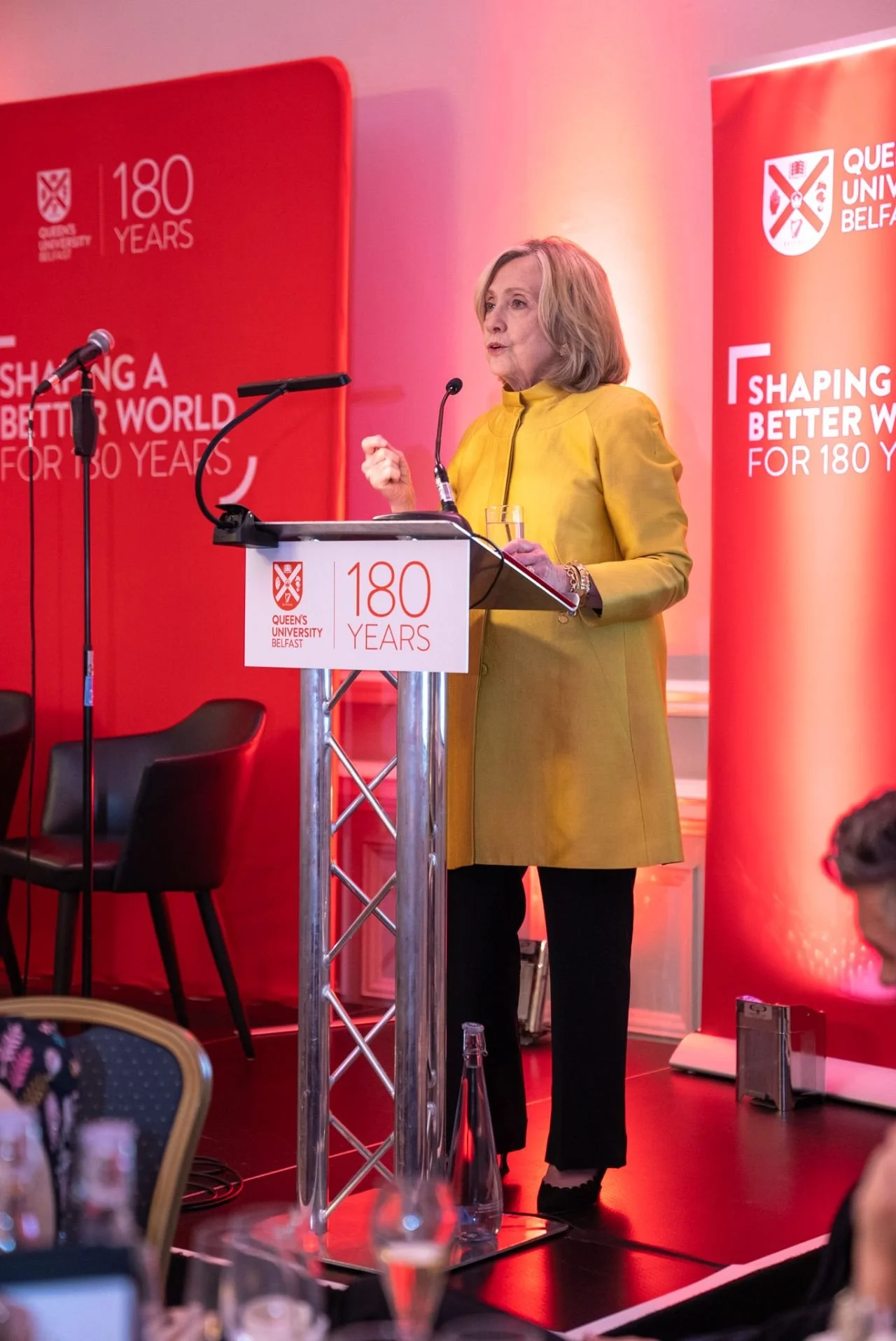
Hillary Rodham Clinton, chancellor of Queen’s University Belfast, a ceremonial role focused on advocacy and widening participation. has announced a new £8 million bursary fund designed to widen access to higher education for students facing financial barriers.
The commitment, unveiled at a London event this week, secures the long-term future of the university’s Pathway Bursary Fund and comes amid growing scrutiny of affordability, access, and participation across the UK higher education sector.
Clinton sets out long-term access commitment
The initiative confirms that Queen’s will commit £4 million in match funding, doubling philanthropic donations to create an £8 million endowed fund by 2028. The Pathway Bursary Fund supports students who may not traditionally see higher education as an option, easing financial pressures linked to study and living costs.
“For almost 200 years, Queen’s has provided learning, support and opportunities for thousands of people whose lives have been transformed by education and have gone on to shape the world,” Clinton says.
She adds: “We remain committed to ensuring that many more students who may otherwise have missed out receive the support they need to succeed. The Pathway Opportunity Programme and the Pathway Bursary Fund exist to ensure that students, most able but least likely to access higher education, are given the opportunity and the support to do so.”
Pathway Bursary Fund and matched funding model
The Pathway Bursary Fund has been in place since 2018 and has supported hundreds of students. It has been backed by Kilwaughter Minerals, the Kilwaughter Foundation, and nearly 500 donors, with bursaries designed to reduce financial strain and allow students to focus on their studies.
Clinton highlights the importance of sustained donor support. “Since 2018, thanks to the generosity of Kilwaughter Minerals, the Kilwaughter Foundation and nearly 500 donors, the Pathway Bursary Fund has opened doors for hundreds of students by providing bursaries which ease the financial burden and allow students to focus on their studies,” she says. “These bursaries are not just financial support – they reflect our investment in the talent, ambition and the future of young people.”
Under the new model, Queen’s will match every £1 raised through philanthropy, up to £4 million, creating a permanent funding base intended to support future cohorts.
University strategy on widening participation
Professor Sir Ian Greer, president and vice-chancellor of Queen’s University Belfast, frames the initiative as part of a long-term institutional strategy. “The University is incredibly proud of our commitment to ensuring that our talented young people are not missing out on educational opportunities because of financial barriers,” Greer says.
He adds that the university has agreed “a bold vision to secure annual bursaries into the future through an endowed fund,” supported by matched funding. “We have made a commitment to match each £1 raised through philanthropy up to £4m until 2028. This is part of our long-term investment in widening participation and commitment to ensuring that Queen’s is reflective of the society within which it exists,” Greer says.
Greer also confirms early progress toward the target, noting: “I am delighted that this announcement has already attracted donations, with the Curran Family Foundation and several other members of the Foundation Board already coming together to commit the first £1.2m towards the match Fund, placing us well on our way towards our target.”
As rising costs continue to influence participation across UK higher education, the move signals how universities are increasingly combining philanthropy and institutional funding to address access and equity at scale.