US Education Department urges schools to judge EdTech by outcomes, not screen time
New federal guidance asks states and districts to put learning evidence, independent evaluation and implementation quality at the center of technology procurement and renewal decisions

New U.S. Department of Education guidance asks states and school districts to evaluate instructional technology by its impact on learning rather than screen time alone
The U.S. Department of Education has issued new guidance urging states and school districts to judge education technology by whether it improves student learning, rather than treating screen time as the primary measure of whether technology belongs in classrooms.
The August 20 Dear Colleague Letter sets out a more evidence-focused approach to edtech selection and use. Districts are encouraged to look for products that have demonstrated positive outcomes, including through randomized controlled trials, review whether tools continue to meet instructional goals and reconsider technology that is not delivering results.
Recreational technology and instructional technology should not be treated as interchangeable, it argues, even as concerns about children's overall screen exposure, digital well-being and privacy continue.
Assistant Secretary of Elementary and Secondary Education Kirsten Baesler makes that distinction explicit: “Cell phones and algorithm-driven social media distract students from learning and undermine the focused classroom environments they need to succeed. States and schools are right to take steps to remove those distractions.
“In contrast, instructional technologies should be judged by their impact on learning, not simply whether they happen on a screen.”
The asks schools to examine what individual products are being used for, which students they serve, how long they are used and, critically, what evidence exists that they improve learning.
Schools are also encouraged to review implementation and outcomes after adoption, while providers are expected to give districts clearer information about capabilities, limitations and performance.
RCTs enter the procurement conversation
States and districts are encouraged to incorporate effectiveness data into procurement and renewal decisions and specifically to look for products that have conducted randomized controlled trials and demonstrated positive outcomes.
The Department also points to third-party evidence, implementation reviews, educator and parent feedback, and local outcome data as information that can support decisions.
For providers, that translates into a series of expectations. The Department says companies should publish rigorous, independent evaluations of their products' impact on student learning where feasible, provide implementation guidance grounded in classroom practice and be transparent about product limitations as well as capabilities.
The letter is unusually direct about the gap between responsible product design and evidence that a tool actually works. “Responsible design is the floor,” it states.
The guidance says effectiveness depends not only on the quality of a technology product, but on what it is being used for and the conditions in which it is implemented. It also argues that product demonstrations and vendor claims should be tested rather than accepted as evidence of impact.
The Department's accompanying announcement goes further on what should happen when that evidence is weak. Schools are encouraged to change course when a tool is not improving learning and remove it altogether when repeated findings show persistent shortcomings.
The letter points to Louisiana, Arkansas, Indiana, Michigan and Texas as states exploring contracting models built around shared performance measures, student data privacy protections, implementation support and district goals. Early examples have focused mainly on tutoring services and increasingly on education technology, according to the Department.
Screen time alone is not the test
While the guidance responds directly to concerns around screen exposure, it stops short of treating all classroom screen use in the same way.
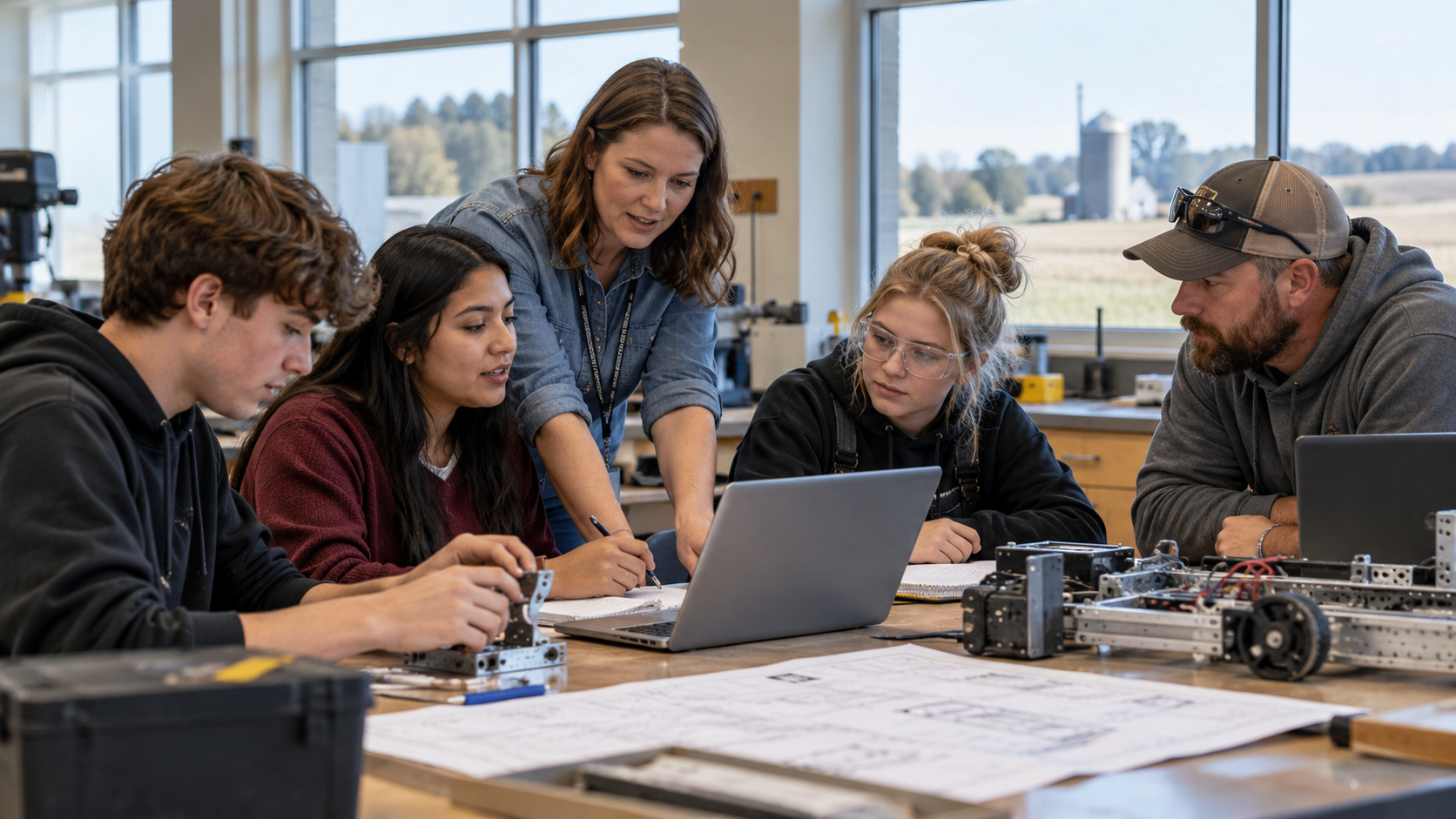
The Department points to several cases where digital tools can serve a specific instructional purpose, including access to tutoring, world language instruction, dual enrollment and specialized career and technical education for students in rural or geographically isolated communities.
Digital assessment is another example cited in the letter. Diagnostic, formative and summative tools can give educators information about student progress and learning needs, while assistive technologies including text-to-speech, speech-to-text, real-time captioning and visual supports can help students with disabilities access instruction.
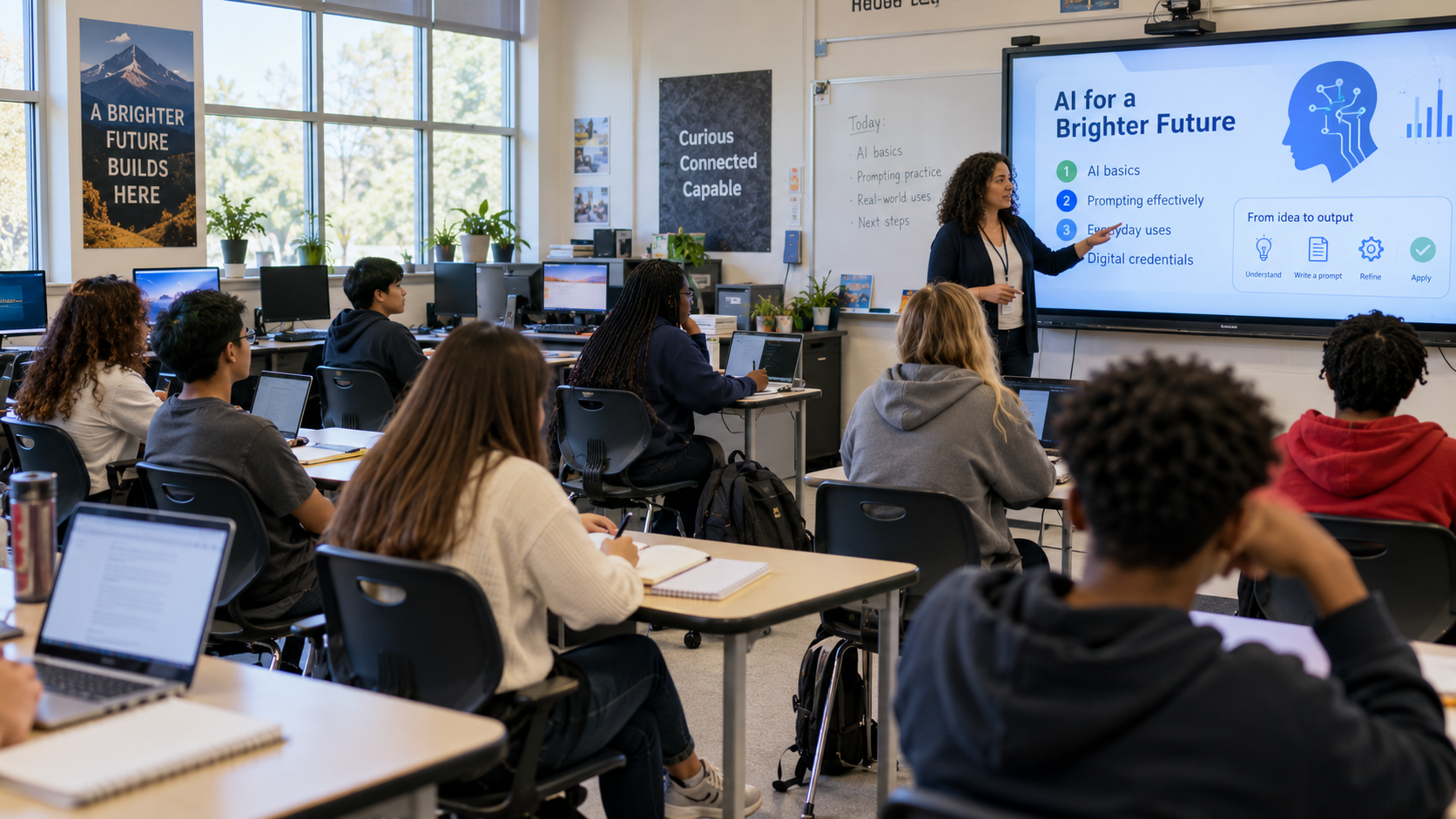
The Department also cites virtual tutoring, adaptive instructional programs and digital learning resources as potential forms of additional support when they complement classroom teaching.
Baesler says: “The same tools that can distract during recreational use can also expand access to advanced courses, support students with disabilities, and help close learning gaps, when used wisely.”
The Department says states and local communities should continue to lead decisions about technology use, with input from teachers and parents. It also asks schools to provide greater transparency around when technology is being used, how much screen time students are experiencing and whether that use is translating into meaningful learning outcomes.
The guidance builds on a July 2025 letter from U.S. Secretary of Education Linda McMahon setting out five principles for responsible AI use in education. Those principles state that education technologies should be educator-led, ethical, accessible, transparent and protective of student data. The new letter applies that framework more broadly across education technology.