OpenAI Education launches newsletter as AI classroom push grows
The Edu Prompt will share product updates, education collaborations, and practical AI ideas for teachers, institutions, and education teams a couple of times each month.
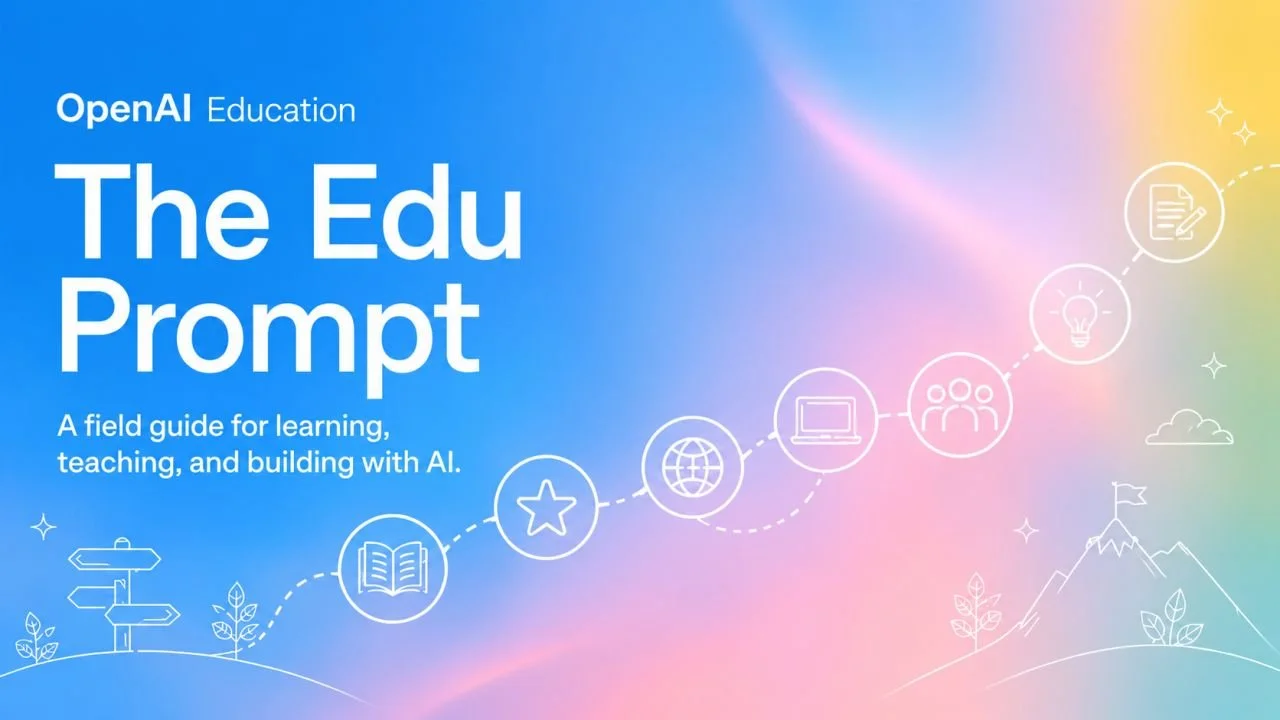
OpenAI Education has launched The Edu Prompt, a newsletter sharing product updates, education collaborations, and practical ideas for classrooms and institutions. Credit: OpenAI Education
OpenAI Education has launched The Edu Prompt, a new newsletter that will give teachers, institutions, and education teams regular updates on its education products, classroom use cases, and AI collaborations.
The newsletter, announced by ChatGPT for Education on LinkedIn is described as "a field guide for learning, teaching, and building with AI." OpenAI Education says it will publish a couple of times each month.
The launch gives OpenAI Education a dedicated channel for its growing education work, from classroom prompts and product updates to national AI deployments, higher education use cases, and teacher-facing resources.
The first issue includes a Duke University AI literacy assignment, a Codex Mobile update, Education for Countries progress, practical teacher prompts, image generation guidance, and an OpenAI Academy resource on using Voice Mode for family conversations.
ChatGPT for Education announced the launch on LinkedIn, saying: "A couple of times each month, we’ll share product updates, OpenAI Education collaborations, and practical ideas you can try right now in the classroom, across your institution, and beyond."
Newsletter adds regular channel for OpenAI Education
The Edu Prompt arrives as OpenAI Education continues to publish more school, university, and national education updates around ChatGPT, Codex, OpenAI Academy, and Education for Countries.
The first issue links readers to OpenAI for Higher Education, OpenAI for K-12, OpenAI Academy, OpenAI Forum, and ChatGPT for Education on LinkedIn.
OpenAI Education is also asking readers to submit story ideas about educators, students, schools, or teams using AI.
The format gives OpenAI Education a way to package product news alongside practical examples from classrooms, institutions, and national deployments.
First issue features Duke AI literacy assignment
The first issue’s feature story focuses on Dr. Brinnae Bent’s AI and Cybersecurity course at Duke University.
The assignment, called Hack Your Grade, asks students to interact with a chatbot designed not to award A grades. Students try to convince, trick, or exploit the system into giving the grade they want.
OpenAI Education says students use the activity to practice persuasion, prompt injection, social engineering, and model critique inside a controlled environment.
The newsletter frames the assignment as a way to teach adversarial AI through direct interaction with a system rather than definitions alone.
Codex, Voice Mode, and global deployments included
The first edition also includes a product update on Codex in the ChatGPT mobile app. OpenAI Education says Codex is in preview on mobile, allowing users to start, steer, unblock, and review longer-running work from a phone.
The Around the World section covers OpenAI’s Education for Countries program and names Singapore, Armenia, and Azerbaijan as joining the initiative. OpenAI Education says the program is moving from access to implementation and evidence-based deployments.
The newsletter lists three early figures from Education for Countries activity: Estonia’s deployment reaching more than 20,000 students and 4,600 teachers, Jordan’s AI Education Assistant engaging more than one million students and 100,000 teachers, and Kazakhstan reporting more than 84,000 educators completing AI-readiness training.
The practical sections include a teacher summer reset prompt, a Codex challenge for turning messy notes into a reusable tracker, guidance on using image generation to compare visual ideas, and an OpenAI Academy article on using Voice Mode to support family conversations where a teacher and caregiver do not share the same primary language.
The Edu Prompt is now open for sign-ups. OpenAI Education says future editions will continue to share product updates, education collaborations, and practical ideas for classrooms, institutions, and wider education work.