NASA bans generative AI from 2027 Student Launch challenge
Teams must complete all challenge work without AI assistance as applications open for NASA’s nine-month rocket engineering program
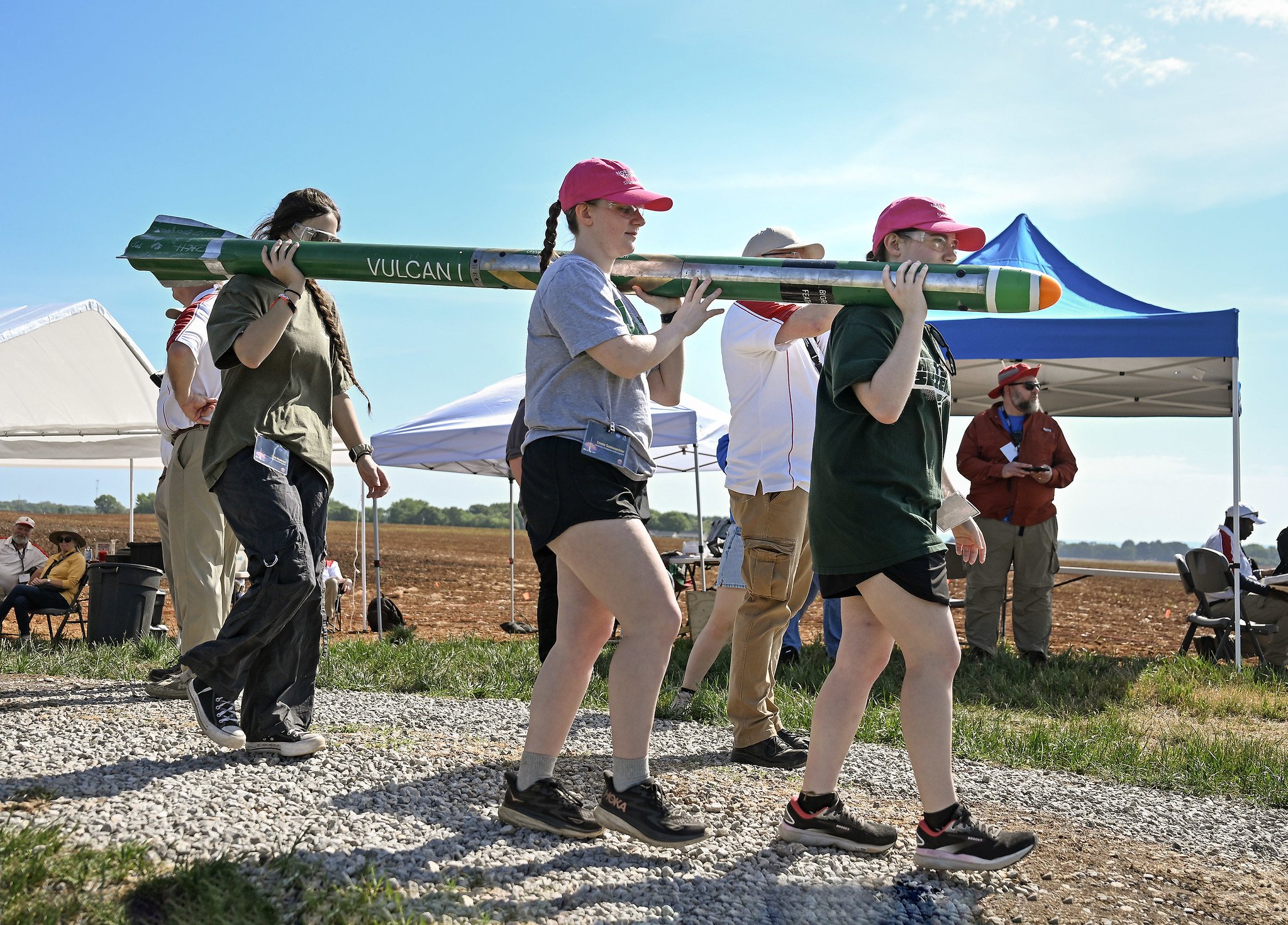
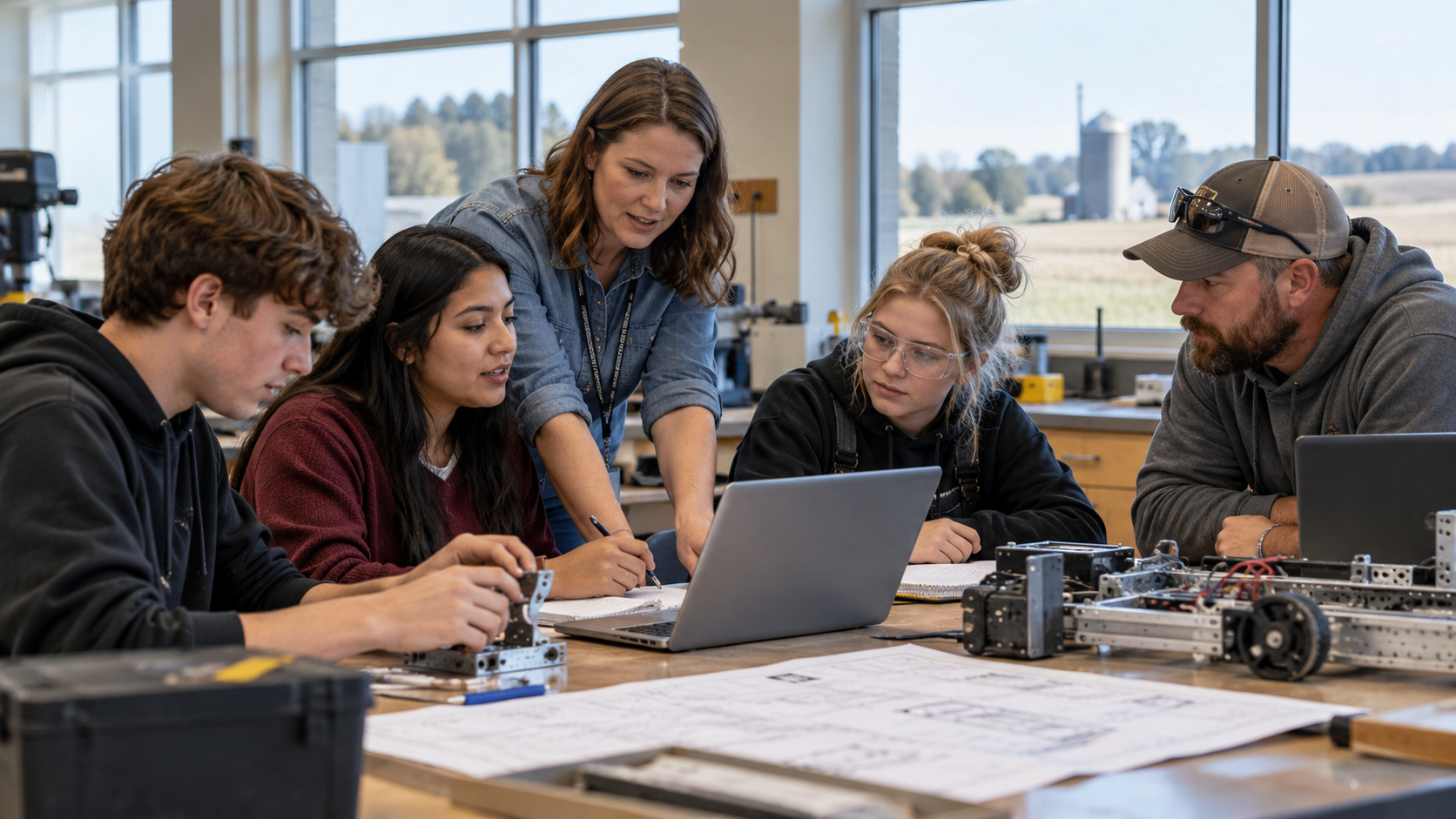
NASA has opened applications for the 2027 Student Launch challenge, with a new rule banning AI tools from challenge-related student work. Photo: NASA
NASA has opened applications for its 2027 Student Launch challenge, with a new rule banning students from using generative AI or other artificial intelligence tools for any challenge-related work.
The rule applies across both the college and university division and the middle and high school division. Students cannot use browser-based generative AI, AI-assisted coding tools or AI-generated imagery, and NASA says challenge content must not be uploaded to or processed by AI systems.
That means the design work, coding, reports, presentations and other submissions must be created by the students themselves.
The restriction sits inside one of the core rules for Student Launch, which already requires students to complete 100% of the project, from design and construction through to documentation and flight preparation. Safety-critical tasks involving motors, black powder, ejection charges and electric matches remain the responsibility of an adult mentor.
The 2026-27 program runs for nine months and asks teams from across the U.S. to design, test, build and launch high-powered rockets and payloads. Applications close on September 14 at 8:00 a.m. Central Time, with selected teams due to be announced on October 1.
University teams face a new autonomous payload challenge
For the college and university division, this year’s mission is built around an autonomous post-landing imaging payload.
Teams must design a system that can land, locate a large passive visual target, capture a photograph of it and calculate the distance from the payload to the target.
The catch is that it has to do that without using GPS for the distance calculation.
The entire process must happen autonomously within 15 minutes of landing and before any human interacts with the payload. Teams must also produce an onboard computation log showing the sequence of target detection, image capture, orientation estimation and distance calculation.
The payload can rotate, sweep or scan to find the target, but it cannot move toward it by walking, rolling, hopping or any other form of translation.
Middle and high school teams can either take on the same payload challenge or design their own scientific or engineering experiment aligned with their educational goals.
The challenge follows NASA’s engineering review process
Student Launch is structured around a series of technical reviews that mirror NASA’s engineering design lifecycle.
Teams move through a Preliminary Design Review, Critical Design Review and Flight Readiness Review, presenting their work to panels that may include scientists, engineers, safety specialists, educators and industry partners.
They must also complete subscale and full-scale demonstration flights before reaching the final launch stage.
For university teams, rockets must be designed to reach between 4,000 and 6,000 feet above ground level, use staged recovery systems and be recoverable and reusable.
The handbook also places a strong emphasis on documentation. Teams are expected to produce flight simulations, safety analyses, test results, engineering drawings, budgets, schedules and evidence that their designs meet NASA’s requirements.
Student Launch is run by the Office of STEM Engagement at NASA’s Marshall Space Flight Center and is designed to give students experience of the processes used in aerospace engineering.
The program also includes a workforce and outreach element. Teams must complete either a STEM Industry Engagement plan or a Community STEM Engagement plan, working with industry professionals, schools, education organizations or community groups during the project.
Who can apply?
Any U.S. college or university can submit a proposal for the University Student Launch Initiative, which is the competitive division.
Eligibility is tighter for middle and high school teams. Grades 6-12 teams must qualify through either the American Rocketry Challenge or Rockets for Schools. The top 25 schools from the American Rocketry Challenge and the top seven Class II teams from Rockets for Schools can apply, provided they have also completed the Advanced Rocketry Workshop. Participation is limited to one team per school.
The middle and high school division is non-competitive and is designed as an educational experience, while the university division is scored and includes awards for areas including vehicle design, experiment design, safety, project review, STEM engagement and overall performance.
Selected teams will begin formal design work in October. Preliminary Design Review materials are due on October 29, Critical Design Review submissions on January 7 and Flight Readiness Review materials on March 8.
Teams attending the culminating event will arrive in Huntsville, Alabama, on April 7, 2027. Launch Week activities take place on April 8 and 9, with the final launch scheduled for Saturday, April 10 and April 11 held as the backup date.