Government AI engineers will work inside six councils from January to see whether connecting public service data helps careers advisers reach 16- to 24-year-olds sooner
Government AI engineers will work with Liverpool City Region’s Combined Authority and six councils from January 2027.
Liverpool City Region will test whether AI can help local advisers spot when a young person needs support getting into work, education or training. The first people the project aims to reach are 16- to 24-year-olds who are already out of education, employment or training, or at risk of falling out of all three.
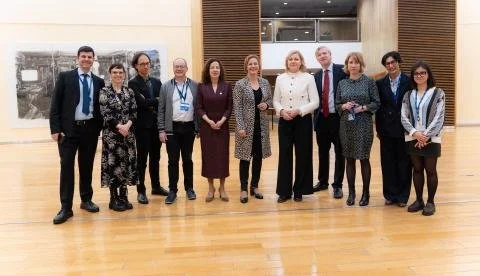
Liverpool City Region Mayor Steve Rotheram and AI Minister Kanishka Narayan agreed the 12-month partnership on November 20. Starting in January 2027, engineers from the UK government’s Incubator for AI (i.AI) will work alongside staff at the Liverpool City Region Combined Authority and its six councils. Liverpool City Region is the first to sign a memorandum of understanding with i.AI under the scheme.
Can advisers reach young people sooner?
The project will look at what happens when local advisers can draw on information already held across different public services. The government wants to find out whether AI can help identify where support might be needed, giving advisers a chance to reach young people earlier and help them find a job, apprenticeship or training opportunity that fits their circumstances.
Local teams and i.AI are still agreeing what to work on first. Young people will help shape the design of the tools, which will be publicly owned. The project forms part of the government’s immediate response to Alan Milburn’s review of young people and work. Ministers put the number of young people out of education, employment or training at around one million. Employment Minister Andrew Western places the Liverpool work alongside the government’s wider £2.5 billion investment in helping young people into work and learning.
Who decides what support a young person gets?
The government says trained professionals will make the decisions about an individual’s support. AI’s role would be to help advisers see where they might need to act. The partners will put data-sharing agreements and privacy assessments in place before accessing or using personal information for the project.
The work will also follow the Liverpool City Region Community Charter on Data and AI, which residents wrote to guide how these technologies are used in local services.
A separate project aims to reach 25,000 young people
On the same day, the government announced that Kyndryl is supporting Skills Builder Partnership to develop resources for young people across the Liverpool City Region. The materials will show how skills such as teamwork, problem-solving and creativity complement AI and help young people explore careers that use the technology.
The partners aim to make the resources available to schools and colleges, with the ambition of reaching 25,000 young people across the region.
What Liverpool could teach other regions
The Liverpool partnership will serve as an early test for the Government Digital Service’s Youth Data Service. Part of the work will be to establish shared standards for how services manage and exchange information when supporting young people. The project builds on the Digital Devolution program launched in August.
The Prime Minister’s AI Taskforce is backing the partnership, which will also explore wider uses of AI in public services, including healthcare. The government plans to use what it learns in Liverpool to work with other mayoral authorities in England on how those tools and approaches could fit their own services.
ETIH Innovation Awards 2027 open for entries
The ETIH Innovation Awards 2027 are now open for entries, with 26 categories recognising companies, institutions, projects and individuals making a measurable impact across education technology. The global awards span AI in education, digital learning, higher education, skills and workforce, inclusion, education operations, evidence and impact, with entries managed through ETIH’s new online awards platform.
Entries are open worldwide, with the early-bird deadline on Friday 18 December 2026 and the final entry deadline on Friday 26 February 2027 at 23:59 UK time.
Explore the 2027 categories and judging criteria, read the How to Enter guide or start an entry through the ETIH Innovation Awards 2027 platform.