The Swiss neurotechnology company plans to use EEG recordings to help drug developers look for early signs of treatment response in Alzheimer’s disease and other neurological conditions
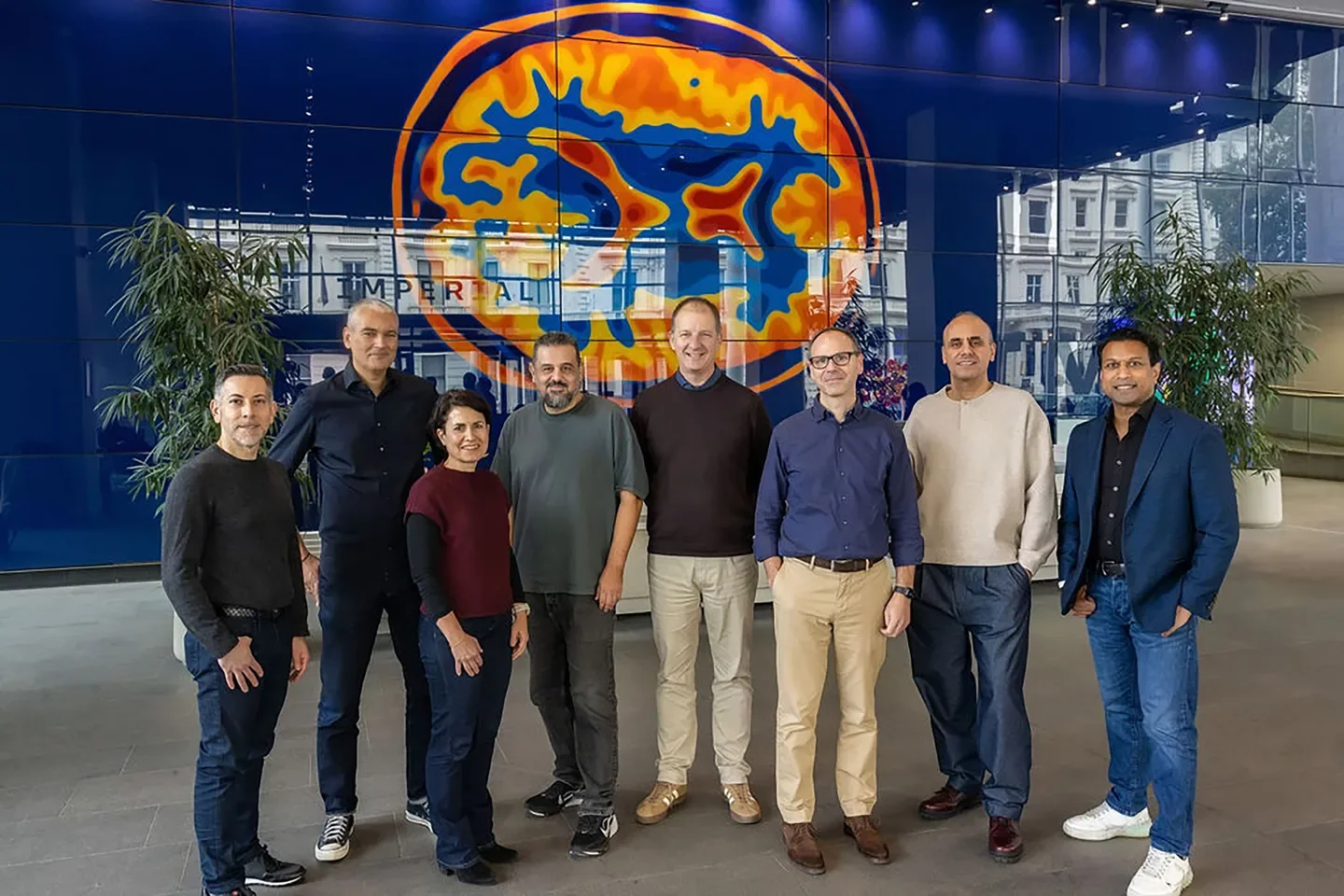
Cogitat will continue operating as a business unit within Indivi following the acquisition. Photo credit: Imperial College London.
Basel-based Indivi has acquired Cogitat, an Imperial College London spinout that uses AI to interpret electrical signals recorded by headsets. Indivi’s first priority is to help pharmaceutical companies investigate whether experimental treatments are affecting the brain before changes in behavior become apparent. The purchase price remains undisclosed.
Cogitat, which is based in the UK and Greece, will continue operating as a business unit within Indivi. The company’s model, NeuroRVQ, analyzes data from electroencephalography (EEG), a technique that records electrical activity through sensors on the scalp.
From controlling virtual reality games to reading brain signals
Cogitat began in December 2020 with a different aim. The team wanted to build a brain-computer interface that would let users control virtual reality games through brain activity. Its early models picked out patterns associated with what a person intended to do. The team later extended that work to look for signs of attention and distraction.
EEG headsets are relatively inexpensive and easy to use, but their recordings can be difficult to interpret. Cogitat’s researchers designed experiments at Imperial so they could compare what people were doing with the signals recorded at the time. The team says having its machine learning engineers collect data themselves helped them spot misleading patterns.
"For example, early on, some signals that looked like concentration turned out to be eye movements," says Dr. Allan Ponniah, Cogitat’s CEO and Co-founder.
Cogitat’s technology took first place in the EEG Transfer Learning competition at the Neural Information Processing Systems conference, known as NeurIPS.
Indivi turns to drug development
Indivi plans to use NeuroRVQ to look for early signs of biological response to experimental treatments. Cogitat says validating the technology in practice is part of its next phase. Indivi also sees potential applications in consumer technology over the longer term.
NeuroRVQ is scheduled to be presented at the 40th NeurIPS conference, which runs from December 6 to 12, 2026.
ETIH Innovation Awards 2027 open for entries
The ETIH Innovation Awards 2027 are now open for entries, with 26 categories recognising companies, institutions, projects and individuals making a measurable impact across education technology. The global awards span AI in education, digital learning, higher education, skills and workforce, inclusion, education operations, evidence and impact, with entries managed through ETIH’s new online awards platform.
Entries are open worldwide, with the early-bird deadline on Friday 18 December 2026 and the final entry deadline on Friday 26 February 2027 at 23:59 UK time.
Explore the 2027 categories and judging criteria, read the How to Enter guide or start an entry through the ETIH Innovation Awards 2027 platform.