Google Cloud opens $75,000 Agentic Cinema hackathon for Gemini-powered media tools
The online competition closes on September 7 and requires entrants to build a working AI agent using Google Cloud and one of five partner technologies
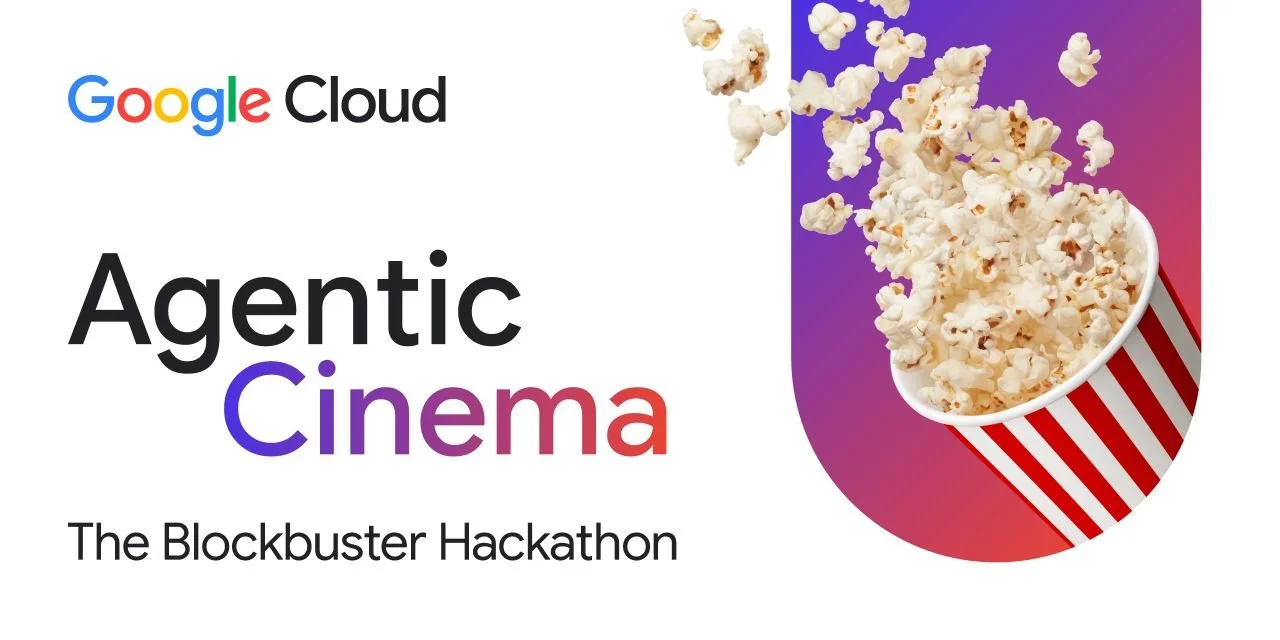
Google Cloud’s Agentic Cinema hackathon offers $75,000 across five partner tracks for working Gemini-powered media and entertainment tools
Google Cloud has opened submissions for Agentic Cinema: The Blockbuster Hackathon, an online competition offering $75,000 for AI agents designed around film and entertainment workflows.
Entries opened on July 27 and close at 10:00 p.m. GMT+1 on September 7, 2026. Participants must be above the legal age of majority in their country of residence, with some countries and territories excluded under the official rules.
The challenge asks developers to build a functional agent or multi-agent system powered by Gemini and Google Cloud Agent Builder. Each project must integrate a product or Model Context Protocol server from IBM, Grafana, Parallel, ClickHouse or Replit.
Despite the cinema branding, this is not a competition for AI-generated films. Entrants must create a working tool for a media and entertainment process involving filmmakers, screenwriters, studio crews or fans.
Potential applications covered by the hackathon resources include script processing, video transcription, asset captioning, storyboarding, speech generation, sentiment analysis and production data management. Google Cloud also provides guidance covering deployment, function calling, external tools, database access, security and safety settings.
Working software and public code required
A concept or technical demonstration alone will not meet the submission requirements. Entrants must provide a URL to a hosted project and a three-minute video demonstrating the agent working as built. The video must be publicly available through YouTube or Vimeo and presented in English or include English subtitles.
Each submission also needs a public open-source code repository containing the source code, assets and instructions required to run the project. The repository must include a complete open-source license and demonstrate actual runtime use of Google Cloud and the selected partner service.
Naming a partner technology in a README file is not sufficient. Its service must be imported and called in the project’s code.
Participants must select one partner track and complete the Devpost submission form. Projects will be assessed against other entries using the same partner technology.
Five partner tracks divide the prize fund
IBM, Grafana, Parallel, ClickHouse and Replit each have separate first, second and third-place awards. First-place winners receive $7,500, second-place winners receive $4,500 and third-place winners receive $3,000. The five tracks therefore account for the full $75,000 prize fund. First-place winners are also offered an opportunity for social media promotion.
Judging will consider technological implementation, product design, potential impact and the quality of the idea. The organizers say projects should present a coherent product experience and demonstrate how the proposed system addresses a specific problem for a defined audience.
The full judging panel has not yet been announced.
Developers can use either a managed, low-code route or a custom software development kit. Available resources cover the Gemini Enterprise Agent Platform, Agent Builder, Agent Engine, the Agent Development Kit and Google Cloud services for deployment and data connectivity.
Google Cloud is also offering eligible participants the option to request $100 in cloud credits. Approval is expected within one to five business days, while supplies last.
Completed projects, demonstration videos, public repositories and Devpost forms must be submitted by 10:00 p.m. GMT+1 on September 7, 2026.