ETIH EdTech predictions for 2026 as education moves into a more intentional digital phase
A year of rapid adoption sets the stage for 2026 as education shifts toward clearer strategy, stronger design, and more deliberate use of technology to support learning, teaching, and skills development.
Last year marked the moment when education stopped talking in hypotheticals and started dealing with the reality of rapid technological change. The pace was quicker, the expectations were higher, and the sector reached a point where small experiments were no longer enough. AI became part of everyday decision making, digital confidence moved from nice-to-have to essential, and questions about trust, access, and skills surfaced more sharply than ever.
It was a year that forced schools, universities, and employers to think beyond pilots and begin shaping longer-term strategies. If 2025 was the acceleration point, 2026 is where education begins to build with more intention, more clarity, and a far stronger sense of what works.
This shift sets the tone for the year ahead. The conversations shaping 2026 are no longer about whether technology belongs in classrooms, campuses, or workplaces, but about how it is designed, governed, and integrated so it genuinely strengthens learning and professional growth. The sector enters the year with sharper priorities, firmer expectations, and a clearer understanding of the gaps that still need addressing. So where does that leave us? These are ETIH’s EdTech predictions for 2026.
1. AI becomes embedded, not optional
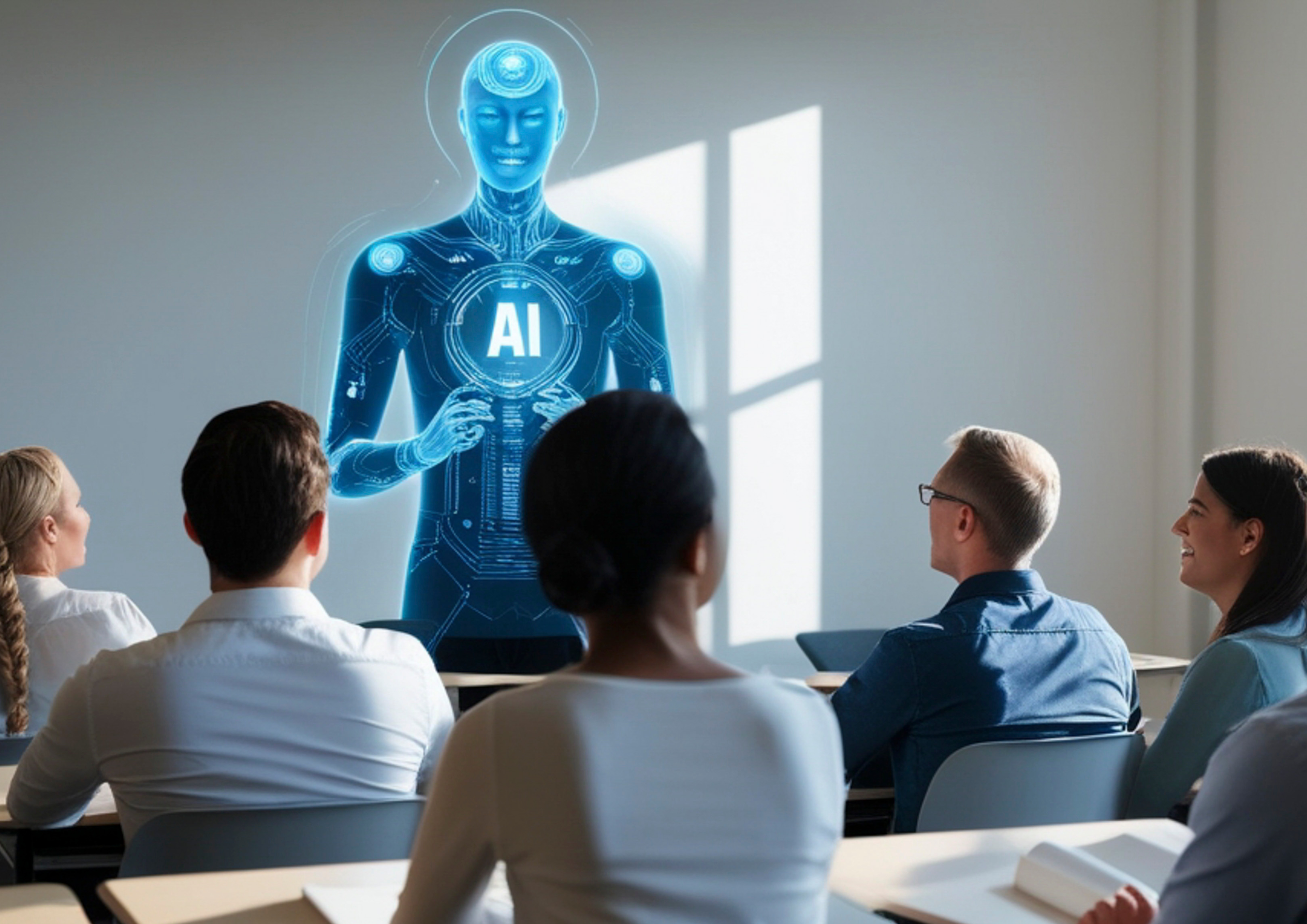
If there is one shift ETIH predicts will become impossible to ignore this year, it is how quietly AI slips into the systems everyone already uses. Instead of arriving as shiny new tools, AI will be baked into planning platforms, reporting dashboards, and workflow software, turning up in places where users barely notice it at first.
That subtlety is exactly why 2026 will matter. When automation becomes the default rather than the add-on, schools, colleges, and employers will need to look more closely at what the technology is actually doing, who is checking it, and where human judgment must stay in control. This is the year AI stops introducing itself and simply takes a seat at the table.
2. Big Tech shapes education more directly
ETIH predicts that 2026 will be the year the major platforms stop hovering at the edges of education and step firmly into the center. Google, Microsoft, AWS, Meta, and OpenAI are no longer just suppliers of tools. They are setting the pace, defining the standards, and deciding what “default” looks like for millions of learners.
Their updates now land with the weight of policy announcements, and institutions often adapt faster to product changes than to their own strategic plans. This growing influence brings benefits in scale and stability, but it also raises sharper questions about dependency, choice, and long-term autonomy. The platforms will not slow down in 2026, so the sector will need to be far more deliberate about how it works alongside them.
3. Governments move from guidance to hard expectations
One of the clearest signals heading into 2026 is the shift in how governments approach digital and AI readiness. Last year’s loose encouragements are giving way to firmer expectations, and more countries are preparing to follow the United States with structured requirements for AI literacy, responsible use, and baseline digital skills in schools.
The UK is moving in the same direction as it sharpens its own plans for embedding AI understanding across the curriculum. The mood has changed. Policymakers are no longer asking whether students should learn about AI, but how early, how consistently, and with what safeguards. This move brings clarity, but it also places real pressure on institutions that are still catching up on training, infrastructure, and curriculum design. The coming year will test how well national ambitions align with what classrooms, colleges, and universities can realistically deliver.
4. Workforce development becomes the main growth engine
If last year showed anything, it was that the biggest momentum in EdTech now sits outside traditional education settings. Employers are rethinking how they build capability, and 2026 is set to accelerate that shift. Organizations are looking for practical ways to give staff hands-on experience with AI, data, and emerging technologies without relying solely on universities or lengthy in-house programs. Short-form learning, micro-credentials, and simulation-based training are becoming the preferred route, especially in sectors where skills gaps are widening faster than roles can be filled.
In the UK, companies such as Euan Blair’s Metaverse are beginning to shape this landscape more directly, offering structured pathways that bring technical training, industry projects, and employer partnerships under one roof. ETIH sees this blend of scale, practicality, and real-world relevance driving much of the movement this year, as organizations search for credible routes to upskilling that match the pace of their own digital transformation.
5. Human-centered skills take priority as AI reshapes learning

Alongside the push for digital and AI capability, a quieter but equally important shift is taking shape for 2026. Educators across schools, colleges, universities, and professional settings are paying closer attention to the skills that sit beyond automation.
Communication, judgment, independent thinking, and the ability to navigate unfamiliar problems are moving higher up the agenda, especially as AI handles more of the routine work.
ETIH has noticed growing emphasis from providers who want students to use AI confidently without losing the reasoning and originality that matter in real settings. The focus this year will be turning that ambition into consistent, everyday practice.
6. AI-assisted content creation becomes standard practice
Lesson planning is one of the areas set to change most visibly in 2026. A growing wave of tools released over the past year has pushed AI support from a novelty into an everyday expectation. In the UK, platforms such as TeachMateAI are giving teachers quick ways to draft lesson outlines, explore curriculum variations, and generate starting points that can be shaped into something more personal. Stateside, OpenAI’s free teacher tools and Google for Education’s expanding suite have made it easier for educators to build resources, restructure activities, and test alternative explanations with far less friction.
Back in the UK, Pearson and Microsoft have begun integrating similar features into their wider ecosystems, allowing teachers to refine assessments, lesson sequences, and feedback directly within the platforms they already rely on. The challenge this year will be making sure these tools enhance professional judgment rather than simply speeding up the admin that sits behind it.
7. Vibe coding and next-generation building tools reshape entry into tech
A noticeable shift for 2026 is how quickly AI-assisted development is lowering the barrier to creating software. Vibe coding and similar next-generation tools are giving learners the ability to build applications through natural language, example-based prompts, and guided workflows rather than traditional syntax. Companies are already moving in this direction, with Google developing vibe-coding features in AI Studio, and platforms like Replit, GitHub, Microsoft, and Amazon expanding their natural-language coding tools to make building far more intuitive.
For colleges, universities, and early-career training programs, this changes who can participate. Students who may have been put off by the formality of coding can now move from idea to prototype in minutes. The shift is less about replacing computer science and more about widening access, especially for learners with creativity but not yet the technical fluency. It moves the focus from “can you code” to “can you solve the problem.”
8. Data governance and trust become strategic priorities

After a year marked by several high-profile breaches, 2026 opens with a sharper focus on how exposed education systems can be when core data platforms fail. The PowerSchool breach in the United States was the wake-up call.
Attackers gained access through a compromised staff password, then downloaded huge volumes of sensitive information held inside its Student Information System, with claims that up to 62 million student records were taken. It was the kind of incident that showed just how much risk sits inside a single cloud provider used at national scale.
Since then, schools, colleges, and universities have been re-examining what they store, how it’s secured, and whether vendors can actually meet the standards the sector now expects.
The pressure this year is shifting firmly toward transparent safeguards, clearer audit trails, and governance models that protect students without slowing digital ambitions.
9. EdTech funding stabilizes and shifts toward proven models
If 2025 was the year of cautious capital, 2026 is shaping up to be the moment investors start backing what has actually demonstrated value, not just what sounds good in a pitch deck. The turbulence of the last two years , shrinking valuations, AI hype, rapid pivots, has left both founders and investors more focused on products that have real adoption, measurable impact, and credible paths to revenue.
We’re already seeing funding shift toward tools with clear curriculum alignment, workforce-readiness outcomes, or enterprise-level integration, rather than “AI for the sake of AI.” Companies like Knowunity, Lirvana Labs, Attensi, and PyxiScience secured rounds last year by proving they could solve real problems with sustainable models, not just generate buzz. That direction of travel continues into 2026, with investors looking harder at evidence, retention, and long-term partnerships — a market correction that should steady the sector rather than stall it.
10. Human expertise becomes the anchor of EdTech design
AI isn’t slowing down in 2026, and no one in education is pretending otherwise. What is changing, though, is the understanding of what actually holds classrooms together. After a year of rapid adoption, policy shifts, and constant product launches, the sector is settling into something more honest: technology only works when it amplifies human judgment, not replaces it. Whether learning happens in-person or online, the teacher remains the center of gravity.
Across the stories ETIH covered last year, the pattern kept resurfacing. MIT’s creativity research showed the limits of shortcutting. Google’s updates highlighted how AI support only lands when educators shape its use. PowerSchool’s breach underlined the risks when trust is assumed rather than earned. Even the wave of new lesson-planning tools proved that automation is only useful when it frees teachers to do the parts of the job only they can do.
Heading into 2026, EdTech is shifting toward models built around teacher agency, transparent controls, and clear boundaries for when AI should step in, and when it shouldn’t. The momentum is still with AI, but the sector now understands the obvious truth it sometimes forgot: sustainable innovation depends on the people guiding the learning, not the systems running beneath it.
The ETIH Innovation Awards 2026

The EdTech Innovation Hub Awards celebrate excellence in global education technology, with a particular focus on workforce development, AI integration, and innovative learning solutions across all stages of education.
Now open for entries, the ETIH Innovation Awards 2026 recognize the companies, platforms, and individuals driving transformation in the sector, from AI-driven assessment tools and personalized learning systems, to upskilling solutions and digital platforms that connect learners with real-world outcomes.
Submissions are open to organizations across the UK, the Americas, and internationally. Entries should highlight measurable impact, whether in K–12 classrooms, higher education institutions, or lifelong learning settings.