Anthropic commits $150m to Claude Corps AI fellowship program
The program will train 1,000 early-career fellows and place them inside US nonprofits for 12 months, with the first cohort starting in October 2026.
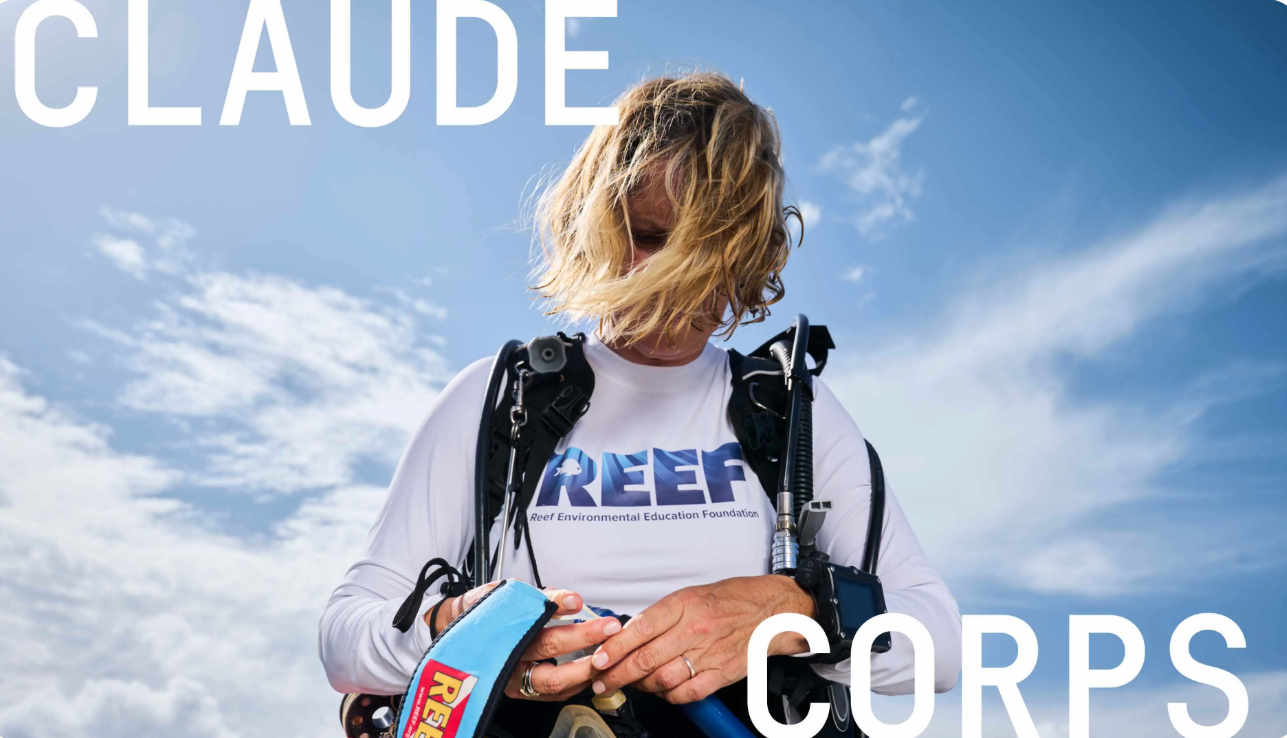
Anthropic’s Claude Corps program will place early-career AI fellows inside US nonprofits, including Reef Environmental Education Foundation
Anthropic has announced Claude Corps, a $150 million national fellowship program that will train 1,000 early-career workers in AI and place them inside nonprofits across the United States.
The program was announced on 11 June 2026 and is being run by Anthropic, CodePath, and Social Finance. It is designed to give early-career workers hands-on AI experience while helping mission-driven organizations use Claude to support operations, programs, and service delivery.
The first cohort of around 100 fellows will begin in October 2026. The remaining 900 fellows are expected to join later cohorts starting in January 2027 and August 2027.
Fellowship applications are open until 17 July for the first cohort. Anyone over 18 with under two years of full-time work experience can apply, with no education requirement, provided they are authorized to work in the US, comfortable working with Claude, and willing to relocate if needed.
Fellows will receive an $85,000 full-time salary and benefits. The 12-month fellowship is fully funded by Anthropic, with fellows employed by CodePath and placed inside nonprofit host organizations.
AI training for early-career workers
Claude Corps is aimed at people entering the workforce as AI changes entry-level work, skills demand, and the way organizations use technology.
Shad Ahmed, who works on economic mobility and AI at Anthropic, said in a LinkedIn post that Anthropic’s data indicates the "early-career ladder is softening" while thousands of under-resourced nonprofits need support to use AI safely.
Ahmed said: "Today we're announcing Claude Corps, a $150M program that places 1,000 early-career fellows at 300+ nonprofits around the U.S."
He added that Claude Corps is being built "to be scaled and open-sourced, especially as the evidence comes in that it works for both fellows and host orgs."
Fellows will complete an intensive training program before joining host organizations. The training will cover prompt design, building with Claude and the Anthropic API, and running AI evaluations.
After placement, fellows will continue to receive around five hours of structured training each week. The rest of their time will be spent working on projects for their host nonprofit.
Fellows will also receive support from a CodePath mentor, office hours from Anthropic for technical questions, an expanded Claude token budget, and professional guidance from a manager at the host organization.
Nonprofits receive funded AI capacity
Claude Corps host organizations will receive a full-time fellow whose salary and benefits are covered by the program. Hosts will also receive Claude access, implementation funding, and direct support.
According to the host organization information, eligible nonprofits must be US-based 501(c)(3) organizations and Claude for Nonprofits Team or Enterprise customers. For the October 2026 cohort, host organizations need an in-person or hybrid workplace where fellows can spend regular time with staff.
Fully remote nonprofits can apply, but will not be eligible to host fellows until the 2027 cohorts.
Each host organization must name a senior sponsor and a day-to-day supervisor. Hosts can apply for up to four fellows, with Anthropic recommending at least two fellows where possible to support the experience.
Host organizations will receive a one-time $10,000 implementation grant, administered through Social Finance, to help cover operational and administrative costs. They will also receive up to $2,500 in Claude licenses and API credits per fellow.
Fellows may work on operational or programmatic challenges. Examples listed in the host guidance include a workforce nonprofit building a triage tool to help case managers match clients to training programs faster, a housing organization summarizing inspection reports to reduce paperwork, and a legal aid clinic prototyping an intake screener to route callers by issue type.
CodePath and Social Finance roles
CodePath will act as the fellows’ employer of record. Fellows will be full-time CodePath employees, with CodePath handling payroll, benefits, and employment administration.
CodePath will also lead programming during the fellowship. Host organizations will manage fellows day to day, set projects, provide access to internal systems and data, and guide the work in the same way they would manage a member of their own team.
Social Finance will administer philanthropic capital and lead measurement and evaluation. It will also work on a longer-term financial vehicle intended to help Claude Corps scale beyond Anthropic’s initial commitment.
Anthropic said it plans to open-source the training curriculum, host playbook, toolkit, and some core infrastructure so other funders and operators can build similar programs.
The company said it would also like the model to be adapted into apprenticeships and other early-career formats, with potential expansion to other sectors and countries if there is demand.
Host organizations include education, workforce, and civic nonprofits
Anthropic said at least 400 nonprofits will host Claude Corps fellows over the next 12 months. Named host organizations include Braven, Code for America, Code the Dream, Heartland Forward, Montgomery County Food Bank, Team Red, White & Blue, Reef Environmental Education Foundation, SoundOff, StriveTogether, and YMCA of Greater Charlotte.
Braven, based in Chicago, works with first-generation and lower-income students on routes into early employment.
Aimée Eubanks Davis, Founder and CEO of Braven, said: "AI is reshaping the labor market, and with deep intentionality, it can help level the economic playing field for first-generation and low-income college students. Braven is proud to join Claude Corps’ inaugural cohort to accelerate AI literacy for our fellows, build capacity, and shape how higher education and employers approach the future of entry-level work."
Code the Dream, based in Durham, North Carolina, provides free coding education and paid software apprenticeships.
Dan Rearick and Daisy Magnus-Aryitey, Co-Executive Directors of Code the Dream, commented: "AI can help us solve urgent problems facing our communities. Claude Corps fellows will make a real difference in the lives of people served by Code the Dream-built technology —students, families seeking healthcare, and farmworkers who keep food on our tables."
StriveTogether, based in Cincinnati, supports local partnerships using data to help young people. Jennifer Blatz, CEO of StriveTogether, said: "In 70 communities across the US, we’re working to put more young people on a path to economic opportunity. That requires constantly tracking, analyzing, and sharing data and on-the-ground insights so the strategies that work in one place can take root everywhere. AI changes that equation. With our Claude Corps fellow, we’ll be able to do analysis to connect the dots at a pace that was unimaginable in the past. This sort of dedicated technical talent enables us to move faster on work that directly benefits the millions of young people we serve."
Goodwill Industries International is also participating. Steve Preston, President and CEO of Goodwill Industries International, said: "Goodwill Industries International is participating in Claude Corps to help us bridge the gap between AI's potential and its responsible, real-world application. We look forward to learning from peers, sharing our experience and gaining insights that will drive meaningful impact across our work."
Applications and evaluation
Fellow applications for the first cohort close on 17 July, with the first group scheduled to start in October 2026. Host organization applications are rolling, although nonprofits seeking to host fellows in the October 2026 cohort must apply by 17 July.
Host organizations selected for the first cohort are expected to be notified in late August. Fellow-host matching will then begin, with host organizations interviewing finalists before placements are confirmed.
Social Finance will measure fellows’ skill development and career progress, as well as the impact on host organizations. Measures will include skills assessments at the beginning, middle, and end of the fellowship, regular surveys of fellows and host managers, portfolio reviews of fellow work, and alumni follow-up after the program ends.
For host organizations, the evaluation will track how AI-enabled work benefits the organization over time, whether AI capability spreads beyond the fellow to the wider team, and whether hosts return to the program for future cohorts.
Anthropic said the first cohort will start in October 2026, followed by additional cohorts in January 2027 and August 2027. The company said its ambition is for Claude Corps to scale beyond 1,000 fellows after the first year of measurement and implementation.