Deep Science Ventures expands doctorate lab network to 40 partners
Fourteen Venture Scientists can move between research facilities across the UK, Europe, the United States, and other international locations while developing new companies.
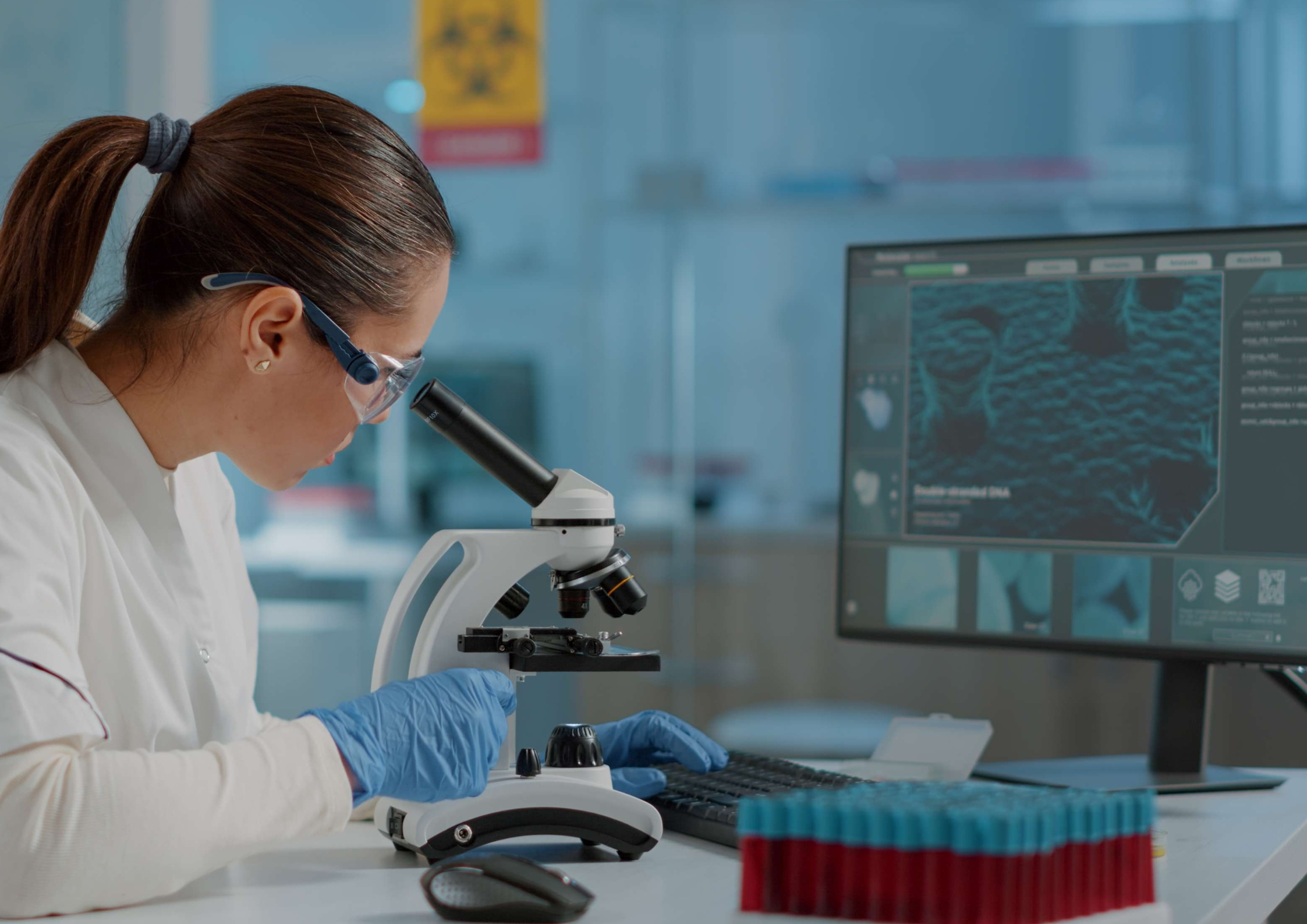
Deep Science Ventures has expanded its Venture Science Doctorate network to 40 academic and research lab partners.
Deep Science Ventures (DSV) has expanded the research network supporting its Venture Science Doctorate to 40 lab partners, giving 14 doctoral researchers access to specialist facilities while they develop technologies and potential businesses.
The London-based venture creator announced the expansion on June 23 as its first three doctoral cohorts progress through the program. The network includes universities, national laboratories, research organizations, and businesses across the UK, Europe, and the United States, with additional partners in Saudi Arabia, India, and the Bahamas.
Named partners include the National Physical Laboratory, King's College London, GlaxoSmithKline, the Max Planck Institutes, the Satellite Applications Catapult, the Helmholtz Association, and CGIAR's Alliance of Bioversity International and the International Center for Tropical Agriculture.
The Health and Life Science Alliance Heidelberg Mannheim is also involved, including the European Molecular Biology Laboratory and the German Cancer Research Center.
The Venture Science Doctorate is backed by organizations including Germany's Federal Agency for Disruptive Innovation, known as SPRIND, and Builders Vision. DSV has not disclosed the funding available to each researcher, the process used to allocate access to individual laboratories, or when applications for another cohort will open.
Researchers move between laboratories as projects develop
The Venture Science Doctorate is structured around mobility between research facilities rather than requiring each researcher to remain attached to one laboratory throughout the program.
DSV says candidates can use different facilities as their projects move from early research to testing and prototyping. Available infrastructure ranges from precision measurement equipment to biological containment facilities.
The model also provides dedicated research funding intended to reduce reliance on grants attached to a single university, supervisor, or existing academic program.
Dr. Thane Campbell, Dean of Education at Deep Science Ventures, says: "The Venture Science Doctorate is designed to drive the creation of high impact, de-risked companies that launch with a clear path to commercialisation."
He adds: "By stripping away the typical constraints of traditional academia and giving talent the freedom to move fluidly between labs, we are optimising the conditions for PhDs to solve complex problems, not just generate papers."
DSV describes the program as focused on commercialization and company formation rather than academic publication alone.
Projects cover longevity, fusion, energy, and heart monitoring
Current Venture Scientists are working across health, climate, and energy technologies.
Daniela Pamias Lopez is collaborating with Professor David Sinclair's laboratory at Harvard University on research intended to rejuvenate ovaries and prevent conditions associated with hormonal decline.
Vlad Iorgulescu has secured a €200,000 validation grant from SPRIND to develop a fusion reactor consortium involving participants from Commonwealth Fusion, the University of Alabama, Sefkorp, and Forschungszentrum Jülich.
Climate Venture Scientist Brett Cornick has developed an AI-driven virtual power plant intended to rebalance electricity grids. The project is being prototyped through SPRIND's €12 million Composite Learning Challenge.
Todor Cross is using real patient samples at King's College London to develop a continuous monitoring system intended to identify heart failure during the period following a heart attack.
King's College London joins shared research network
King's College London is providing laboratory access to Venture Science Doctorate researchers, including work involving patient samples.
Maddy Parsons, Dean of Research Excellence Frameworks at King's College London, comments: "We are proud to open our doors to members of the Venture Science Doctorate cohort and be a party to the vital work they are doing to tackle both environmental and social challenges."
She continues: "This model helps create the safety net that prevents high-impact venture creation from falling through the cracks of traditional academic funding."
Other partner organizations cover sectors including measurement science, agriculture, pharmaceuticals, space technology, molecular biology, and energy research.
DSV builds companies in agriculture, climate, computation, and pharmaceuticals. It says its portfolio has raised more than $240 million from investors, although the announcement does not provide a breakdown of how much funding has gone to businesses originating from the Venture Science Doctorate.