Naomi Bashkansky leaves OpenAI for Conduit thought-to-text research role
The former OpenAI alignment researcher has joined the San Francisco company as a Founding Researcher, working on models designed to predict text from non-invasive neural data
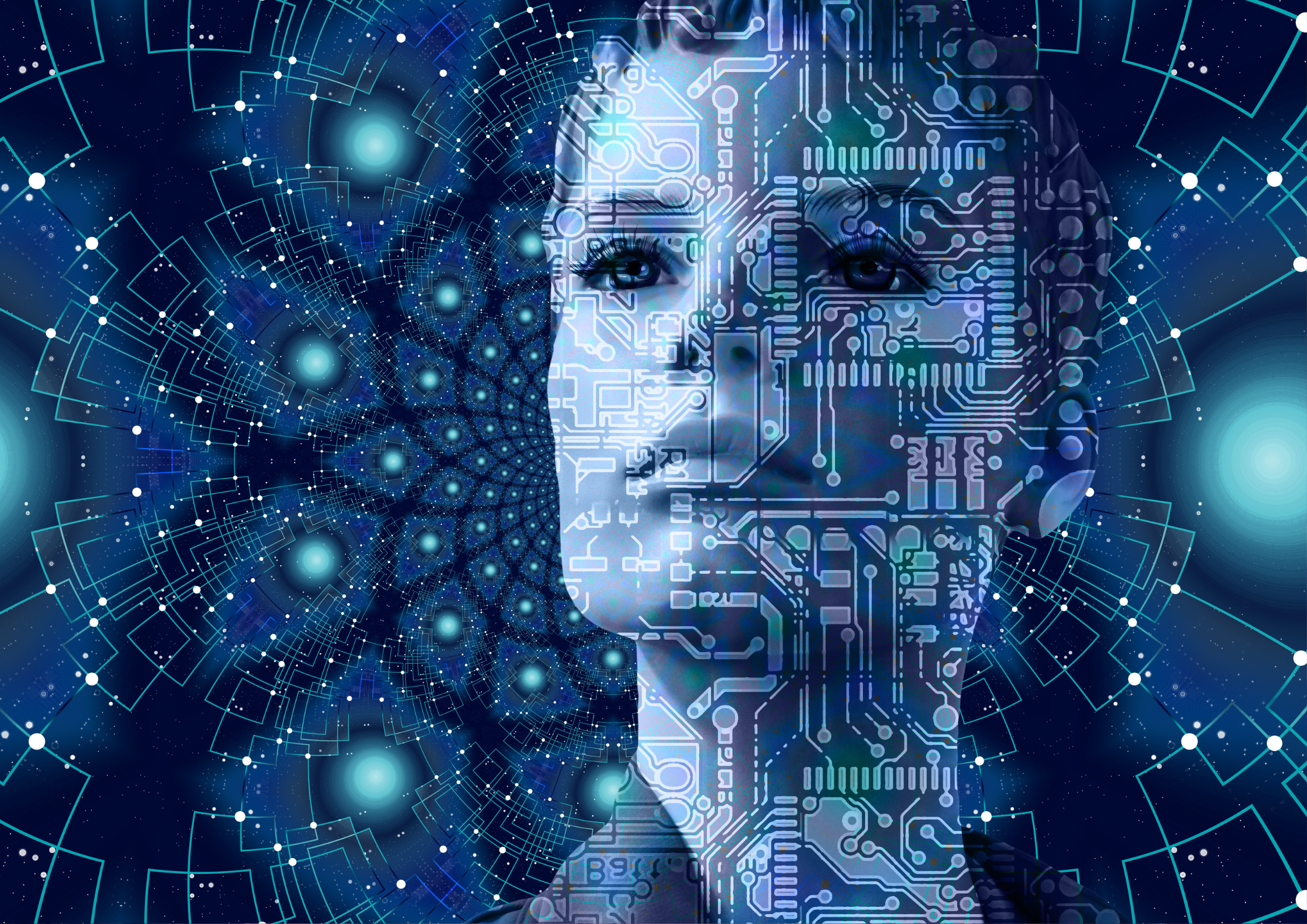
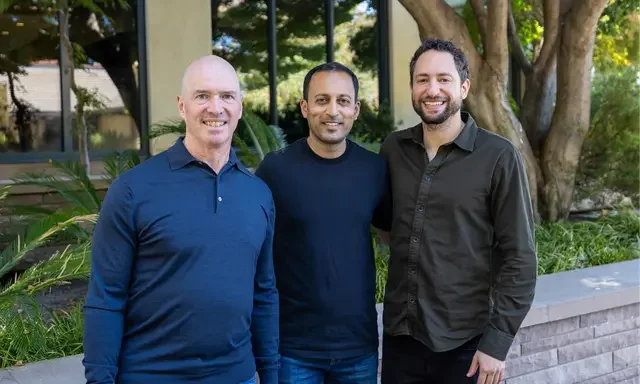
Conduit is training models designed to predict text from non-invasive neural data after recruiting former OpenAI researcher Naomi Bashkansky as a Founding Researcher
Naomi Bashkansky has left OpenAI to become a Founding Researcher at Conduit Intelligence, where she is working on an attempt to turn brain activity into text using models trained on non-invasive neural data.
Bashkansky resigned from OpenAI on July 23 and started at Conduit the following day. Announcing the change on LinkedIn several weeks later, she described the company's goal more starkly: "Three weeks ago, I resigned from OpenAI to join Conduit as a founding researcher, where we're training models to non-invasively read the human mind."
Conduit and Bashkansky use "telepathy" as shorthand for the work. Strip away that label, however, and the immediate research problem is more specific. The team is attempting to train models that take brain activity as an input and predict an output that is semantically similar to what a person was doing at the time, such as text they were writing.
Bashkansky's longer-term predictions go considerably further. In her 2030 scenario, she imagines AI companies training models to interface directly with Conduit's neural representations, writing: "I rarely go band-less when chatting with AIs these days."
By 2035, she predicts a much closer relationship between human cognition and AI: "My AI is a natural extension of me. It feels like a sixth sense and another limb." These are Bashkansky's predictions for how the technology could develop, rather than demonstrated capabilities of a current Conduit product.
Training models on neural data
The immediate challenge is scale. Bashkansky argues that improving thought-to-text models will require collecting substantially more neural data than has historically been used in academic research.
Invasive approaches make that difficult because they require people to have devices implanted. Conduit's work instead centers on non-invasive neural data, although Bashkansky does not disclose the specific hardware involved. In her account of the research, she acknowledges being "vague about the particularities of our hardware."
Bashkansky says Conduit's results are improving as it increases the amount of training data. "Concretely, the scaling laws are looking good: the cosine similarity of our latent space predictions with the target latent spaces goes up as a straight line with respect to the logarithm of the number of hours of data," she writes. Her assessment of the stage the research has reached is more succinct: "We're in the GPT-2 era."
She also argues that perfect neural decoding would not necessarily be required for the system to become useful. Her comparison is with an imprecise GPS signal that becomes more informative when combined with a map and route. In Conduit's case, she envisages a large language model and the surrounding context helping interpret a noisy neural signal.
From AI alignment to neural interfaces
The appointment takes Bashkansky from AI alignment research into an effort combining neural data and AI models.
She spent around a year and a half at OpenAI, first as a Member of Technical Staff Resident on its Alignment team from January to July 2025, then as a Researcher from July 2025 until July 2026. She says her work there also included helping create OpenAI's artificial general intelligence onboarding presentation and alignment blog, as well as advising the AI Resilience division of the OpenAI Foundation.
Before OpenAI, Bashkansky worked as an Auto Alignment Research Trainer for Anthropic, was a Technology and Security Policy Fellow at RAND, and completed an internship with the U.S. AI Safety Institute at the National Institute of Standards and Technology. She studied computer science at Harvard.
Her decision to move also reflects the difference she sees between working inside an established AI lab and joining an earlier-stage research effort.
Writing about why she joined Conduit, Bashkansky says: "At OpenAI, you can only work on a narrow slice of The Problem, and even on that narrow slice you're constrained by the existing architecture. At Conduit, it's all greenfield."
Her forecasts for where that research could ultimately lead are deliberately ambitious. By 2030, she imagines AI companies training models to interface directly with Conduit's neural representations. By 2035, her scenario has AI becoming "a natural extension of me" rather than an external system.
For now, Conduit's stated work remains on training thought-to-text models from non-invasive neural data. Bashkansky says the company is also recruiting researchers, infrastructure staff, and operators, and is seeking people to participate in its research.