
Microsoft Science president Peter Lee to retire after 16 years for ‘once-in-a-lifetime’ next move
Lee, who has led Microsoft Research and most recently Microsoft Science, is leaving for an undisclosed opportunity that he describes as a major departure from his work of the past two decades
Peter Lee, President of Microsoft Science and one of Microsoft’s longest-serving research leaders, is retiring from the company after more than 16 years to take up what he describes as a “once-in-a-lifetime opportunity.”
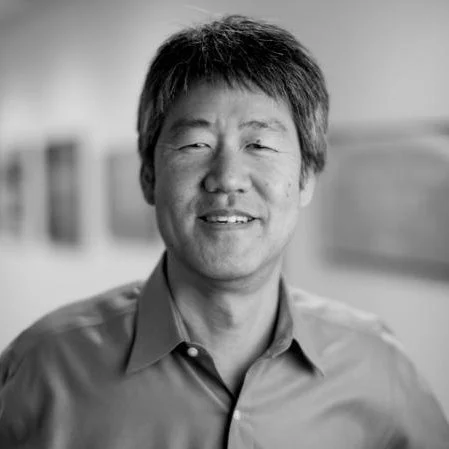
Peter Lee is retiring from Microsoft after more than 16 years with the company, including leadership roles across Microsoft Research and Microsoft Science.
Credit: Peter Lee
Lee has not disclosed where he is going next. Writing on LinkedIn, he said the decision followed a more personal calculation about whether he would regret turning the opportunity down.
“Considering my stage of life and career, will I regret it if I pass on this?” he wrote. “The answer I came up with was ‘Yes,’ and so I've taken a big leap and decided to retire from Microsoft.”
The move ends a Microsoft career that has spanned AI research, scientific discovery and leadership of the company’s global research organization.
Lee became President of Microsoft Science in February 2026, with responsibility for accelerating discovery across the physical, biological and medical sciences using AI and other emerging technologies. Before that, he served as President of Microsoft Research and led research operations across 14 laboratories worldwide.
Lee keeps his next destination under wraps
The next step remains deliberately vague. Lee described it on LinkedIn as a “once-in-a-lifetime opportunity to join an elite team,” adding that it fulfills a dream he has held since childhood.
He also called it “a major detour from what I've been doing over the past 2+ decades,” suggesting the role will move him away from the research and technology leadership path that has defined much of his recent career.
What he has confirmed is that his existing work with several healthcare and medical organizations will continue.
Lee says he will remain involved with Mayo Clinic, Kaiser Permanente Bernard J. Tyson School of Medicine, Seattle Children’s and other organizations working across healthcare delivery and medical science.
He currently serves on the Mayo Clinic Board of Trustees and the board of the Kaiser Permanente Bernard J. Tyson School of Medicine.
From Carnegie Mellon and DARPA to Microsoft Research
Lee joined Microsoft in 2010 as Corporate Vice President, AI & Research, initially leading Microsoft Research.
Before moving into industry, much of his career was rooted in academia. From 1987 to 2010, he was a professor at Carnegie Mellon University and served as head of its computer science department.
He then moved to the Defense Advanced Research Projects Agency, where he established a technology office focused on areas including machine learning, data science and computational social science.
At Microsoft, his remit broadened from computer science and AI research into the application of emerging technologies to scientific discovery.
His most recent Microsoft Science role has centered on using AI to accelerate work in fields including biology, medicine and the physical sciences.
Lee is also a member of the National Academy of Medicine and co-author, with Carey Goldberg and Isaac Kohane, of The AI Revolution in Medicine: GPT-4 and Beyond.
His departure removes a senior figure who has operated across Microsoft’s AI research, scientific discovery and healthcare work as the company continues to expand the role of AI beyond general-purpose software.






Quisque iaculis facilisis lacinia. Mauris euismod pellentesque tellus sit amet mollis.