
Anthropic joins Oslo’s first Claude Code meetup highlighting hands-on AI workflows
Anthropic, the AI company behind the Claude model, has taken part in Oslo’s first Claude Code meetup, as developers and enterprise teams gathered to discuss how AI tools are being used in real-world workflows and skills development.
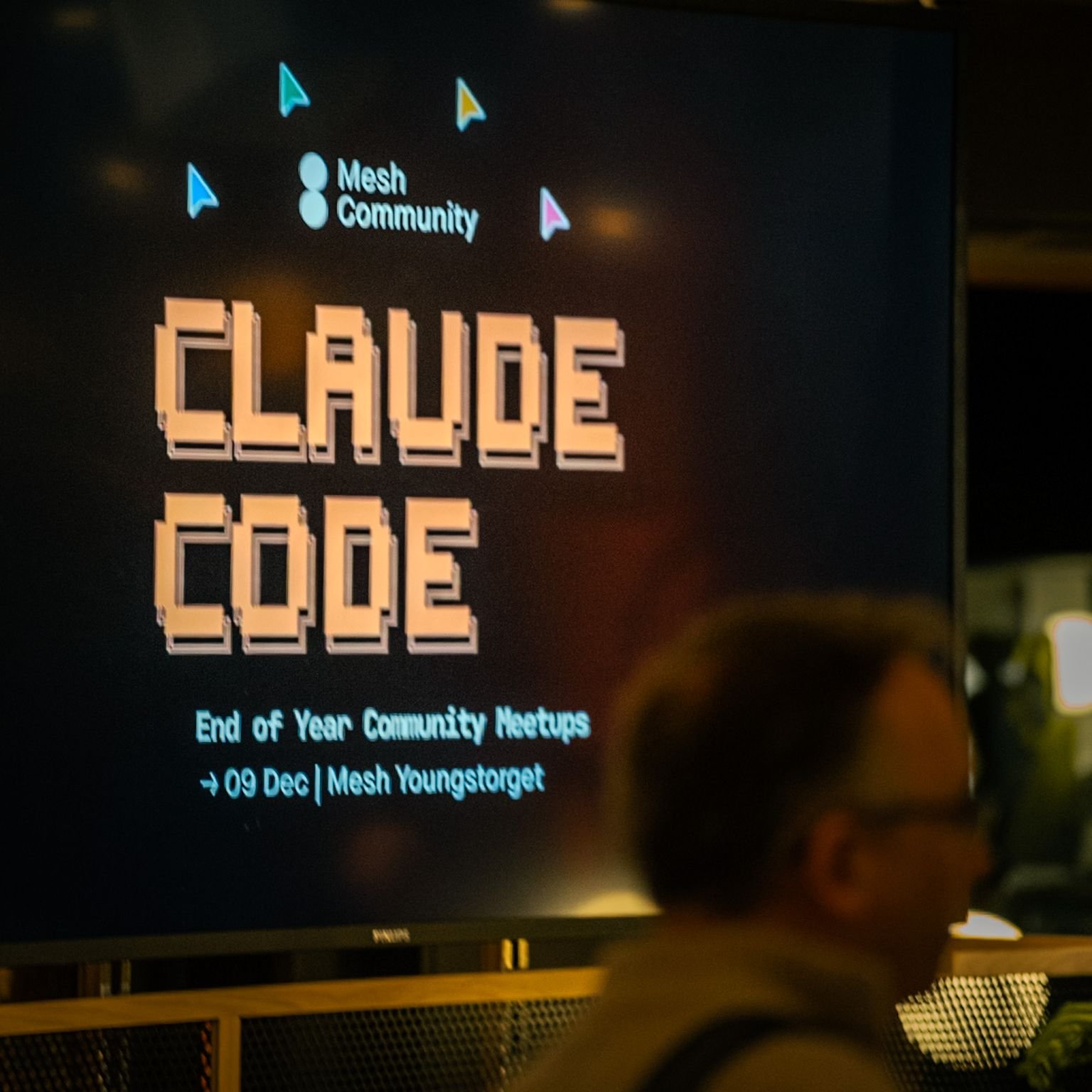
Photo credit: Ivana Piljic
Anthropic, the AI company behind the Claude large language model, joined developers, founders, and enterprise teams in Oslo this week for the first Claude Code meetup in Norway.
The event, hosted at Mesh Oslo in collaboration with GritAI, focused on how Claude Code is being applied in practice, reflecting growing interest in hands-on AI adoption and workforce skills development beyond experimentation.
Practical use of Claude Code
According to posts shared on LinkedIn by organizers and attendees, the meetup centered on how teams are working with Claude Code in day-to-day development and problem-solving. A Q&A session featured Daisy Sophia Hollman, product engineer at Anthropic, who discussed approaches to collaborating with AI systems rather than treating them solely as tools.
Posts highlighted examples of developers using documentation, checkpoints, and subagents to support more structured workflows. Other discussions focused on using AI to generate specifications, break work into smaller tasks, and experiment with features such as Claude Code Hooks.
Several attendees noted that newly launched front-end capabilities within Claude Code are already influencing how teams organize development work and collaborate with AI systems.
Community-led learning in Oslo
The meetup took place at Mesh Youngstorget, part of the Mesh Oslo coworking community, which brings together founders, freelancers, and entrepreneurs in central Oslo. The session was hosted by Aleksander Stensby, founder at GritAI, with Martine N. joining remotely on behalf of Anthropic.
Taking to social media to reflect on the week’s events, Stensby highlighted how in-person sessions are helping teams move beyond observing AI tools toward practical application, particularly when discussions are grounded in real work processes.
“Not the tools or the frameworks, but that moment when someone stops watching and starts building (or solving problems),” Stensby wrote.
He also pointed to a shift in confidence among participants as teams begin to see how AI can be applied directly within their own workflows.
“From ‘I don’t know where to start’ to ‘I have three ideas that I can now actually solve myself!’” he added.
Stensby linked the Oslo meetup to a wider series of workshops and training sessions delivered across Europe in recent weeks, including sessions with enterprise teams and public sector organizations. He noted that many of these discussions focused less on experimentation and more on identifying immediate, practical opportunities for AI adoption within existing roles and systems.
Signals for skills and workforce adoption
Organizers linked the Oslo meetup to a wider series of AI workshops and training sessions delivered across Europe, including recent programs focused on MCP, RAG, and enterprise AI workflows. These sessions have involved both private companies and public sector organizations, including work with teams in the health sector.
In a LinkedIn post, Mesh Oslo described the session as bringing “a lot of clarity around how we can work smarter with AI,” highlighting discussions around how developers are using documentation, checkpoints, and subagents to support more structured workflows. The post also referenced conversations about using AI to generate specifications, break work into smaller tasks, and experiment with automation features such as Claude Code Hooks.
While informal in tone, the activity around the Oslo meetup points to increasing demand for practical AI skills and peer-led learning, as organizations look to move from pilots toward real-world deployment.
